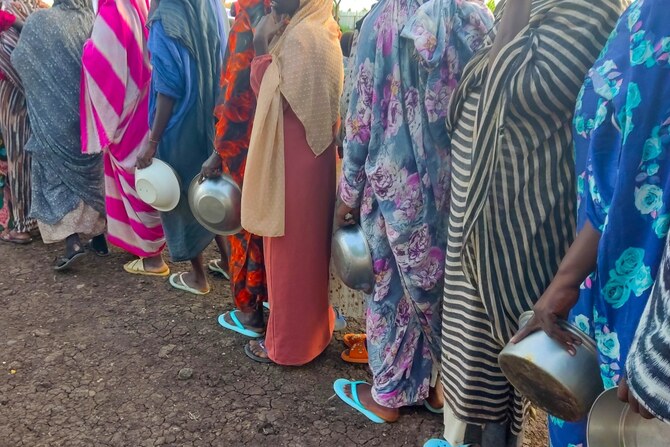
Juba: Almost 60 percent of South Sudan’s population will be acutely food insecure next year, with more than two million children at risk of malnutrition, data from a United Nations-backed review warned on Monday.
The world’s youngest country is among the globe’s poorest and is grappling with its worst flooding in decades as well as a massive influx of refugees fleeing the war in Sudan to the north.
The latest Integrated Food Security Phase Classification (IPC) review estimated that 57 percent of the population would be suffering from acute food insecurity from April.
The United Nations defines acute food insecurity as when a “person’s inability to consume adequate food puts their lives or livelihoods in immediate danger.”
Almost 7.7 million people will be classed as acutely food insecure, according to the IPC, an increase from 7.1 million people the previous lean season.
“Year after year we see hunger reaching some of the highest levels we’ve seen in South Sudan,” said Mary-Ellen McGroarty of the UN’s World Food Programme (WFP) in South Sudan.
“When we look at the areas with the highest levels of food insecurity, it’s clear that a cocktail of despair — conflict and the climate crisis — are the main drivers,” she said.
More than 85 percent of returnees fleeing the war in Sudan will be acutely food insecure from the next lean season in April.
The data also found that 2.1 million children are at risk of malnutrition, compounded by a lack of safe drinking water and sanitation.
“Malnutrition is the end result of a series of crises,” said Hamida Lasseko, UNICEF’s representative in South Sudan, adding the agency was “deeply concerned” that the numbers would increase if aid was not stepped up.
In October, the World Bank warned widespread flooding was “worsening an already critical humanitarian situation.”
The UN’s humanitarian agency, OCHA, said earlier this month that 1.4 million people had been impacted by the flooding, which had displaced almost 380,000.
Since gaining independence from Sudan in 2011, the world’s youngest nation has remained plagued by chronic instability, violence and economic stagnation as well as climate disasters such as drought and floods.
The country also faces another period of political paralysis after the presidency delayed elections by two years to December 2026, exasperating international partners.
South Sudan boasts plentiful oil resources but the vital source of revenue was decimated in February when an export pipeline was damaged in neighboring war-torn Sudan.


![]()

Majority of South Sudanese will be food insecure next year: UN
Short Url
https://arab.news/9sm2x
Majority of South Sudanese will be food insecure next year: UN
- Almost 7.7 million people will be classed as acutely food insecure, according to the IPC, an increase from 7.1 million people the previous lean season
- More than 85 percent of returnees fleeing the war in Sudan will be acutely food insecure from the next lean season in April


Latest updates


Recommended


© 2026 SAUDI RESEARCH & PUBLISHING COMPANY, All Rights Reserved And subject to Terms of Use Agreement.