

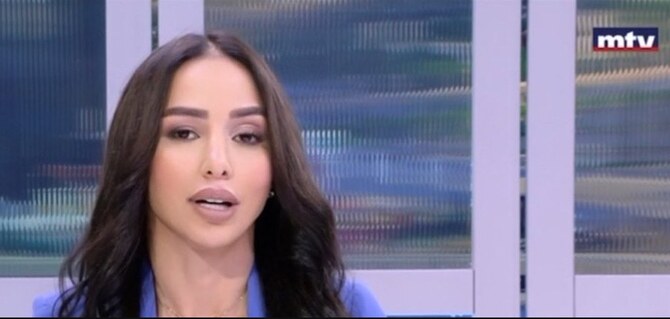

DUBAI: A renowned Lebanese journalist has taken to social media platform X to announce her departure from MTV following alleged death threats believed to have been made by supporters of Hezbollah.
Not mentioning the Iran-backed group by name, Dr. Eman Shweikh, a TV presenter at MTV, journalist and university professor, wrote: “I decided to leave MTV because of the intimidations that reached the point of death threats and the harassment that I am exposed to, which reached the point of following me home and chasing me on the road, in addition to harassing my family.”
The Samir Kassir Eyes Center reported that since Nov. 12 Shweikh had been subjected to a campaign of threats, incitement and accusations of treason due to her political opinions that she publishes on X, and because of her work for MTV.
The purported threats and harassment prompted her to leave her job at the channel.
The TV presenter added in her tweet: “The (Lebanese) state is absent, and laws are inexistent, and I do not want to expose my life and the lives of my family to danger. I want to live in safety and peace. Thank you to the Chairman of the Board of Directors of MTV Michel Murr.”
Shweikh’s tweet received thousands of likes and hundreds of retweets and comments.
Speaking to Arab News, Shweikh said things got worse since the escalation between Israel and Hezbollah.
“In addition to the threats from Hezbollah supporters, my old friends sent me very negative comments, saying they wouldn’t allow me to enter the south, where my family house is located in Tyre, or return to my hometown of Al-Mansoury, she said.
“Some relatives even threatened to send me to Syria to be killed by criminals. I believe that the best decision for me now was to quit my job, although I am very sad and shocked. However, I believe that Hezbollah’s control will end very soon.
“As for my plans, I am ready to work as an anchor or perhaps a TV hostess, but I will not declare my political opinions until the appropriate moment,” she added.
Replying to her tweet, advocate Tarek Chindeb said: “The threat to kill journalist Eman Shweikh makes us believe at every moment that we cannot build a state in Lebanon in the presence of illegal weapons and militias outside accountability.”
Expressing solidarity, Chindeb hoped that the Lebanese security and judicial authorities would do their duty to protect her, and arrest the culprits.
Political analyst Magdi Khalil also replied to Shweikh’s tweet, saying: “Ideological militias do not know participation, but rather overpowering. They do not know dialogue, but rather the threat of violence.”
MTV journalist Nawal Berry and cameraman Dany Tanios were attacked in July while attempting to cover the aftermath of an Israeli airstrike on Beirut’s southern suburb, a Hezbollah stronghold.
It was not the first time Berry and her team had been assaulted by Hezbollah loyalists. During the early days of the Oct. 17 revolution in 2019, she and her team faced a violent attack and had their camera smashed.
Supporters of Hezbollah have a history of assaulting and threatening journalists. Targets have included Layal Alekhtiar, who received death threats in 2021 and faced legal action last year for interviewing an Israeli spokesperson; Dima Sadek; Ali Al-Amin; and others.


