ISLAMABAD: The Punjab government has conducted a successful artificial rain trial using local technology to reduce smog, state-run media reported on Saturday, as the province grapples with deteriorating air quality and takes measures to protect millions from pollution.
State broadcaster Radio Pakistan said the provincial government carried out “cloud seeding” in the eastern cities of Jhelum, Chakwal, Talagang and Gujar Khan on Friday, which resulted in rainfall in Jhelum and Gujar Khan within a few hours.
Cloud seeding is a weather modification technique that improves a cloud’s ability to produce rain or snow by introducing tiny ice nuclei into certain types of subfreezing clouds.
In December last year, a cloud seeding experiment was carried out by the United Arab Emirates to bring about artificial rain in Lahore. The UAE sent two special planes and a technical team, which waited in Lahore for several days for the right conditions before carrying out its mission.
“Punjab Chief Minister Maryam Nawaz Sharif congratulated all scientific experts and associated institutions on the success of this artificial rain experiment,” Radio Pakistan said.
It said the experiment was conducted due to the combined efforts of the Punjab government, Pakistan Army’s Scientific Research and Development experts, Army Aviation, PARCO and the Environmental Protection Agency.
“This success will open new avenues for technological advancement in Pakistan and help alleviate weather-related issues for the public,” it said.
The development takes place as Punjab extended school closures in smog-hit major cities from Nov. 17 by a week, with thousands hospitalized as the country battles record air pollution.
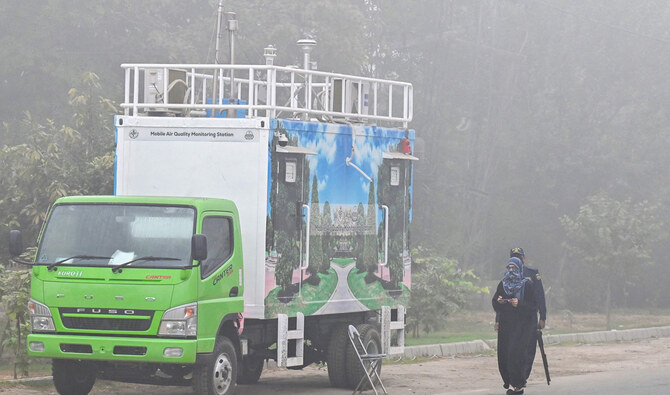
Toxic smog has enveloped Punjab’s cities, especially its cultural capital of Lahore, since last month. Smog occurs when cold air traps dust, low-grade diesel fumes and smoke from illegal stubble burning on fields.
As the air quality deteriorates, the provincial government has taken certain measures such as closing schools, banning the entry of heavy transport vehicles in Lahore on specific days and banning entry to parks, zoos, playgrounds and other public spaces.
Other parts of South Asia are also dealing with high levels of pollution and Punjab blames neighboring India for contributing to its hazardous air quality.
New Delhi, the world’s most polluted capital, has banned non-essential construction, moved children to virtual classrooms and asked residents to avoid using coal and wood from Friday.


![]()

Pakistan’s Punjab conducts successful artificial rain trial amid smog crisis
Short Url
https://arab.news/r6snt
Pakistan’s Punjab conducts successful artificial rain trial amid smog crisis
- Punjab carries out cloud seeding in Jhelum, Chakwal, Talagang and Gujar Khan
- Toxic smog due to air pollution has enveloped Punjab province since last month
Latest updates


© 2026 SAUDI RESEARCH & PUBLISHING COMPANY, All Rights Reserved And subject to Terms of Use Agreement.