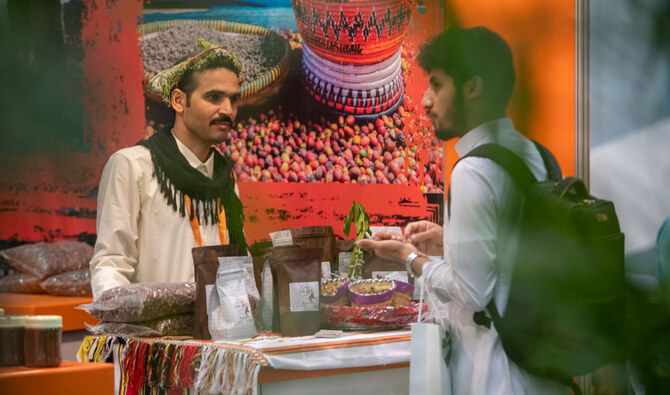


RIYADH: Saudi Arabia is among the Gulf Cooperation Council nations taking significant steps to invest in developing its organic food and beverage sector, which has experienced a growth surge in recent years.
The three-day Biofach Saudi Arabia, which was held alongside Saudi Organic Food Day and concluded on Wednesday, is a key platform showcasing the Kingdom’s commitment to developing its agricultural future.
Biofach was organized by 1st Arabia Tradeshows and Conferences in collaboration with NurnbergMesse, with support from the Saudi Ministry for Energy, Water and Agriculture and the Saudi Organic Farming Association.
Christian Beyer, manager of international events at NurnbergMesse, highlighted the potential of the Middle East and North Africa region: “The MENA region, especially Saudi Arabia, represents an emerging market for organic food that was estimated at USD 7 billion in 2022 and can expect ongoing growth.”
Recognizing the importance of organic farming for food security and environmental sustainability, Saudi authorities are focusing on enhancing rural production and improving supply chains to ensure organic products reach consumers efficiently.
The exhibition’s knowledge-exchange platform addressed local challenges, including effective water and fertilizer management, which are crucial for the region’s arid climate.
Among the exhibitors was the Saudi company Aamal Al-Andalus, which provides organic fertilizers to address soil degradation and declining fertility. Their products are said to help treat and reduce environmental stress, increase agricultural production, and improve the quality of crops to enhance export opportunities.
Youssif Abdulqader, sales manager and engineer at Aamal Al-Andalus, told Arab News: “Food around the world is increasingly going organic, particularly when all inputs in the plants come from organic and safe sources.”
He noted that this shift is largely driven by the health issues linked to consuming fruits and vegetables produced through conventional farming methods, which are often less beneficial or even harmful to human well-being.
Abdulqader explained: “Conventional farming practices are generally well-structured and effective; however, they face challenges such as the excessive use of pesticides and their persistence in the soil.”
Farmers often encounter bacterial issues within their crops that need to be addressed cost-effectively to maximize profitability.
“This is where organic alternatives can be prohibitively expensive, prompting conventional farmers to seek cheaper, often internationally banned options,” he added.
He added that the use of pesticides results in chemical residues that can remain in the plant’s environment.
These residues pose significant health risks when consumers ingest vegetables like cucumbers and tomatoes.
“There is a concern that these chemicals may contain heavy metals that the human body cannot process, leading to serious health issues such as cancer, kidney failure, and liver diseases, which are frequently associated with traditional farming practices,” he explained.