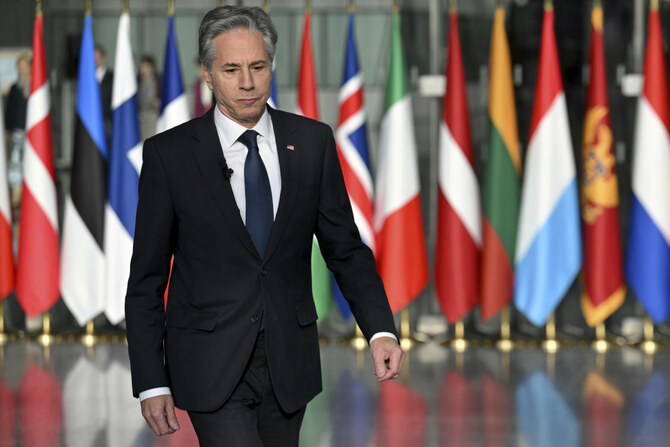
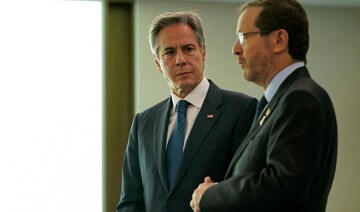
KYIV: The Biden administration is determined in its final months to help ensure that Ukraine can keep fighting off Russia’s full-scale invasion next year, sending it as much aid as possible so that it might hold Russian forces at bay and possess a strong hand in any potential peace negotiations, US Secretary of State Antony Blinken said Wednesday.
“President Biden has committed to making sure that every dollar we have at our disposal will be pushed out the door between now and Jan. 20,” when president-elect Donald Trump is due to be sworn in, Blinken said.
NATO countries must focus their efforts on “ensuring that Ukraine has the money, munitions and mobilized forces to fight effectively in 2025, or to be able to negotiate a peace from a position of strength,” Blinken said during a visit to Brussels.
The US will “adapt and adjust” with the latest equipment it is sending, Blinken said, without providing details.
The almost three-year war has shown no signs of winding down.
Russia attacked the Ukrainian capital Kyiv with a sophisticated combination of missiles and drones for the first time in 73 days on Wednesday. That came a day after the Pentagon said most of the North Korean troops sent to help Moscow’s war effort are fighting to drive Ukraine’s army off Russian soil in the Kursk border region.
Ukraine is also straining to hold back a monthslong Russian onslaught in the eastern Donetsk region.
Political uncertainty over how a US administration under Trump will change Washington’s policy on the war is a key new factor in the conflict. US military aid is vital for Ukraine, but Trump has signaled that he doesn’t want to keep giving tens of billions of dollars to Kyiv.
Air raid warnings blared for hours as Russia targeted eight regions of Ukraine on Wednesday, firing six ballistic and cruise missiles and 90 drones, the Ukrainian air force said.
Air defenses downed four missiles and 37 drones, and another 47 drones were stopped by electronic jamming, the statement said. The damage was being assessed.
The air assault came as most of the more than 10,000 North Korean troops sent by Pyongyang to help Moscow in the war are engaged in combat in Russia’s Kursk border region, according to the Pentagon. A Ukrainian army incursion into Kursk three months ago has succeeded in holding a broad area of land and has embarrassed the Kremlin.
Russia’s military has trained the North Korean soldiers in artillery, drone skills and basic infantry operations, including trench clearing, Pentagon deputy spokesperson Vedant Patel told a briefing Tuesday. The cooperation faces challenges, according to the Pentagon, including how to achieve military interoperability and overcoming the language barrier.
Kyiv officials say that Russia has deployed around 50,000 troops to Kursk in a bid to dislodge the Ukrainians.
Russia has in recent months been assembling forces for a counteroffensive in Kursk, according to the Institute for the Study of War think tank, though the timescale of the operation isn’t known.

Biden is sending aid to help Ukraine keep fighting next year, Blinken says
Short Url
https://arab.news/m8mbj
Biden is sending aid to help Ukraine keep fighting next year, Blinken says
- “President Biden has committed to making sure that every dollar we have at our disposal will be pushed out the door between now and Jan. 20,” Blinken said
- The US will “adapt and adjust” with the latest equipment it is sending, Blinken said, without providing details
Portugal fears disruption in first general strike in 12 years
LISBON: Portugal braced on Thursday for its first general strike in 12 years, as unions urge action against the right-wing minority government’s planned workers’ rights reforms.
Widespread disruption is expected for public transport, schools, courts and hospitals, as workers protest against a draft law aiming to simplify firing procedures, extend the length of fixed-term contracts and expand the minimum services required during a strike.
The walk-out is expected to be Portugal’s largest since June 2013, when the country was forced to gut public spending in exchange for international aid after being engulfed by a debt crisis that affected several European nations.
Prime Minister Luis Montenegro insisted that the labor reforms, with more than 100 measures, were intended to “stimulate economic growth and pay better salaries.”
But the communist-leaning CGTP and more moderate UGT unions have lambasted the plans.
The CGTP is organizing about 20 demonstrations across the country. Its secretary general Tiago Oliveira called the reforms “among the biggest attacks on the world of work.” He told AFP the government action would “normalize job insecurity,” “deregulate working hours” and “make dismissals easier.”
Out of a working population of some five million people, around 1.3 million are already in insecure positions, Oliveira said.
- ‘Already a success’ -
Private sector unions are set to join the action.
The TAP Air Portugal national airline expects just a third of its 250 usual flights to get off the ground, while the national railway company has warned the disruption could spill over into Friday.
With Portugal set to elect a new president in early 2026, Oliveira said he considered the strike was “already a success” as it had drawn public attention to the government labor reforms.
“Without a doubt, we’ll have a great general strike,” the union leader added.
Public opinion is largely behind the action, with 61 percent of those polled in favor of the walk-out, according to a survey published in the Portuguese press.
On the eve of the strike, Montenegro said he hoped “that the country will function as normally as possible... because the rights of some must not infringe on the rights of others.”
Although his right-wing party lacks a majority in parliament, Montenegro’s government should be able to force the bill through with the support of the liberals — and the far right, which has become the second-largest political force in Portugal.
The left-wing opposition has accused Montenegro’s camp of not telling voters that workers’ rights roll-backs were on the cards while campaigning for the last parliamentary elections.
Although Portugal has recorded economic growth of around two percent and a historically low unemployment rate of some six percent, the prime minister has argued that the country should take advantage of the favorable climate to push through reforms.
Widespread disruption is expected for public transport, schools, courts and hospitals, as workers protest against a draft law aiming to simplify firing procedures, extend the length of fixed-term contracts and expand the minimum services required during a strike.
The walk-out is expected to be Portugal’s largest since June 2013, when the country was forced to gut public spending in exchange for international aid after being engulfed by a debt crisis that affected several European nations.
Prime Minister Luis Montenegro insisted that the labor reforms, with more than 100 measures, were intended to “stimulate economic growth and pay better salaries.”
But the communist-leaning CGTP and more moderate UGT unions have lambasted the plans.
The CGTP is organizing about 20 demonstrations across the country. Its secretary general Tiago Oliveira called the reforms “among the biggest attacks on the world of work.” He told AFP the government action would “normalize job insecurity,” “deregulate working hours” and “make dismissals easier.”
Out of a working population of some five million people, around 1.3 million are already in insecure positions, Oliveira said.
- ‘Already a success’ -
Private sector unions are set to join the action.
The TAP Air Portugal national airline expects just a third of its 250 usual flights to get off the ground, while the national railway company has warned the disruption could spill over into Friday.
With Portugal set to elect a new president in early 2026, Oliveira said he considered the strike was “already a success” as it had drawn public attention to the government labor reforms.
“Without a doubt, we’ll have a great general strike,” the union leader added.
Public opinion is largely behind the action, with 61 percent of those polled in favor of the walk-out, according to a survey published in the Portuguese press.
On the eve of the strike, Montenegro said he hoped “that the country will function as normally as possible... because the rights of some must not infringe on the rights of others.”
Although his right-wing party lacks a majority in parliament, Montenegro’s government should be able to force the bill through with the support of the liberals — and the far right, which has become the second-largest political force in Portugal.
The left-wing opposition has accused Montenegro’s camp of not telling voters that workers’ rights roll-backs were on the cards while campaigning for the last parliamentary elections.
Although Portugal has recorded economic growth of around two percent and a historically low unemployment rate of some six percent, the prime minister has argued that the country should take advantage of the favorable climate to push through reforms.
© 2025 SAUDI RESEARCH & PUBLISHING COMPANY, All Rights Reserved And subject to Terms of Use Agreement.