ISLAMABAD: The National Disaster Management Authority (NDMA) on Tuesday said smog conditions in Pakistan’s eastern Punjab province are expected to persist throughout November and December, advising citizens to take precautions to protect themselves from air pollution.
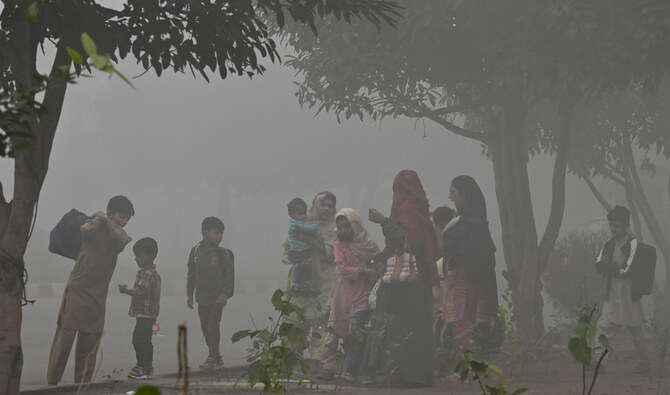
Toxic smog has shrouded Pakistan’s cultural capital of Lahore and 17 other districts in Punjab since last month. Health officials say more than 40,000 people have been treated for respiratory ailments forcing Punjab to close schools until Nov. 17 to protect children’s health. The UN children’s agency has warned that the health of 11 million children in Punjab is in danger due to air pollution.
South Asia, particularly India and Pakistan, is shrouded in intense pollution every winter as cold air traps emissions, dust, and smoke from farm fires. Pollution could cut more than five years from people’s life expectancy in the region, a study found last year.
In its latest advisory, the NDMA said it has been monitoring the smog situation in Pakistan and its surrounding areas via state-of-the-art ground-based and space-based monitoring tools.
“It is anticipated that smog conditions will persist throughout November and December in the plains of Punjab,” the NDMA said. “Urban centers such as Lahore, Faisalabad, Multan, Bahawalpur, Peshawar, Mardan, and Nowshera are expected to experience smog during these months.”
The disaster management agency said it used its monitoring tools to analyze and project emissions from the industry, transportation and agriculture sectors.
“This includes emissions from stubble burning, volatile organic compounds, and nitrogen oxides, as well as surface-level ozone and particulate matter like PM10 and PM2.5,” the NDMA added. “Using information on aerosol optical depth, our team is identifying hotspots significantly affected by smog.”
Seasonal crop burn-off by farmers on the outskirts of Lahore also contributed to toxic air, which the World Health Organization says can cause strokes, heart disease, lung cancer and respiratory diseases.
The NDMA urged people to avoid stepping outdoors during smog peak hours in the morning, wear masks during outdoor activities, stay hydrated and use dehumidifiers.
Last month, Punjab identified four hotspots in the city where it imposed restrictions. These included banning auto rickshaws with polluting two-stroke engines, along with restaurants that operate barbecues without filters.
Last Friday, Pakistani authorities ordered the closure of all parks and museums for 10 days, urging people to avoid unnecessary travel.


![]()

Pakistan says smog to persist in Punjab’s plain areas throughout November and December
Short Url
https://arab.news/by6y3
Pakistan says smog to persist in Punjab’s plain areas throughout November and December
- Toxic smog has shrouded Pakistan’s cultural capital Lahore and 17 other districts in Punjab since last month
- Punjab has closed schools, banned entry of heavy transport vehicles on specific days in Lahore amid smog crisis
Latest updates


© 2026 SAUDI RESEARCH & PUBLISHING COMPANY, All Rights Reserved And subject to Terms of Use Agreement.