

Saudi women rise: W20 to ‘address systemic barriers’

1 / 3
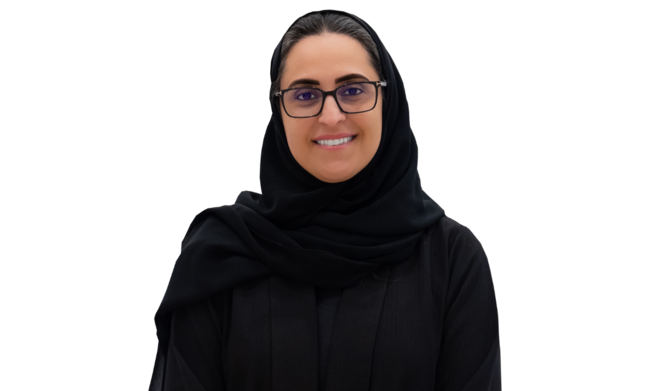
Miznah Al-Omair. (AN photo by Huda Bashatah)
2 / 3
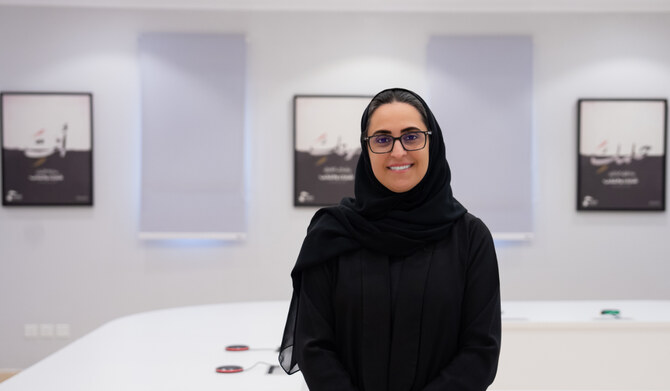
Miznah Al-Omair. (AN photo by Huda Bashatah)
3 / 3
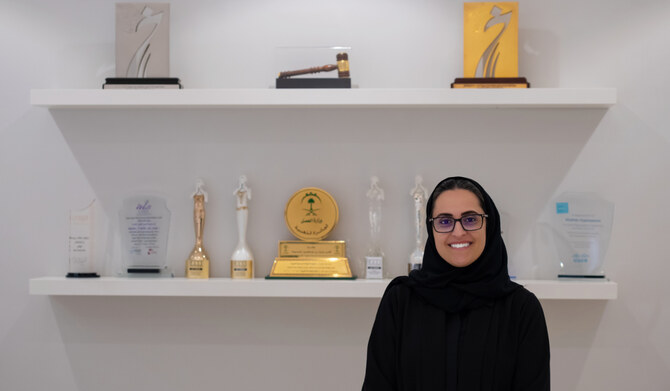
Miznah Al-Omair. (AN photo by Huda Bashatah)
Short Url
Updated 09 November 2024
Follow

Saudi women rise: W20 to ‘address systemic barriers’

  • Head of Saudi delegation Miznah Al-Omair unpacks women’s empowerment agenda

RIYADH: In a world where women’s economic participation is crucial for sustainable development, the W20 initiative is amplifying women’s voices within the G20 framework.

A beacon of advocacy and action, the Saudi delegation for Women 20, or W20, is led by Miznah Al-Omair, CEO of Al-Nahda Society, which was founded in 1963 to empower women in Saudi Arabia.

In an interview with Arab News, Al-Omair emphasized the importance of including women’s issues in G20 dialogues: “The role of women must be considered in decision-making processes, as these decisions impact women’s economic realities.” This perspective underscores the need for a platform that prioritizes women’s voices in global economic policy discussions.

Through its strategic initiatives, W20 seeks to foster gender equality and empower women economically, ensuring their concerns are heard and integrated into high-level discussions, she said.

We must ensure that every woman can voice her needs and aspirations in the economic landscape, fostering an environment where they can thrive.

Miznah Al-Omair, Head of W20 Saudi delegation

W20 operates independently while maintaining connections with government entities. Its main objective is to ensure women’s issues are integrated into G20 discussions, official declarations and commitments, shaping the agenda of this influential forum.

By advocating for policies addressing the particular challenges women face, the W20 initiative is creating a more equitable economic landscape.

Host countries play a key role in shaping the W20 agenda by identifying areas that reflect their specific contexts. For instance, Brazil’s focus this year highlights the intersection of race and ethnicity with women’s economic challenges.

Al-Omair explained: “By examining the unique challenges women face based on their race and ethnicity, we can develop targeted solutions that address systemic barriers.”

This approach allows for a nuanced understanding of women’s diverse experiences and facilitates the creation of tailored solutions to address their needs.

W20 collaborates with various stakeholders to compile evidence-based recommendations for women’s economic empowerment. These recommendations are presented to G20 leaders for adoption, promoting best practices that can be tailored to different national contexts.

“If a successful program exists in one country, we encourage others to adopt similar frameworks that can benefit women economically,” Al-Omair said. This collaborative spirit is crucial for building a unified approach to women’s empowerment across nations.

Since Saudi Arabia hosted the W20 summit in 2020, significant progress has been made in advancing women’s roles in the economy. The focus has shifted from simply including women in discussions to actively promoting their participation and leadership in various sectors.

“We have made tremendous advancements, and our efforts are reflected in the increasing visibility and effective roles of women in various sectors,” she said. This progress is notable, yet it highlights the ongoing challenges women face in achieving full economic participation.

Despite these advancements, obstacles remain. Women’s participation often depends on individual aspirations and the supportive infrastructures present in different sectors.

“While reforms to laws and regulations promote gender equality, equal opportunities in the private sector have yet to be achieved,” Al-Omair said.

This variability underscores the need for continued advocacy and the development of frameworks that foster an inclusive environment for women.

One standout initiative from Al-Nahda Society is its financial literacy program, launched in 2017. This program equips women with essential skills in budgeting, planning and investment, promoting financial independence.

“This program has proven impactful, helping women gain financial independence and equipping them to launch and sustain their businesses,” the organization’s CEO said.

By focusing on financial literacy, the W20 agenda will empower women to take control of their economic futures.

“We must ensure that every woman can voice her needs and aspirations in the economic landscape, fostering an environment where they can thrive,” Al-Omair said.

This commitment to inclusivity is key to creating a future where women’s economic participation becomes the norm, not the exception.

W20’s collaborative efforts highlight the importance of context-sensitive approaches to women’s empowerment. Effective solutions must resonate with each country’s social and national frameworks.


Saudi Arabia launches key projects at World Defense Show in Riyadh

Updated 27 min ago
Follow

Saudi Arabia launches key projects at World Defense Show in Riyadh

  • Defense Minister Prince Khalid bin Salman unveils initiatives
  • New firms set up and deals inked at event running to Feb. 12  

RIYADH: Defense Minister Prince Khalid bin Salman unveiled new initiatives and signed several agreements on the opening of the third World Defense Show in Riyadh on Sunday.

Prince Khalid opened the show on behalf of Crown Prince Mohammed bin Salman, the Saudi Press Agency reported.

Organized by the General Authority for Military Industries, the five-day event will run until Feb. 12, showcasing the Kingdom’s rapid strides toward strategic independence and technological leadership in the defense sector.

The 2026 edition features a purpose-built venue with a 2,700-meter runway for live air and land demonstrations, underscoring the show’s status as a premier global defense event.

The GAMI’s Gov. Ahmad Al-Ohali said the show reflects Saudi Arabia’s commitment to localizing over 50 percent of military spending in line with Vision 2030, and fostering an integrated ecosystem where government bodies and international partners collaborate on innovation.

The event brings together official delegations, government entities, and leading international companies specializing in the defense and security sectors. (SPA)

Strategic agreements and major launches

At the Saudi Arabian Military Industries Group pavilion, Prince Khalid launched several key initiatives.

  • New entities: The inauguration of the SAMI Land Co., SAMI Autonomous Co., and the SAMI Land Industrial Complex.
  • Supply chain: The unveiling of the SAMI Local Content Program and the HEET Program.
  • International cooperation: A memorandum of understanding was signed between the Saudi General Authority for Defense Development and the Korean Agency for Defense Development on advanced military research.
  • Defense deals: The minister signed cooperation agreements with Slovakia, Malaysia, and Somalia.
Defense Minister Prince Khalid signed cooperation agreements with Slovakia, Malaysia, and Somalia. (SPA)

Technological debuts and innovations

The show is also serving as a launchpad for cutting-edge security technologies across various government sectors.

AI-Powered Lucid Gravity: Public Security debuted its advanced Lucid Gravity electric security vehicle at the Ministry of Interior’s pavilion.

The vehicle integrates state-of-the-art artificial intelligence and specialized security equipment designed to accelerate emergency response times and support field operations.

By leveraging predictive intelligence and advanced command-and-control systems, the Lucid Gravity exemplifies the ministry’s commitment to protecting the Kingdom.

Public Security’s advanced Lucid Gravity electric security vehicle is displayed at the Ministry of Interior’s pavilion. (SPA)

Smart helmet: Also at the Ministry of Interior’s pavilion, the General Directorate of Civil Defense unveiled its smart helmet.

Designed to revolutionize public safety and emergency response, the helmet features day-and-night cameras and specialized sensors to detect hazardous materials in hard-to-reach locations.

The device serves as a mobile command node, delivering live video feeds directly to command-and-control centers. By enabling real-time data analysis and faster decision-making, the helmet reduces response times and enhances personnel safety in high-risk environments.


The smart helmet features day-and-night cameras and specialized sensors to detect hazardous materials in hard-to-reach locations. (SPA)

Border security: The General Directorate of the Border Guard showcased an integrated security system featuring radar and thermal cameras capable of detecting drones and classifying moving targets to protect critical infrastructure.

It also functions as an early warning system for critical facilities and border areas and is fully integrated with command-and-control systems.

Border Guard's integrated security system features radar and thermal cameras capable of detecting drones and classifying moving targets to protect critical infrastructure. (SPA)

Counter-terrorism: The Islamic Military Counter Terrorism Coalition presented a comprehensive framework integrating intellectual, media, and military domains to combat extremism and terror financing.

Visitors were briefed on specialized programs designed to raise the readiness of national personnel and foster sustainable institutional cooperation among member states to combat extremism.

On the event’s opening day, the pavilion hosted high-level delegations, including ministers, military leaders, and ambassadors who reviewed and praised the coalition’s pivotal role in coordinating local and international security efforts.

A view of the Islamic Military Counter Terrorism Coalition pavilion. (SPA)

Meteorology: The National Center for Meteorology displayed advanced weather systems essential for ensuring the safety of the event’s air shows and military operations.

At its dedicated pavilion, the NCM is showcasing its latest advanced meteorological technologies and systems. These solutions serve both the military and civilian sectors, providing accurate data to support beneficiary entities’ operational processes.

World Defense Show CEO Andrew Pearcey said that participation is expected to surpass previous records, reflecting the event’s growing importance on the international stage.

NCM's latest meteorological technologies and systems serve both the military and civilian sectors