

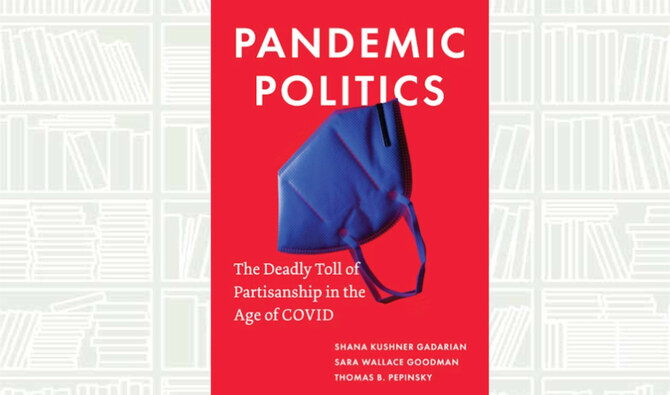
What We Are Reading Today: Pandemic Politics

Photo/Supplied
Short Url
Updated 08 November 2024
Follow

What We Are Reading Today: Pandemic Politics

  • Health is not an inherently polarizing issue, but the Trump administration’s partisan response to COVID-19 led ordinary citizens to prioritize what was good for their “team” rather than what was good for their country

Author: Shana Kushner Gadarian, Sara Wallace Goodman and Tomas B. Pepinsky

COVID-19 has killed more people than any war or public health crisis in American history, but the scale and grim human toll of the pandemic were not inevitable. Pandemic Politics examines how Donald Trump politicized COVID-19, shedding new light on how his administration tied the pandemic to the president’s political fate in an election year and chose partisanship over public health, with disastrous consequences for all of us.

Health is not an inherently polarizing issue, but the Trump administration’s partisan response to COVID-19 led ordinary citizens to prioritize what was good for their “team” rather than what was good for their country.

Democrats, in turn, viewed the crisis as evidence of Trump’s indifference to public well-being. At a time when solidarity and bipartisan unity were sorely needed, Americans came to see the pandemic in partisan terms, adopting behaviors and attitudes that continue to divide us today.


What We Are Reading Today: ‘Fixed’

Updated 22 December 2025
Follow

What We Are Reading Today: ‘Fixed’

Authors: John Y. Campbell and Tarun Tamadorai

We interact with the financial system every day, whether taking out or paying off loans, making insurance claims, or simply depositing money into our bank accounts. 

“Fixed” exposes how this system has been corrupted to serve the interests of financial services providers and their cleverest customers—at the expense of ordinary people.

John Campbell and Tarun Ramadorai diagnose the ills of today’s personal finance markets in the US and across the globe, looking at everything from short-term saving and borrowing to loans for education and housing, financial products for retirement, and insurance. 

They show how the system is “fixed” to benefit those who are wealthy and more educated while encouraging financial mistakes by those who are aren’t, making it difficult for regular consumers to make sound financial decisions and disadvantaging them in some of the most consequential economic transactions of their lives.