ATHENS: A Greek oil tanker crippled by Yemen’s Houthi militants and towed to avert an environmental disaster began transferring its cargo of over a million barrels on Thursday, the state-run ANA news agency said.
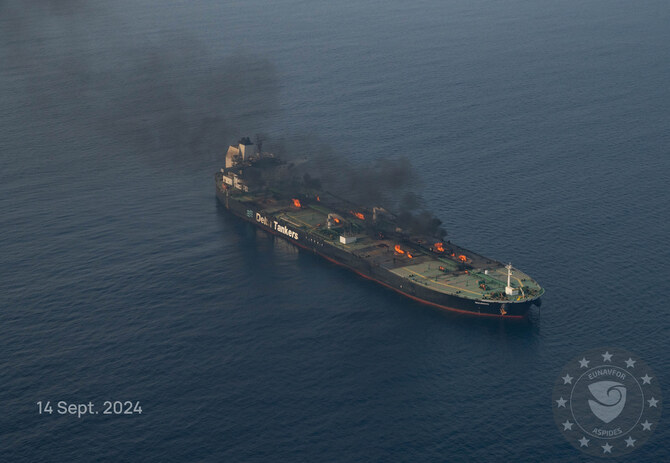
The Sounion caught fire and lost power after being attacked on August 21 off the coast of Hodeidah, a Houthi-held port city.
The following day its 25-strong crew was rescued. The rebels claimed to have detonated charges on the ship’s deck, sparking new fires.
ANA said the Sounion had begun transferring its cargo of 150,000 tons of crude to another tanker, Delta Blue, at a “safe anchorage” in the port of Suez.
“The vessel is at Suez, and as it’s at a safe anchorage, we are no longer monitoring it,” a source at Greece’s merchant marine ministry told AFP.
Citing ministry sources, ANA said the operation began on Thursday and will last between three and four weeks.
In September, EU maritime safety body Aspides said the Sounion was not under its protection at the time of the attack.
The ship’s original course “was a bit of a mystery,” the ministry source told AFP. “We were told it was heading from Iraq to Singapore. If that were the case, how did it end up in the Red Sea?“
The operation to tow the vessel to safety in September required a tugboat escorted by three frigates, helicopters and a special forces team, ANA said.
Had the vessel broken up or exploded, it could have caused an oil spill four times larger than that caused by the Exxon Valdez in 1989 off Alaska, experts had warned.
The EU naval force was formed in February to protect merchant vessels in the Red Sea from attacks by Houthis.
The Houthis have waged a campaign against international shipping to show solidarity with Hamas in its war with Israel in the Gaza Strip.
They have been firing drones and missiles at ships in the vital commercial route, saying they are targeting vessels linked to Israel, the US and Britain.
The United States, with the support of allies led by Britain, has carried out repeated air strikes on rebel bases in Yemen.


![]()

Greek tanker crippled by Houthi militants starts oil transfer
Short Url
https://arab.news/pgrtj
Greek tanker crippled by Houthi militants starts oil transfer


Latest updates


Recommended


© 2026 SAUDI RESEARCH & PUBLISHING COMPANY, All Rights Reserved And subject to Terms of Use Agreement.