
MIAMI, Florida: Concerts and carnivals hosted at polling precincts. “Souls to the Polls” mobilizations after Sunday service. And star-studded rallies featuring Hollywood actors, business leaders, musical artists and activists.
Such seemingly disparate efforts all have a single goal: boost Black voter turnout ahead of Election Day.
How Black communities turn out in the 2024 election has been scrutinized due to the pivotal role Black voters have played in races for the White House, Congress and state legislatures across the country.
Vice President Kamala Harris, who if elected would be the second Black president, has made engaging Black voters a priority of her messaging and policy platform. Meanwhile, former president Donald Trump has sought to make inroads with Democrats’ most consistent voting bloc with unorthodox and at times controversial outreach.
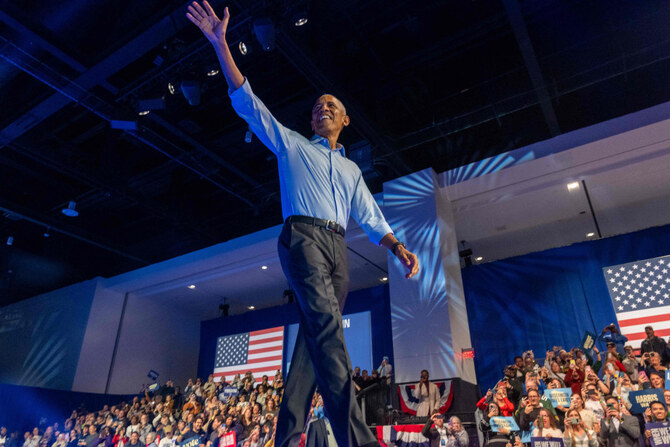
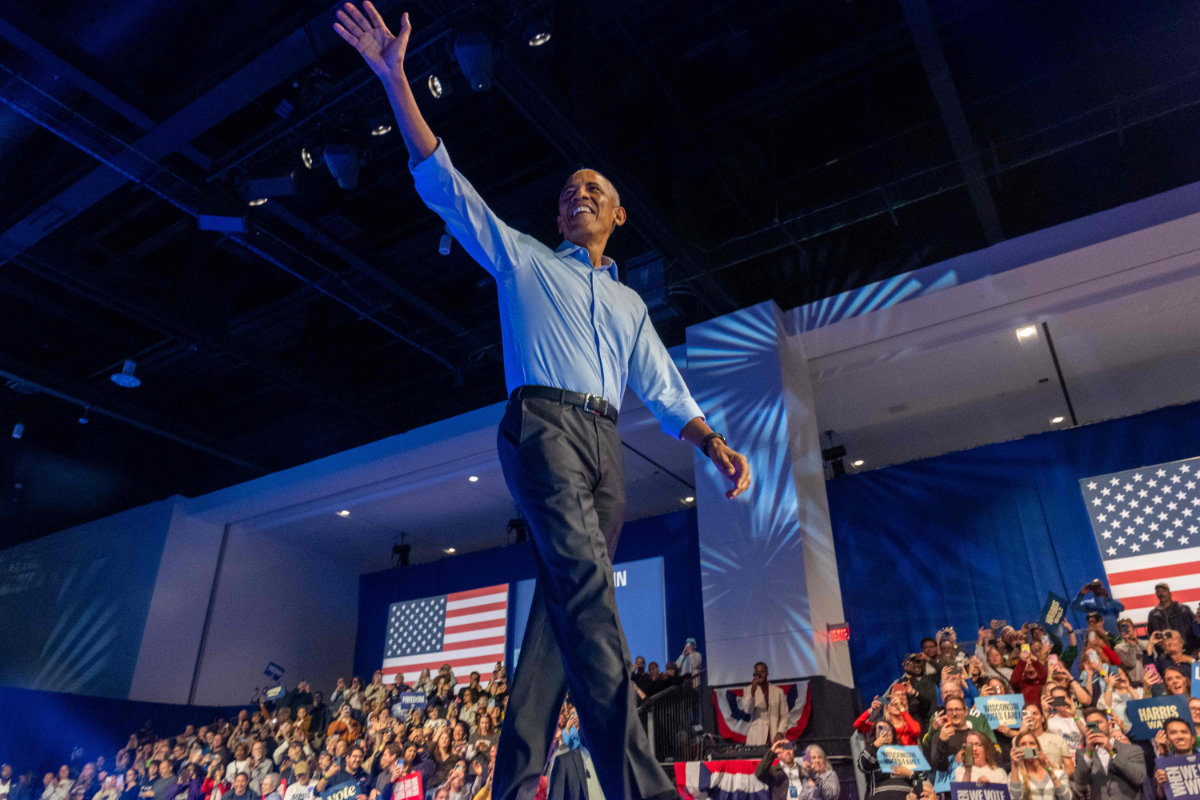
A key strategy in Harris and Democrats’ Black voter outreach includes dispatching the first Black president and his wife, the former first lady, to battleground states where winning may come down to how well the Obamas convince ambivalent or apathetic voters that they must not sit this one out.
Caption
Democratic efforts have ranged from vigorous door-knocking campaigns in Atlanta, Detroit and Philadelphia this weekend to swing state rallies. Michelle Obama rallied voters in Norristown, Pennsylvania on Saturday alongside Grammy award-winning artist Alicia Keys while Barack Obama stumped in Milwaukee on Sunday. The former first lady also conducted her own scrupulously nonpartisan rally on Tuesday where speakers evoked the South’s Civil Rights history.
“I’m always amazed at how little so many people really understand just how profoundly elections impact our daily lives,” Michelle Obama said. “Because that’s really what your vote is, it is your chance to tell folks in power what you want.”
Efforts to boost Black voter turnout often start at the community level. In Miami, members of local churches gathered Sunday at the African Heritage Cultural Arts Center and marched to a nearby early voting center as part of a Souls to the Polls event.
“It helps a lot to encourage others to vote,” said Regina Tharpe, a Miami resident. She had voted earlier, but said people “get excited when they see us walking down the street. It encourages them to get out.”
Sharina Perez, a first-time voter, brought her mother, Celina DeJesus, to vote on the last day of early voting in Florida. She said a number of issues inspired her to vote. “It was for myself, my future, my mom’s future and for the younger generation,” she said.
Organizers focused on Black communities say they are often combating exhaustion and cynicism about politics, especially among younger Black voters and Black men. But they are cautiously optimistic that their efforts will bear fruit.
“If you want the people who are going to be most impacted to come out, you have to go where they are,” said Jamarr Brown, executive director of Color of Change PAC, whose campaigns aimed at Black voters included live events in Georgia, Michigan, North Carolina, Pennsylvania and Wisconsin. The group has reached more than 8 million voters in those states through text messaging and digital in the last month, he said.
”We’ve been going to those precincts and communities, those new platforms and websites where there is so often misinformation targeting our communities,” Brown said.
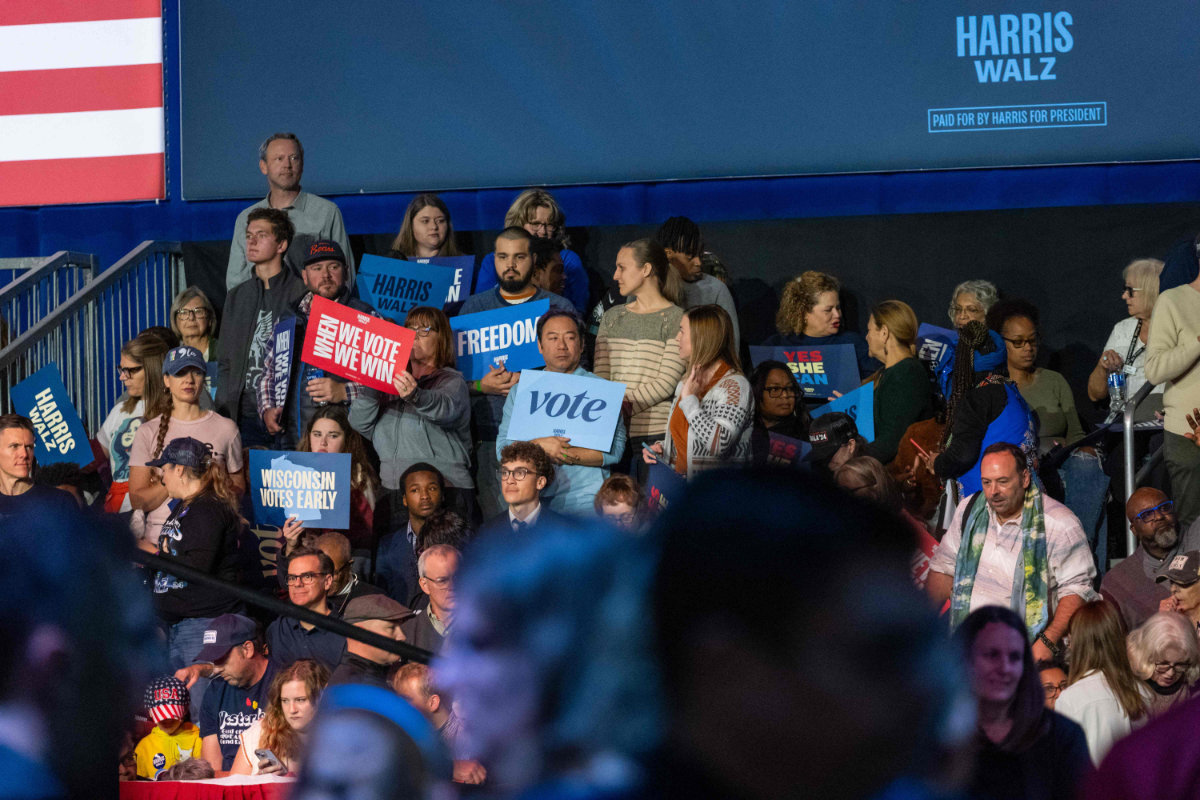
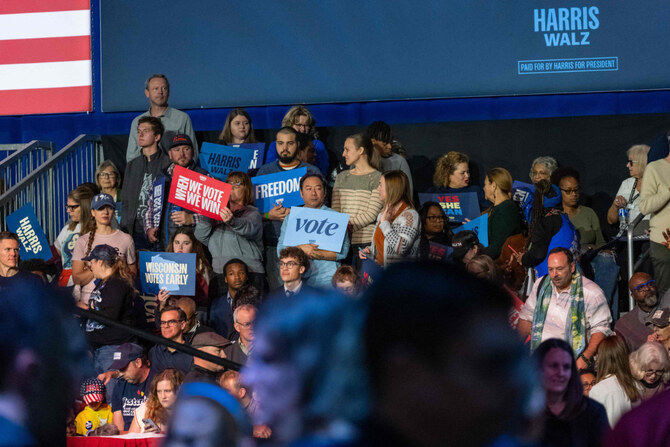
Supporters wait for former US President Barack Obama to take the stage as he campaigns in support of Democratic Presidential nominee Vice President Kamala Harris at the Baird Center on Nov. 03, 2024 in Milwaukee, Wisconsin. (Getty Images via AFP)
Other events have had a more free-flowing structure. The Detroit Pistons, for instance, hosted a “Pistonsland” festival in a majority Black neighborhood featuring musical performances from rappers including Lil Baby, carnival games, food trucks and other fanfare alongside the opportunity to cast a ballot. The nonpartisan carnival was constructed next to an early voting polling place.
“I don’t like neither one,” said Karl Patrick, a Detroit native who attended the festival. He strongly backed Harris, however, “because Trump wants to be a dictator.” Not all of his close friends had come to the same conclusion — at least one of his friends was fervently backing the former president, he said.
Black voters are the most overwhelmingly Democratic voting demographic in the country. But the Trump campaign has made a more concerted pitch to win a greater share of Black voters this year, particularly Black men.
The Trump campaign has similarly zeroed in on economic arguments. Trump has repeatedly argued that undocumented immigrants take “Black jobs,” despite economists finding the claim unfounded. The campaign believes the former president’s broader pitch on the economy, crime and traditional values has appeal in Black communities.
“If Kamala wanted to turn our country around, then she would do it now,” said Janiyah Thomas, a spokesperson for the Trump campaign. “We deserve more than token gestures — we deserve a leader who respects us, empowers us, and backs it up with action.”
GOP Reps. Byron Donalds and Wesley Hunt have emerged as key surrogates in Trump’s outreach to Black men. The campaign hosted a Black men’s barbershop roundtable with Donalds in Philadelphia in October. The Black Conservative Federation, which hosted a gala Trump attended earlier this year, held a “closing argument” event Sunday with Donalds and Hunt.
Millions of Black voters, like many Americans, have already cast a ballot in the election, including in Georgia and North Carolina.
Rep. Hank Johnson, D-Georgia, spoke about that state’s turnout at a Tuesday brunch and bus tour launch hosted by the Black Music Action Coalition.
“The truth of the matter is that Trump has been advising his people who always vote on Election Day to get out early. So they’re the ones that are making these numbers look so big. On our behalf, Black people, we have been slightly underperforming,” Johnson said.
Early Black voter turnout slightly lagged in North Carolina compared to 2020, though increased turnout at the close of early voting shrunk the gap. Whether Black voter turnout breaks records in 2020 hinges on Election Day. Many veteran Black leaders are confident the myriad strategies will bring voters out.
“Now obviously, there’s always a group of people who still don’t believe that their vote makes a difference and they lag behind,” said the Rev. Wendell Anthony, a Detroit pastor and the president of the city’s NAACP chapter. But so far, he added, “the indicators to us are such that those people are going to turn out. They’re not going to miss this this historic moment.”