

REVIEW: ‘Astro Bot’ sets new standards for platformer games

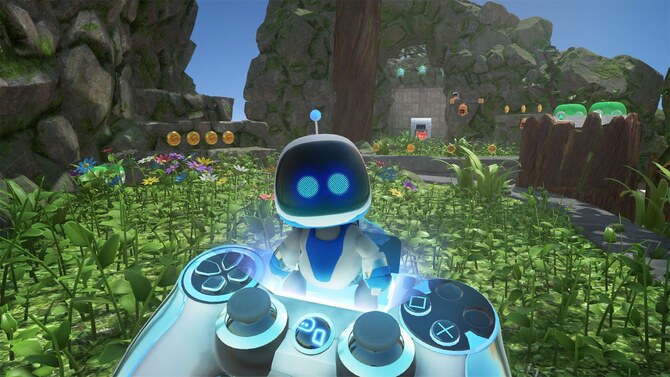
“Astro Bot,” one of Sony’s flagship titles for the PlayStation 5, raises the bar for 3D platform games. (Courtesy of Sony)
Short Url
Updated 03 November 2024
Follow

REVIEW: ‘Astro Bot’ sets new standards for platformer games

LONDON: “Astro Bot,” one of Sony’s flagship titles for the PlayStation 5, raises the bar for 3D platform games.

Positioned as a competitor to well-known characters such as Mario and Sonic, this game delivers a delightful, imaginative experience, brimming with vibrant levels, innovative mechanics, and a healthy dose of nostalgia that will appeal to younger players and longtime PlayStation fans.

The storyline is simple but leaves plenty of room for the player’s imagination. You play as Astro, a charming robot hero on a mission to rescue his fellow bots scattered across various galaxies after an attack on their spaceship. While the narrative is not groundbreaking, it serves its purpose well, keeping the focus on the gameplay.

“Astro Bot” is designed to engage players of all ages. With a 7-plus age rating, it’s accessible to a wide audience — my 4-year-old, for example, finds it captivating. The game offers about nine hours of playtime for those focused on the main story, with closer to 17 hours for completionists seeking out bonus areas and treasure.

Visually, “Astro Bot” shines. Across six distinct galaxies and more than 80 creatively designed levels, players will explore tropical paradises, icy landscapes and futuristic environments, each packed with charm and variety. The level design ensures the game stays fresh throughout, keeping players engaged.

One of the game’s standout features is its exceptional use of the PS5’s Dual Sense controller. Haptic feedback and adaptive triggers make Astro’s movements feel more immersive than ever. New gadgets and abilities, like animal-themed power-ups, are seamlessly integrated into the gameplay, adding depth and variety. The way the game maximizes the controller’s features makes every jump, glide and gadget interaction feel responsive and exciting.

“Astro Bot” is also a treasure trove for PlayStation history enthusiasts. With more than 150 iconic characters to collect — like PaRappa the Rapper, Kratos from “God of War” and Nathan Drake from “Uncharted” — the game taps into nostalgia that will bring a smile to long-time fans.

Accompanied by a playful soundtrack composed by Kenny C.M. Young, which is available on platforms such as Spotify and Apple Music, the overall experience is joyful and engaging.

In short, “Astro Bot” is a must-play for PS5 owners. It provides fun for all ages and sets a new benchmark for platforming games.


Review: ‘Sorry, Baby’ by Eva Victor

Eva Victor appears in Sorry, Baby by Eva Victor, an official selection of the 2025 Sundance Film Festival. (Supplied)
Updated 27 December 2025
Follow

Review: ‘Sorry, Baby’ by Eva Victor

  • Victor makes a deliberate narrative choice; we never witness the violence of what happens to her character

There is a bravery in “Sorry, Baby” that comes not from what the film shows, but from what it withholds. 

Written, directed by, and starring Eva Victor, it is one of the most talked-about indie films of the year, winning the Waldo Salt Screenwriting Award at Sundance and gathering momentum with nominations, including nods at the Golden Globes and Gotham Awards. 

The film is both incisive and tender in its exploration of trauma, friendship, and the long, winding road toward healing. It follows Agnes, a young professor of literature trying to pick up the pieces after a disturbing incident in grad school. 

Victor makes a deliberate narrative choice; we never witness the violence of what happens to her character. The story centers on Agnes’ perspective in her own words, even as she struggles to name it at various points in the film. 

There is a generosity to Victor’s storytelling and a refusal to reduce the narrative to trauma alone. Instead we witness the breadth of human experience, from heartbreak and loneliness to joy and the sustaining power of friendship. These themes are supported by dialogue and camerawork that incorporates silences and stillness as much as the power of words and movement. 

The film captures the messy, beautiful ways people care for one another. Supporting performances — particularly by “Mickey 17” actor Naomi Ackie who plays the best friend Lydia — and encounters with strangers and a kitten, reinforce the story’s celebration of solidarity and community. 

“Sorry, Baby” reminds us that human resilience is rarely entirely solitary; it is nurtured through acts of care, intimacy and tenderness.

A pivotal scene between Agnes and her friend’s newborn inspires the film’s title. A single, reassuring line gently speaks a pure and simple truth: “I know you’re scared … but you’re OK.” 

It is a reminder that in the end, no matter how dark life gets, it goes on, and so does the human capacity to love.