

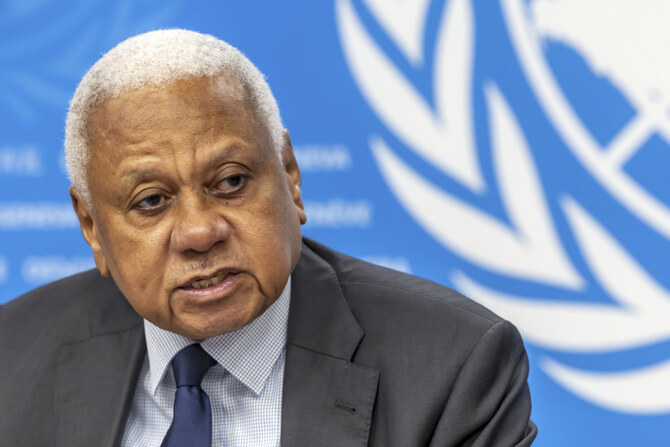

GENEVA: The head of a UN-backed fact-finding team looking into human rights violations and abuses in Sudan said Friday it found the paramilitary Rapid Support Forces responsible for large-scale sexual violence in areas that it controls.
Mohamed Chande Othman has denounced “staggering violence” in Sudan since war broke out more than 18 months ago between the Sudanese military and the RSF, starting with open fighting in the capital, Khartoum, that later spread across the country.
“We said in our report that we attribute sexual gender-based violence to RSF in West Darfur, in Darfur, in greater Khartoum, and in Al-Gezira (state),” the Tanzanian lawyer said Friday by phone from Zimbabwe, where he was attending a conference.
However, Othman said a renewed mandate from the UN Human Rights Council would allow his team of independent experts to investigate “credible” allegations of sexual exploitation by the Sudanese armed forces as well.
Sudan plunged into conflict in mid-April 2023, when long-simmering tensions between its military and paramilitary leaders broke out in the capital Khartoum and spread to other regions including western Darfur. The war has killed more than 24,000 people so far, according to Armed Conflict Location and Event Data, a group monitoring the conflict since it started.
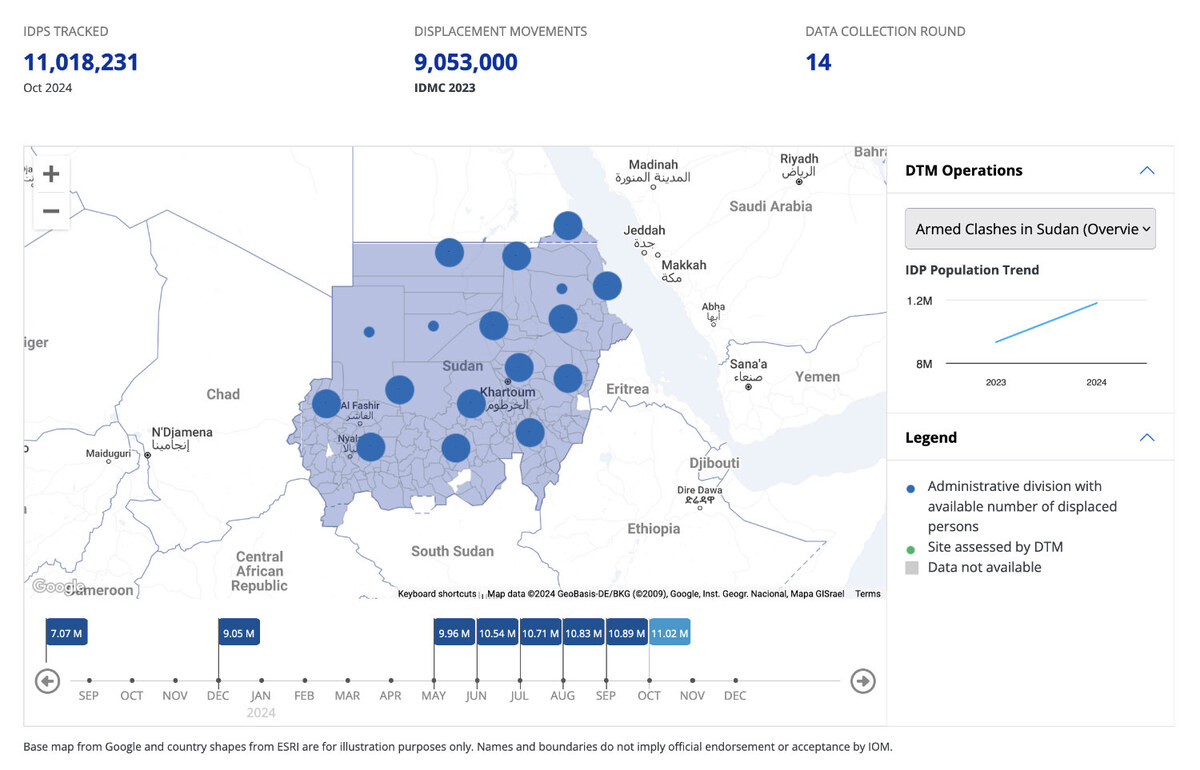
Infographic courtesy of UN International Migration Office
The fact-finding mission on Tuesday released a more comprehensive version of its report presented in September to the rights council, which has 47 member countries. The broader report cited gang rapes, sexual slavery and the abduction of victims in areas the RSF controls.
“It’s important to highlight the horrendous nature and the widespread nature — the patterns of violence — that were committed,” Othman said.
His team found the sexual violence and allegations of enforced marriages and human trafficking across borders for sexual purposes took place mostly during invasions of towns and cities.
“Victims and witnesses consistently reported that perpetrators threatened them with weapons, including firearms, knives and whips to intimidate and coerce them,” the latest report said, citing violence like punching, beatings with sticks, and lashing before and during rape.
“Men and boys were also reportedly targeted while in detention with sexual violence, including rape, threats of rape, forced nudity and beating on the genitals, requiring further investigation,” it added.
The violence in Sudan has been unrelenting. On Sunday, a doctors group and the United Nations reported that RSF fighters in east central Sudan’s Jazirah state carried out a multi-day attack that killed more than 120 people in one town.
On Tuesday, the UN migration agency said 14 million people — or over 30 percent of the country’s population — have been displaced either within Sudan or abroad because of the conflict, making it the world’s largest displacement crisis.
UN Secretary-General Antonio Guterres strongly condemned the RSF attacks in Jazirah and the appalling reports of a large number of killings, detentions and acts of sexual violence against women and girls as well as the looting of homes and markets, and the burning of farms, his spokesman said.
“Such acts may constitute serious violations of international humanitarian law and human rights law,” UN spokesman Stephane Dujarric said. “Perpetrators of such serious violations must be held accountable.”
The UN chief reiterated his call for a ceasefire, expressed alarm at the worsening humanitarian situation in Sudan and demanded that all parties facilitate the delivery of humanitarian aid, Dujarric said.


