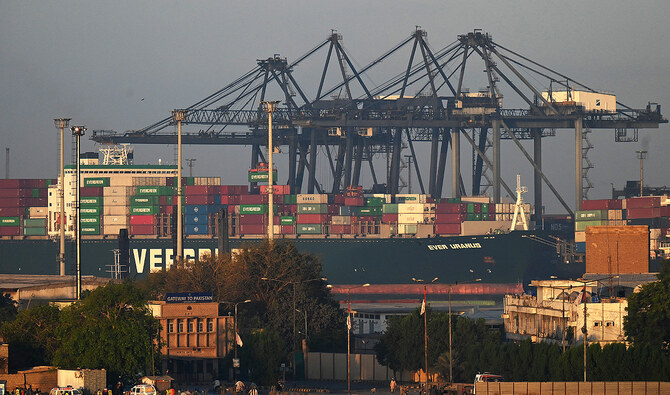
ISLAMABAD: Pakistan is formulating a transshipment policy aimed at enhancing its role in regional and international trade, state media reported on Friday, as the country seeks to gain financial strength by embedding itself more firmly within the global economic system.
International transshipment nodes enable the transfer of cargo from one vessel to another, facilitating regional and international trade by efficiently directing its flow. The process can be lucrative for Pakistan, whose maritime minister announced the government’s decision to draft the policy during parliamentary proceedings.
Last year in June, Abu Dhabi Ports Group signed a 50-year concession agreement with Karachi Port Trust to operate a container terminal, committing to invest $220 million over the first decade.
Subsequently, APM Terminals, a subsidiary of Maersk, expressed interest in developing Pakistan’s first green transshipment terminal in Karachi earlier this year in May, reflecting growing international confidence in Pakistan’s maritime potential.
“Minister for Maritime Affairs Qaiser Ahmad Shaikh told the House during the Question Hour that this policy will provide clear guidelines and incentives for transshipment activities,” according to Radio Pakistan.
“He said it will also streamline transshipment operations at Pakistani ports, resulting in economic growth and job opportunities,” the report added.
Prime Minister Shehbaz Sharif has also actively promoted Pakistan’s ports to Central Asian nations, positioning them as conduits to global markets.
During his visit to Tajikistan in July, he emphasized his government’s commitment to enhancing regional connectivity and integration, highlighting the strategic importance of Pakistan’s ports for the region’s landlocked economies.
The maritime minister said a comprehensive transshipment policy was expected to further solidify Pakistan’s position as a pivotal trade and transit hub in South Asia.


![]()

Pakistan announces drafting of transshipment policy to boost role in global trade
Short Url
https://arab.news/mwgd4
Pakistan announces drafting of transshipment policy to boost role in global trade
- International companies have shown interest in Pakistan’s maritime and transshipment potential
- Abu Dhabi Ports has signed a deal to operate a Karachi container terminal, will invest $220 million
Latest updates


Recommended


© 2026 SAUDI RESEARCH & PUBLISHING COMPANY, All Rights Reserved And subject to Terms of Use Agreement.