Riyadh Air orders 60 next-generation Airbus A321 aircraft

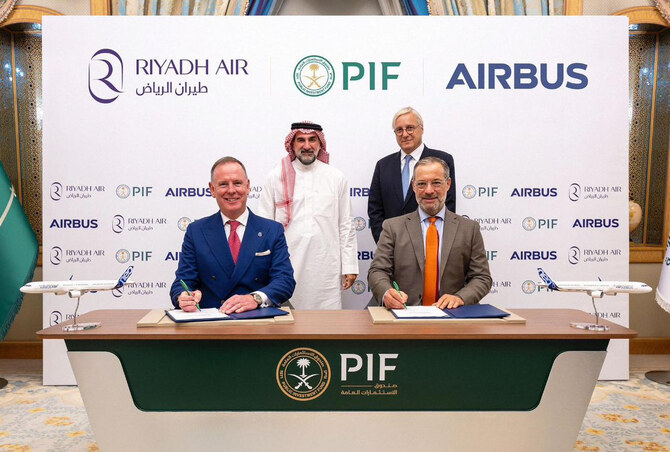
The deal was signed by Tony Douglas, CEO of Riyadh Air, and Christian Scherer, CEO Commercial Aircraft of Airbus, at the 8th Future Investment Initiative in the Kingdom’s capital city. Supplied
Short Url
Updated 30 October 2024
Follow

Riyadh Air orders 60 next-generation Airbus A321 aircraft

  • Strengthening the operations of Riyadh Air is crucial for Saudi Arabia as the Kingdom is evolving itself as a global tourism destination
  • New order will also support the airline’s long-term goal of creating 200,000 jobs and delivering enhanced connectivity

RIYADH: Saudi Arabia’s Riyadh Air, a subsidiary of the Public Investment Fund, has signed an agreement to purchase 60 Airbus A321neo single-aisle aircraft, as it plans to commence its operations in 2025. 

According to a press statement, the deal was signed by Tony Douglas, CEO of Riyadh Air, and Christian Scherer, CEO of Commercial Aircraft of Airbus, at the 8th Future Investment Initiative in the Kingdom’s capital city.  

Strengthening the operations of Riyadh Air is crucial for Saudi Arabia as the Kingdom is evolving as a global tourism destination, aligned with the economic diversification goals outlined in the Vision 2030 program. 

In September, the airline launched its first non-commercial flight from Riyadh’s King Khalid International Airport as part of the certification process.

Last year, the airlines had ordered 39 Boeing 787 Dreamliners with options for 33 more, thus bringing the estimated fleet capacity to 132.


The Airbus A321neo airliner is widely considered the most sustainable and efficient aircraft in the aviation industry. AN/Abdulrahman bin Shalhuob

“We are pleased to embark on another key milestone in Riyadh Air’s journey with the carrier’s second major fleet order, this time in partnership with Airbus,” said Yasir Al-Rumayyan, governor of PIF and chairman of Riyadh Air. 

He added: “This deal underlines the airline’s ambitious intentions in advance of next year’s launch as it builds a comprehensive international network and establishes Riyadh as a major strategic global aviation hub.”

The Airbus A321neo airliner is widely considered the most sustainable and efficient aircraft in the aviation industry, and it is expected to fulfill Riyadh Air’s ambition to cover 100 destinations worldwide by the end of this decade, the press statement said. 

Riyadh Air added that the new order will also support the airline’s long-term goal of creating 200,000 jobs and delivering enhanced connectivity to Riyadh to the world. 

“This order will not only enable us to support economic growth in the aviation industry, it will also ensure Riyadh Air operates one of the most sustainable fleets in the industry and be instrumental in helping Saudi Arabia achieve its net-zero emissions goals,” said the CEO of Riyadh Air. 

Douglas added: “This deal strongly reinforces the positive economic impact of Saudi Arabia’s newest airline on both a global and local scale and helps facilitate the fast-growing local aviation ecosystem.” 

The chief of Commercial Aircraft at Airbus said that the latest generation A321neo aircraft will bring exceptional efficiency to Riyadh Air’s operations and comfort to its passengers. 

“We look forward to working together to support the incredible growth of Saudi aviation,” added Scherer. 


ACWA Power completes refinancing of Rabigh 3 Independent Water Project

Updated 16 sec ago
Follow

ACWA Power completes refinancing of Rabigh 3 Independent Water Project

RIYADH: Saudi utility giant ACWA Power has completed the refinancing of the Rabigh 3 Independent Water Project, located in the western region of the Kingdom. 

Rabigh 3 is a seawater desalination plant with a capacity of 600,000 cubic meters of potable water per day, using reverse osmosis technology.

In a press statement, the Tadawul-listed company said the refinancing was executed through a capital-markets-led approach, anchored by the issuance of a long-term senior secured project bond. 

The refinancing was anchored by investment firm KKR as the largest lender, with participation from other investors including Barings, Hong Kong Mortgage Corp., and Clifford Capital, as well as Sumitomo Mitsui Trust Bank, and SBI Shinsei Bank. There was also regional support from Riyadh Bank and Abu Dhabi Commercial Bank. 

“The transaction highlights ACWA Power’s continued innovation in infrastructure financing, combining capital-markets instruments with strong project-level credit and global institutional participation,” said Marco Arcelli, the company’s CEO.

He added: “By meeting international rating agencies’ and debt investors’ expectations, ACWA Power has reinforced the bankability of large-scale desalination projects and expanded access to long-term funding for essential infrastructure.” 

Arcelli also said the refinancing supports the company’s ambition to continue providing more than half of Saudi Arabia’s desalinated water capacity. 

The new transaction replaces the project’s previous debt facility with a diversified financing structure that broadens the investor base and enhances long-term funding resilience. 

The statement added that the refinancing underscores ACWA Power’s ability to structure complex financings that meet the requirements of global institutional investors while aligning with international sustainability standards. 

“Rabigh 3 IWP is a cornerstone asset for water security in the Kingdom, and the strong participation from international investors reflects its quality, reliability, and long-term value,” said Abdulhameed Al-Muhaidib, chief financial officer at ACWA Power. 

He added: “This transaction demonstrates ACWA Power’s commitment to responsible finance, sustainable water infrastructure, and long-term environmental stewardship. We’re very proud to issue our first-ever blue bond that attracts new international investors to our Saudi fleet.” 

The refinancing marks ACWA Power’s first alignment with the International Finance Corporation’s Blue Finance Guidelines, reinforcing the plant’s strong operational performance while supporting Saudi Arabia’s Vision 2030 infrastructure goals.