Pakistan receiving 45,000-50,000 applications for new passports daily— interior minister

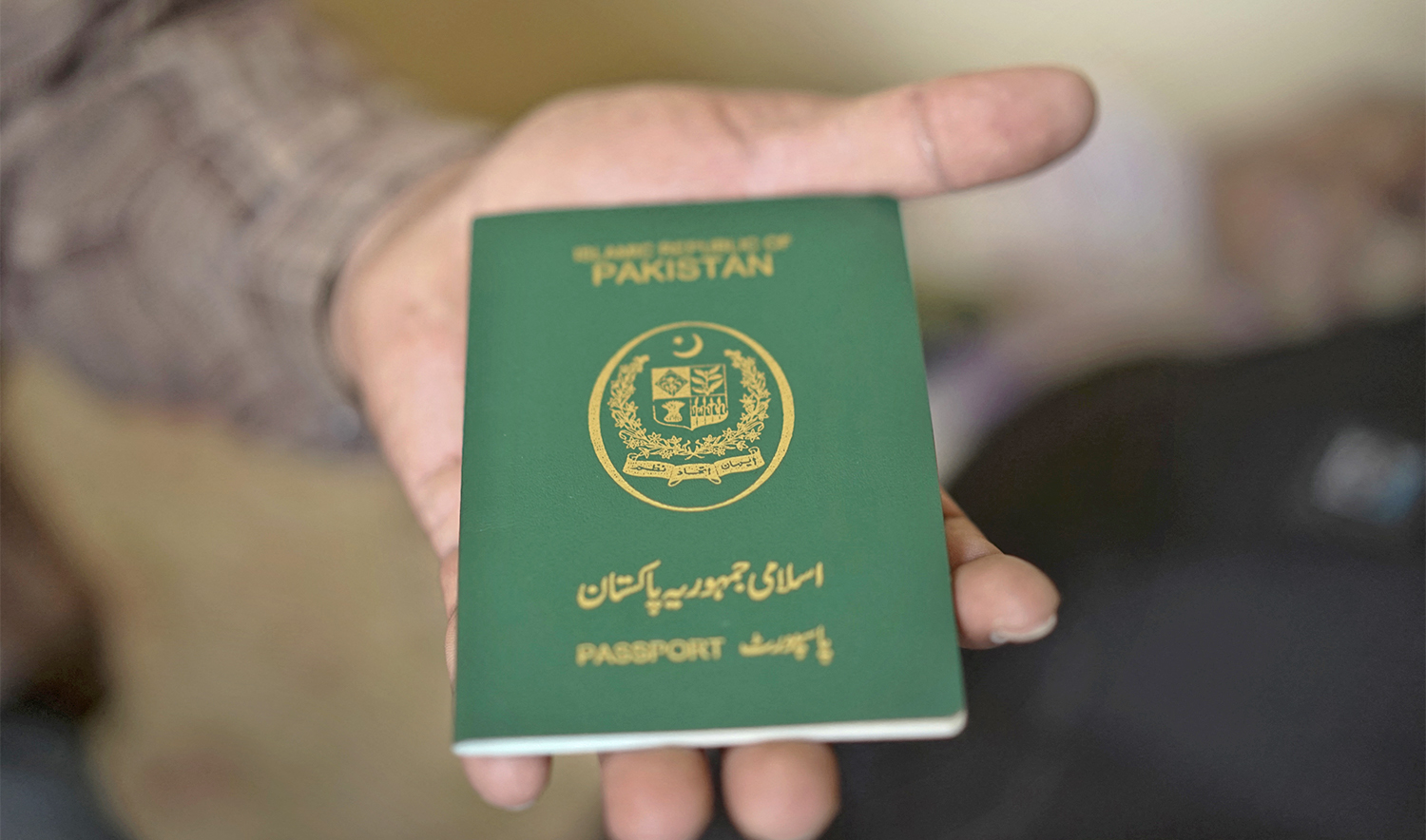
This photo taken on November 3, 2018 shows a Pakistani passport in Bangkok. (AFP/File)
Short Url
Updated 28 October 2024
Follow

Pakistan receiving 45,000-50,000 applications for new passports daily— interior minister

  • Mohsin Naqvi says Pakistan’s production facility can only print 20,000-22,000 new passports daily, leading to backlog
  • Says government has made passport production facility operational 24 hours throughout the week to increase printing 

ISLAMABAD: Pakistan’s Interior Minister Mohsin Raza Naqvi recently disclosed that his ministry was receiving a “very high trend” of around 45,000-50,000 applications for new passports daily, saying that the country’s passport production equipment could not match the number due to which a backlog had accumulated. 

During a National Assembly session on Friday, the minister was asked whether recently passports were issued with “inordinate delay” against the normal time period and whether such a slow process was still in place. 

Naqvi responded that the Machine Readable Passport (MRP) facility had been established in 2004 to cater to only 30 regional passport offices within Pakistan and ten Pakistan missions abroad. He said over time, the passport offices increased to 223 while Pakistan’s missions abroad surged to 93. However, he said the passport production facility was never expanded nor equipped with the technology or equipment to make the printing process “faster and better.” 

“Presently, the department is facing a very high trend of daily passport applications around 45,000 to 50,000 thousand from field formations, whereas, the production facility can merely cater for 20,000 to 22,000 passports per day,” Naqvi said. “Resultantly, the routine backlog is being accumulated.” 

He said the government has made the passport production facility operational 24 hours during all seven days of the week in three shifts to cater to applicants on a war footing basis. 

When asked whether the government was charging people exorbitant fees to issue passports on an urgent basis, the minister responded by saying that it is up to the applicants to choose and apply for passports according to their urgency under the prescribed categories of “normal,” “urgent” and “fast track.”

The development takes place weeks after local media reports published stories of citizens facing trouble procuring passports, some of which had been delayed for up to two months.

Among those who suffered delays in receiving passports were patients needing urgent medical treatment abroad, students seeking admission to foreign universities and individuals pursuing work visas, Pakistani English-language daily Dawn reported in September. 


Pakistan’s Punjab deploys satellites, drones, AI to combat smog

Updated 5 sec ago
Follow

Pakistan’s Punjab deploys satellites, drones, AI to combat smog

  • Senior minister warns industrial masks may become necessary without a change in public attitudes toward pollution
  • Cities in Punjab face worsening smog each winter, driven by crop burning, vehicle emissions and industrial pollution

ISLAMABAD: Punjab Senior Minister Marriyum Aurangzeb on Wednesday said Pakistan’s most populous province deployed satellites, drones and artificial intelligence to tackle smog, warning that industrial masks may become necessary if public attitudes toward air pollution did not change.

Punjab cities face worsening smog each winter, driven by crop burning, vehicle emissions and industrial pollution that threatens public health and daily life. The smog season typically begins in late October, peaks between November and January and can persist through February.

Smog causes symptoms such as sore throats, eye irritation and respiratory illnesses, while prolonged exposure raises the risk of stroke, heart disease and lung cancer. Children are more vulnerable due to higher breathing rates and weaker immune systems.

“We have the AI machine-learning forecasting system in place, surveillance drones and technology cameras,” Aurangzeb said while addressing an event.

“At present, what is considered one of the world’s best environmental protection forces — with training, equipment, technology and digitally integrated data — is operating in Punjab,” she added.

Aurangzeb said surveillance is now being carried out through drones.

“There is monitoring, technology, cameras,” she continued. “Everything is digital.”

The minister maintained the eastern corridor from India was a major source of smoke which becomes active during the winter season.

She said this was the first time a complete testing system was introduced by the Environmental Protection Agency to measure pollution released by vehicles.

She added the government has loaned 5,000 super seeders to farmers, which are agricultural machines that plant crops directly into fields without removing leftover stubble, reducing crop burning, and helping curb winter smog.

Aurangzeb warned the situation could reach a point where people may have to use industrial masks and carry therm around like a “purse or wallet.”

“This will become a mandatory item if we do not change our attitudes and habits toward air quality, climate and conservation.”

Pakistan’s main urban centers routinely rank among the most polluted cities in the world, with vehicular emissions remaining one of the top contributors to air pollution.

The severe air pollution also undermines economic productivity and diminishes the quality of life for millions of residents.