



ISLAMABAD: Chinese Ambassador to Pakistan Jiang Zaidong has urged the Pakistani government to arrest perpetrators of attacks on Chinese nationals working in the South Asian country, Pakistani state media reported on Friday.
China is a major ally and investor in Pakistan that has pledged over $65 billion in investment in road, infrastructure and development projects under the China-Pakistan Economic Corridor (CPEC) project. CPEC is a part of the Belt and Road Initiative, a massive China-led infrastructure project that aims to stretch around the globe.
Though time-tested allies, recent security challenges have put a slight strain on Pakistan’s ties with China, with separatist and religiously motivated militants attacking Chinese projects in Pakistan in recent years. A suicide blast claimed by the separatist Balochistan Liberation Army (BLA) killed two Chinese nationals in Karachi this month, while five Chinese workers were killed in a suicide bombing in March in northwest Pakistan.
Beijing has called on Islamabad to ensure security for its citizens in Pakistan and the South Asian nation has in turn sought to ease Chinese fears, vowing to provide fool-proof security to Chinese nationals working in the country.
“The Chinese people who come to Pakistan are helping build its infrastructure,” Ambassador Jiang was quoted as saying by the Pakistani state-run APP news agency. “They are innocent and their families deserve protection.”
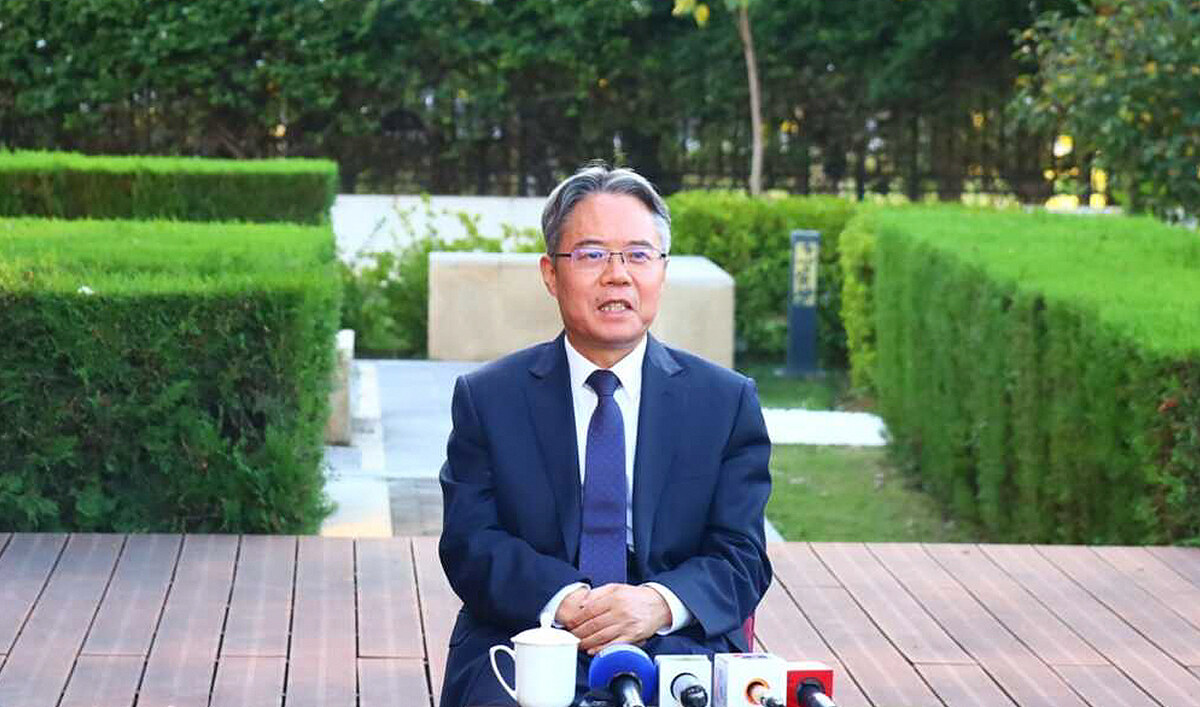
In this handout photo, taken and released by the Chinese Embassy in Pakistan on October 25, 2024, China’s Ambassador to Pakistan Jiang Zaidong speaks during a meeting with a group of Pakistani journalists at the Chinese Embassy in Islamabad. (Photo courtesy: Chinese embassy)
He reiterated President Xi Jinping’s stance that “security is the guarantee for development” and stressed the need for strict action against militant groups responsible for attacks against Chinese nationals and projects in Pakistan, according to the report.
The ambassador noted that CPEC had entered a new phase of development, with cooperation extending into emerging sectors such as electric vehicles and renewable energy. He expressed China’s desire to strengthen cooperation with Pakistan in multilateral forums.
The development comes as Pakistan, which has been reeling from a prolonged economic crisis, has sought to enhance bilateral trade and investment cooperation with friendly countries, including China, Saudi Arabia, UAE and others, to bolster its fragile economy.
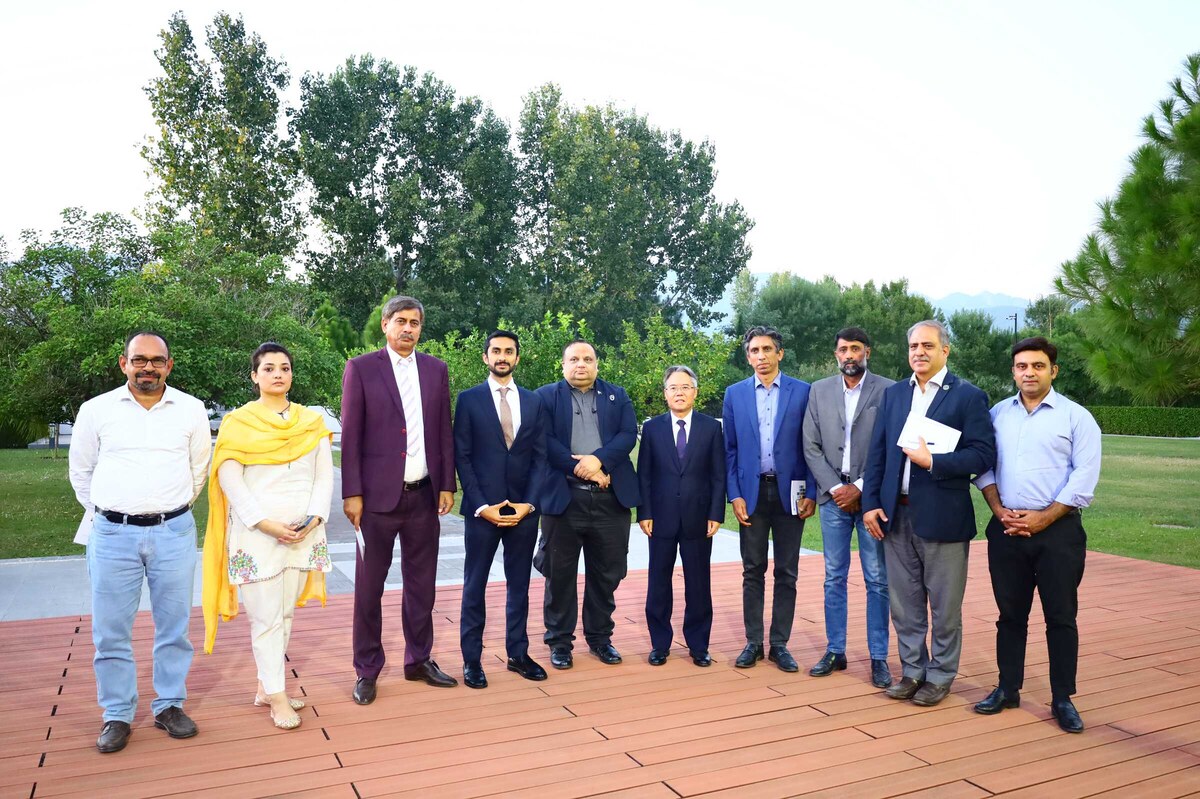
In this handout photo, taken and released by the Chinese Embassy in Pakistan on October 25, 2024, China’s Ambassador to Pakistan Jiang Zaidong gestures for a group photograph with a group of Pakistani journalists at the Chinese Embassy in Islamabad. (Photo courtesy: Chinese embassy)
Earlier this month, Pakistani state media reported that a Chinese development association would invest up to $13 billion in a free trade zone in Pakistan in the next five years.
“China Asia Economic Development Association (CAEDA) will make an investment of 13 billion dollars in free trade zone of Pakistan in the next five years,” the Radio Pakistan broadcaster reported.
“The initial layout of this investment is between 8 to 13 billion dollars while it is expected to reach 30 billion dollars.”
The free trade zone is aimed at catering to Pakistan’s domestic needs and those of the global market, while a duty-free shopping mall will also be a part of the zone where international goods will be available for Pakistani citizens.


