


Robert Sapolsky is a Stanford neuroscientist who has spent much of his adult life studying the behavior of baboons in Africa.
Reflecting on the similarities between the savannah-dwelling primates and our own species, Sapolsky rose to YouTube fame with a series of Stanford lectures on human behavior in the early 2010s.
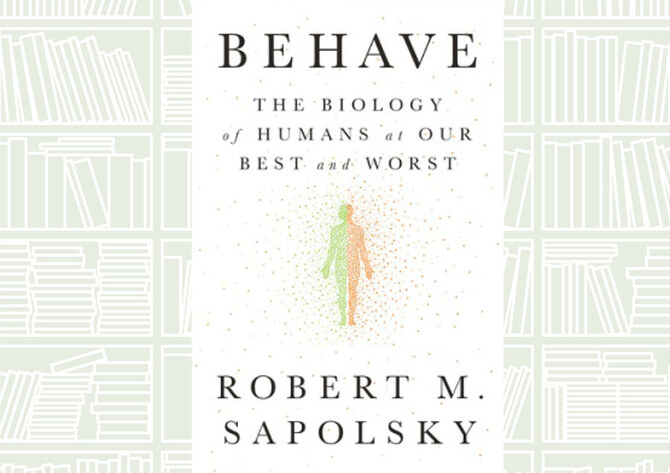
His 2017 New York Times bestseller “Behave” is the product of a lifetime of research, capitalizing on his internet popularity.
Structured into sections that attempt to explain human behavior over different spans of time — starting with studies of brain chemistry moments before an action takes place, and ranging all the way through to the history of human evolution — the book mixes in-depth scientific fact with broader views of culture and society.
If the reader can wade through the technical descriptions of dendrites, axons, and action potentials, they are rewarded with Sapolsky’s profound observations on what exactly it means to be human.
Without giving too much away, the scientific studies presented in the first half of the book are later revealed to be evidence for some of Sapolsky’s more unorthodox theories on free will, society, and the justice system which, if presented without the preceding pages of argument, might not be quite as digestible.
Sapolsky makes the reader eat their vegetables, so to speak, with the science, but the resounding feeling they are left with comes from the dessert: his heartfelt take on compassion, morality, and the progress that humankind is making in becoming kinder despite the darker aspects of our nature.


