UK surveillance missions over Gaza could support ICC war crimes investigation, Defense Ministry says

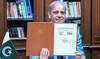
The UK’s Ministry of Defense has confirmed that intelligence gathered by Royal Air Force surveillance flights over Gaza could be shared with the International Criminal Court to support potential investigations into war crimes. (AP)
Short Url
Updated 25 October 2024
Follow

UK surveillance missions over Gaza could support ICC war crimes investigation, Defense Ministry says

  • Spokesperson for MOD said while primary mission remains hostage rescue, UK would consider requests from international authorities for evidence

LONDON: The UK’s Ministry of Defense has confirmed that intelligence gathered by Royal Air Force surveillance flights over Gaza could be shared with the International Criminal Court to support potential investigations into war crimes.

The RAF has reportedly flown more than 600 missions since December, using Shadow R1 aircraft, to gather intelligence aimed exclusively at aiding in the recovery of hostages taken during the Oct. 7, 2023 attack on Israel by Hamas, the MOD said.

A spokesperson for the MOD explained that, while the primary mission remains hostage rescue, the UK would consider requests from international authorities for evidence that might aid war crimes investigations.

“In line with our international obligations, we would consider any formal request from the International Criminal Court to provide information relating to investigations into war crimes,” the spokesperson said, affirming the UK’s commitment to international humanitarian law.

The intelligence collected by the RAF may provide critical insight into conditions in Gaza amid escalating hostilities.

The MOD underscored, however, that UK armed forces are not combatants in the conflict.

“Our mandate is narrowly defined to focus on securing the release of the hostages only, including British nationals,” the spokesperson added.

“The RAF routinely conducts unarmed flights for this sole purpose, and any intelligence provided to our allies is shared only where we are satisfied it will be used in accordance with international humanitarian law.”

Recent reports have drawn attention to the scale of these intelligence operations, with data from a Canadian researcher suggesting over 250 sorties had been completed by mid-2024. Al Jazeera reported that more than 600 flights have been conducted, reflecting the UK’s concerted effort to locate hostages amid an intensifying conflict.

The ICC has expressed interest in addressing alleged war crimes on both sides.

In May, the ICC prosecutor announced intentions to seek arrest warrants for Israeli Prime Minister Benjamin Netanyahu and Defense Minister Yoav Gallant, accusing them of “starvation of civilians as a method of warfare” and “intentionally directing attacks against a civilian population” since Oct. 8, 2023, one day after Hamas’ initial attack.

Arrest warrants were also sought for senior Hamas leaders, including Yahya Sinwar and Ismail Haniyeh, who were accused of crimes against humanity. Both leaders were killed in recent Israeli strikes.

The UK Defense Journal highlighted the continuing scale of RAF missions in the region, indicating that British intelligence efforts remain focused on securing the safe release of hostages, with no involvement in direct combat or provision of weaponry.

This approach, the MOD emphasized, reflects a humanitarian mission with strict adherence to international legal standards.


2025 among world’s three hottest years on record, WMO says

Updated 14 January 2026
Follow

2025 among world’s three hottest years on record, WMO says

  • All eight datasets confirmed that the last three years were the planet’s three hottest since records began, the WMO said
  • The slight differences in the datasets’ rankings reflect their different methodologies and types of measurements

BRUSSELS: Last year was among the planet’s three warmest on record, the World Meteorological Organization said on Wednesday, as EU scientists also confirmed average temperatures have now exceeded 1.5 degrees Celsius of global warming for the longest since records began.
The WMO, which consolidates eight climate datasets from around the world, said six of them — including the European Union’s European Center for Medium-Range Weather Forecasts (ECMWF) and the British national weather service — had ranked 2025 as the third warmest, while two placed it as the second warmest in the 176-year record.
All eight datasets confirmed that the last three years were the planet’s three hottest since records began, the WMO said. The warmest year on record was 2024.

THREE-YEAR PERIOD ABOVE 1.5 C AVERAGE ⁠WARMING LEVEL
The slight differences in the datasets’ rankings reflect their different methodologies and types of measurements — which include satellite data and readings from weather stations.
ECMWF said 2025 also rounded out the first three-year period in which the average global temperature was 1.5 C above the pre-industrial era — the limit beyond which scientists expect global warming will unleash severe impacts, some of them irreversible.
“1.5 C is not a cliff edge. However, we know that every fraction of a degree matters, particularly for worsening extreme weather events,” said Samantha Burgess, strategic ⁠lead for climate at ECMWF.
Burgess said she expected 2026 to be among the planet’s five warmest years.

CHOICE OF HOW TO MANAGE TEMPERATURE OVERSHOOT
Governments pledged under the 2015 Paris Agreement to try to avoid exceeding 1.5 C of global warming, measured as a decades-long average temperature compared with pre-industrial temperatures.
But their failure to reduce greenhouse gas emissions means that target could now be breached before 2030 — a decade earlier than had been predicted when the Paris accord was signed in 2015, ECMWF said. “We are bound to pass it,” said Carlo Buontempo, director of the EU’s Copernicus Climate Change Service. “The choice we now have is how to best manage the inevitable overshoot and its consequences on societies and natural systems.”
Currently, the world’s long-term warming level is about 1.4 C above the pre-industrial era, ECMWF said. Measured on a short-term ⁠basis, average annual temperatures breached 1.5 C for the first time in 2024.

EXTREME WEATHER
Exceeding the long-term 1.5 C limit would lead to more extreme and widespread impacts, including hotter and longer heatwaves, and more powerful storms and floods. Already in 2025, wildfires in Europe produced the highest total emissions on record, while scientific studies confirmed specific weather events were made worse by climate change, including Hurricane Melissa in the Caribbean and monsoon rains in Pakistan which killed more than 1,000 people in floods.
Despite these worsening impacts, climate science is facing political pushback. US President Donald Trump, who has called climate change “the greatest con job,” last week withdrew from dozens of UN entities including the scientific Intergovernmental Panel on Climate Change.
The long-established consensus among the world’s scientists is that climate change is real, mostly caused by humans, and getting worse. Its main cause is greenhouse gas emissions from burning fossil fuels like coal, oil and gas, which trap heat in the atmosphere.