



RIYADH: Saudi Arabia is rapidly positioning itself as a global leader in wellness tourism, a sector that promises significant economic returns while aligning with the Kingdom’s Vision 2030.
With the market expected to reach $1.1 trillion by 2025, the Kingdom is strategically focusing on this burgeoning industry to diversify its economy and enhance the quality of life for residents and visitors, a report by Red Sea Global highlighted.
The rise of wellness tourism in Saudi Arabia reflects a broader transformation within the Kingdom as it seeks to establish itself as a premier destination for global travelers seeking health, well-being, and cultural enrichment.
Wellness tourism: A lucrative market
The global wellness industry, currently valued at $5.6 trillion, is projected to grow to $8.5 trillion by 2027.
This growth is being driven by an increasing global focus on fitness and well-being, particularly in the wake of the COVID-19 pandemic, which has heightened awareness around the importance of physical and mental health.
Within this expansive market, wellness tourism alone was valued at $436 billion in 2020 and is expected to grow at an annual rate of 21 percent by 2025.
This rapid growth underscores the significant opportunities that this industry presents for countries such as Saudi Arabia, which are keen to diversify their economies beyond oil.
The Kingdom is harnessing this growth to drive tourism’s contribution to the national GDP, a key objective under Vision 2030, which aims to increase its share of the economy from 3 percent to 10 percent by the end of the decade.
The Kingdom’s focus on wellness tourism is not just about capitalizing on a lucrative market but also about transforming the overall landscape by offering unique, high-quality experiences that cater to this growing global demand.
Speaking to Arab News, Fahad Mushayt, CEO of the Saudi Tourism Investment Co., also known as ASFAR, emphasized the economic potential of this sector, saying: “International wellness tourists spend, on average, 35 percent more than traditional leisure travelers. This is a market segment that we cannot afford to ignore as we aim to welcome over 150 million visitors by 2030.”
This higher spending is crucial for driving the Kingdom’s tourism revenues, particularly as it seeks to attract high-spending international visitors who are increasingly looking for destinations that offer more than just relaxation. Travelers are seeking comprehensive wellness experiences that combine physical, mental, and spiritual well-being.
Economic impact and Vision 2030
The substantial investments in wellness tourism are a critical component of Vision 2030, which seeks to reduce the Kingdom's reliance on oil.
The growth of wellness tourism is expected to play a pivotal role in increasing the broader sector’s contribution to non-oil GDP, thus supporting broader reforms that are designed to make the Kingdom more resilient in the face of global economic fluctuations.
Shahbaz Tufail, executive vice president of DAR Engineering, told Arab News: “The ongoing development of new entertainment options, as well as aligning value and service propositions to the international travel palette, clearly demonstrates the intent of Vision 2030.
“To appeal to a broader audience, providers must align with global hospitality and travel trends such as ecotourism, wellness, smart hotels, sustainability, and AI.”
The development of luxury wellness resorts, such as those in Riyadh and the Red Sea region, is a key strategy to attract high-end tourists.
Riyadh’s visitation targets, for example, are projected to more than double from 13.6 million in 2022 to 27.4 million by 2030, driven by the expansion of wellness-focused hospitality offerings.
These figures highlight the Kingdom’s ambitious plans to not only increase the number of visitors but also to enhance the quality of their experiences, ensuring that Saudi Arabia becomes a destination of choice for wellness travelers from around the world.
The focus on this form of tourism is also expected to generate significant employment opportunities, particularly in the hospitality, healthcare, and wellness sectors.
As the Kingdom continues to develop its wellness tourism infrastructure, it will require a skilled workforce to meet the demands of this growing industry.
This will not only create jobs but also contribute to the development of a more diverse and knowledge-based economy, in line with the objectives of Vision 2030.
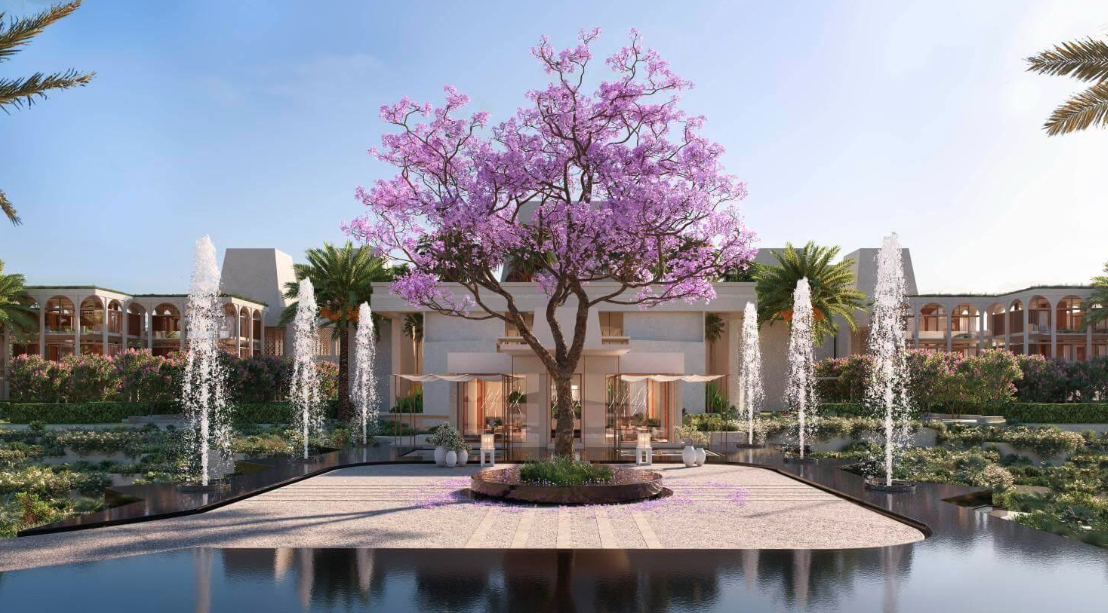
AMAALA is expected to feature nearly 4,000 hotel rooms across 30 hotels, luxury villas, apartments, and estate homes. AMAALA
Meeting global wellness trends
Saudi Arabia is not only responding to global wellness trends but also setting new benchmarks.
The growing demand for retreats that focus on mental health, advanced diagnostic services, and culturally immersive wellness experiences is being met with innovative offerings across the Kingdom.
AMAALA, for instance, integrates traditional healing practices with modern wellness technologies, appealing to travelers seeking authenticity and luxury.
This combination of tradition and innovation is a key strength of Saudi Arabia’s wellness tourism sector, offering visitors unique experiences that cannot be found elsewhere.
AMAALA also offers family-friendly wellness programs, which are becoming increasingly popular as more people look for travel experiences that promote health and well-being for their loved ones as well as themselves.
Men-specific retreats are also gaining traction, reflecting a broader shift towards inclusivity in this market. These offerings ensure that Saudi Arabia remains a competitive destination in the global wellness industry, appealing to diverse demographics and ensuring it becomes a significant driver of the Kingdom’s economic growth.
Strategic developments in wellness tourism
Saudi Arabia’s commitment to wellness tourism is evident in flagship projects like AMAALA and the Red Sea, developed by Red Sea Global, known as RSG.
These projects are part of a broader strategy to position the Kingdom as a global leader in luxury and sustainable tourism.
AMAALA, situated on the northwest coast, is set to become the Kingdom’s premier wellness hub, focusing on luxury and sustainability.
By 2040, the project aims to deliver a 30 percent net conservation benefit to local ecosystems, showcasing its commitment to environmental stewardship. This commitment to sustainability is a key differentiator for Saudi Arabia’s wellness tourism sector, setting it apart from other global destinations.
The economic impact of these projects is significant. With 79 hotels planned across the Red Sea and AMAALA, these destinations are projected to contribute SR33 billion ($8.79 billion) annually to the Kingdom’s economy upon completion.
Covering a combined area of more than 32,000 sq. km, these projects are not only about luxury but also about sustainability.
The Red Sea destination is entirely off-grid, powered by 760,000 solar panels, and the project is scheduled for full completion by 2030.
The scale of these developments reflects the Kingdom’s broader vision to lead in sustainable tourism, setting new benchmarks in environmental responsibility while attracting an international audience.
As the global wellness tourism sector continues to grow, Saudi Arabia is well-placed to capitalize on this trend, driving economic growth, creating jobs, and enhancing the quality of life for its citizens and visitors alike.


