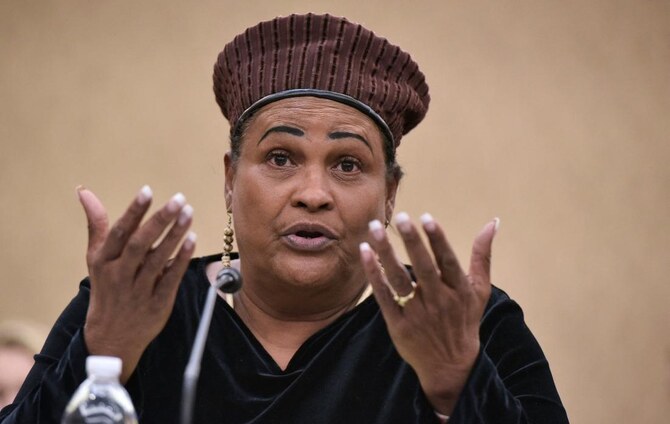
Kabul: A former wife of legendary US boxer Muhammad Ali arrived in the Afghan capital, a Taliban government official said Friday, to reportedly open a stadium in a country where women are barred from sports.
The head of the Taliban government’s sports directorate, Ahmadullah Wasiq, told AFP that Khalilah Camacho-Ali, who was married to the boxer for a decade from 1967, had arrived in Kabul.
State media cited the directorate as saying she was in the city “to build a sports stadium to be named ‘Pirozi’ (victory in Dari) and a sports association named after Muhammad Ali.”
Born Belinda Boyd in 1950 in the United States, Camacho-Ali, like her world champion boxer ex-husband, converted to Islam after they married.
Muhammad Ali himself visited Kabul in 2002, a year after the US forces overthrew the first Taliban government, visiting a girls’ school in his role as a United Nations peace ambassador.
Since the Taliban government came to power in Afghanistan in 2021, they have imposed a strict interpretation of Islamic law, with women bearing the brunt of restrictions the United Nations have called “gender apartheid,” including blocking women from participating in sports.
During the Taliban’s first rule from 1996 to 2001, public executions in sports stadiums were common.
Public corporal punishment has continued since their return to power and at least two public executions have been held in a sports stadium.
The authorities have recently set restrictions on combat sports as well, saying free fighting such as in Mixed Martial Arts was un-Islamic.
Camacho-Ali is a martial artist, as well as an actress and author, according to her website.
Ali was born Cassius Clay in the southeastern state of Kentucky and is known as both a sporting great and for his role in fighting for civil rights for African Americans. He died in 2016.

Ex-wife of Muhammad Ali in Afghanistan: Taliban govt
Short Url
https://arab.news/zmqj2
Ex-wife of Muhammad Ali in Afghanistan: Taliban govt
- During the Taliban’s first rule from 1996 to 2001, public executions in sports stadiums were common
- Khalilah Camacho-Ali is opening a stadium in a country where women are barred from sport
Ex-president’s war crimes trial sparks fierce debate in Kosovo
PRISTINA: In Kosovo, where former guerrilla leaders are still celebrated as heroes, the war crimes trial of ex-president Hashim Thaci and other senior commanders has reignited bitter debate over the legacy of the independence struggle.
The trial in The Hague, which hears closing statements this week, involves Thaci and three other senior figures in the Kosovo Liberation Army (KLA) during the 1990s war against Serbia.
All are charged with war crimes and crimes against humanity, with prosecutors alleging they bear criminal responsibility for murders, torture and illegal detentions carried out by KLA members.
Thaci, who immediately resigned from the presidency after his indictment, and his co-accused all pleaded not guilty.
But in the Balkan nation, the trial has sparked protests, political backlash, and public anger.
For many in Kosovo, the trial represents the prosecution of the KLA itself, and with it the country’s independence movement, says international relations specialist Donika Emini.
“For decades, the KLA and its members have been glorified for their role in the war, while the court has challenged this dominant narrative,” said Emini, a researcher at the University of Graz Center for Southeast European Studies.
-’Unprecedented injustice’-
The Kosovo Specialist Chambers was set up by the country’s parliament. It investigates and prosecutes suspected war crimes committed by ethnic Albanian guerrillas during the war.
Critics of the trial object to the fact that Serbia, which has never recognized Kosovo’s independence, has provided some of the evidence used at the trial. This, they argue, indicates bias in the proceedings.
The scale of atrocities committed by Serbian police and military during the war makes their involvement particularly sensitive. Thousands of ethnic Albanian victims were discovered in mass graves after the end of the war.
But the indictment against Thaci and the other defendants alleges that KLA members also committed crimes against hundreds of civilians and non-combatants at detention sites in Kosovo and northern Albania.
The victims, it says, included Serbs, Roma and Kosovo Albanians deemed political opponents.
Although the court is part of Kosovo’s judicial system, it is nevertheless based in The Hague and staffed solely by international judges in a bid to protect witnesses from possible retribution at home.
But its foreign location has fueled resentment back in Kosovo. It was hard to find anyone on the streets of the capital who supported the trial.
“This is an unprecedented injustice,” Agim Zuka, 63, told AFP in Pristina.
“There is no reason to try them. They have only fought the just war of the Albanian people of Kosovo,” 61-year-old Bahtije Rashica said.
- Protest march -
A march in support of the defendants has been organized to mark the country’s independence day — which also happens to come just before the final day of closing arguments in the trial.
Thaci’s own party organized the protest, which is expected to draw large crowds after weeks of nationwide campaigning against the trial.
Giant photos of Thaci and co-accused Kadri Veseli have also been placed in prominent squares in several towns and cities.
“This campaign has fueled resistance to the court and has been quite effective in articulating criticism for the lack of transparency and perceived inconsistencies in its work,” said the academic Emini.
But the case against the four has taken decades to build and contains extensive details of brutal crimes allegedly committed by members of the KLA between 1998 and 1999.
The prosecutors argue that, as senior figures in the armed militia, they ran a “joint criminal enterprise” that murdered, tortured, persecuted and illegally detained people at dozens of sites in Kosovo and Albania.
-’No common narrative’-
The court’s attempts at outreach have faced a backlash inside the country.
In May, a planned press briefing from its president had to be scrapped after smoke bombs were set off in front of her hotel, while school lectures from court officials drew outrage from politicians and some media outlets.
“Each decision of the Special Court not only affects individuals, but is closely linked to the history of the state and the identity of Kosovo,” said Emini.
Any outcome, particularly a guilty verdict, would change international perceptions of a “sensitive period” that had “no common narrative in the Balkans or in Kosovo,” she added.
“It will undoubtedly have symbolic consequences and will change the narrative and the way history will see Kosovo.”
The trial in The Hague, which hears closing statements this week, involves Thaci and three other senior figures in the Kosovo Liberation Army (KLA) during the 1990s war against Serbia.
All are charged with war crimes and crimes against humanity, with prosecutors alleging they bear criminal responsibility for murders, torture and illegal detentions carried out by KLA members.
Thaci, who immediately resigned from the presidency after his indictment, and his co-accused all pleaded not guilty.
But in the Balkan nation, the trial has sparked protests, political backlash, and public anger.
For many in Kosovo, the trial represents the prosecution of the KLA itself, and with it the country’s independence movement, says international relations specialist Donika Emini.
“For decades, the KLA and its members have been glorified for their role in the war, while the court has challenged this dominant narrative,” said Emini, a researcher at the University of Graz Center for Southeast European Studies.
-’Unprecedented injustice’-
The Kosovo Specialist Chambers was set up by the country’s parliament. It investigates and prosecutes suspected war crimes committed by ethnic Albanian guerrillas during the war.
Critics of the trial object to the fact that Serbia, which has never recognized Kosovo’s independence, has provided some of the evidence used at the trial. This, they argue, indicates bias in the proceedings.
The scale of atrocities committed by Serbian police and military during the war makes their involvement particularly sensitive. Thousands of ethnic Albanian victims were discovered in mass graves after the end of the war.
But the indictment against Thaci and the other defendants alleges that KLA members also committed crimes against hundreds of civilians and non-combatants at detention sites in Kosovo and northern Albania.
The victims, it says, included Serbs, Roma and Kosovo Albanians deemed political opponents.
Although the court is part of Kosovo’s judicial system, it is nevertheless based in The Hague and staffed solely by international judges in a bid to protect witnesses from possible retribution at home.
But its foreign location has fueled resentment back in Kosovo. It was hard to find anyone on the streets of the capital who supported the trial.
“This is an unprecedented injustice,” Agim Zuka, 63, told AFP in Pristina.
“There is no reason to try them. They have only fought the just war of the Albanian people of Kosovo,” 61-year-old Bahtije Rashica said.
- Protest march -
A march in support of the defendants has been organized to mark the country’s independence day — which also happens to come just before the final day of closing arguments in the trial.
Thaci’s own party organized the protest, which is expected to draw large crowds after weeks of nationwide campaigning against the trial.
Giant photos of Thaci and co-accused Kadri Veseli have also been placed in prominent squares in several towns and cities.
“This campaign has fueled resistance to the court and has been quite effective in articulating criticism for the lack of transparency and perceived inconsistencies in its work,” said the academic Emini.
But the case against the four has taken decades to build and contains extensive details of brutal crimes allegedly committed by members of the KLA between 1998 and 1999.
The prosecutors argue that, as senior figures in the armed militia, they ran a “joint criminal enterprise” that murdered, tortured, persecuted and illegally detained people at dozens of sites in Kosovo and Albania.
-’No common narrative’-
The court’s attempts at outreach have faced a backlash inside the country.
In May, a planned press briefing from its president had to be scrapped after smoke bombs were set off in front of her hotel, while school lectures from court officials drew outrage from politicians and some media outlets.
“Each decision of the Special Court not only affects individuals, but is closely linked to the history of the state and the identity of Kosovo,” said Emini.
Any outcome, particularly a guilty verdict, would change international perceptions of a “sensitive period” that had “no common narrative in the Balkans or in Kosovo,” she added.
“It will undoubtedly have symbolic consequences and will change the narrative and the way history will see Kosovo.”
© 2026 SAUDI RESEARCH & PUBLISHING COMPANY, All Rights Reserved And subject to Terms of Use Agreement.


