

IEA predicts oil supply surplus amid weak China demand in 2025

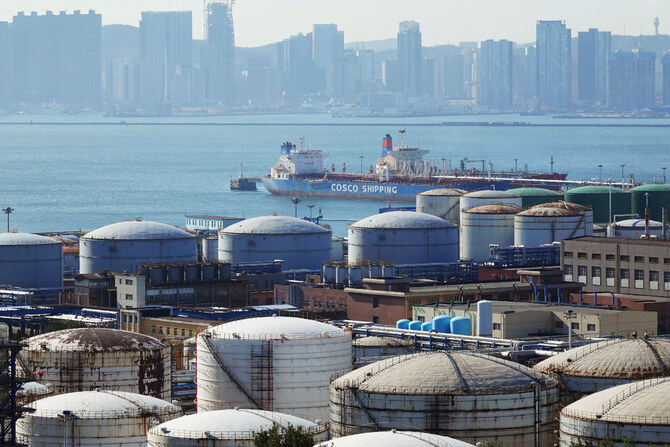
Historically, China has driven over 60 percent of global oil demand growth over the past decade. (Reuters/File)
Short Url
Updated 22 October 2024
Follow

IEA predicts oil supply surplus amid weak China demand in 2025

  • Global oil prices are currently around $70 per barrel, having dropped over 7 percent last week, even amid rising geopolitical tensions in the Middle East

RIYADH: The International Energy Agency forecasts weak oil demand growth in China for 2025, despite recent stimulus measures from Beijing. 

As the world’s second-largest economy shifts toward electrifying its car fleet and experiences slower growth, this trend is expected to continue, according to IEA Executive Director Fatih Birol.

Historically, China has driven over 60 percent of global oil demand growth over the past decade, with an average economic growth rate of 6.1 percent. However, Birol noted that with the economy projected to grow around 4 percent, energy needs are likely to decline. He highlighted that the demand for electric vehicles, now competitive with traditional cars, will contribute to this decrease.

Birol remarked that the impact of China’s fiscal stimulus has been less significant than anticipated, stating, “It will be very difficult to see a major uptick in Chinese oil demand.” 

Global oil prices are currently around $70 per barrel, having dropped over 7 percent last week, even amid rising geopolitical tensions in the Middle East. 

Birol pointed out that one reason for the muted price reaction is the weak demand observed this year, with expectations of continued weakness next year. 

He noted that without the petrochemical sector, Chinese oil demand would have remained flat.

Additionally, increased supply from non-OPEC producers — such as the US, Canada, Brazil, and Guyana — outpaces global oil demand growth, further limiting price increases. 

When asked about the possibility of OPEC+ unwinding production cuts in 2025, Birol stated that the decision lies with OPEC, but he anticipates a surplus in the oil market next year unless significant geopolitical changes occur.

Brent crude futures rose by $1.16, or 1.6 percent, to reach $74.22 a barrel at 10:36 GMT. Meanwhile, U.S. West Texas Intermediate crude futures increased by $1.32, or 1.9 percent, settling at $70.54 a barrel.

Both Brent and WTI experienced significant declines last week, with Brent falling over 7 percent and WTI losing around 8 percent.


Egypt signs energy MoUs with Syria, expanding regional supply role 

Updated 06 January 2026
Follow

Egypt signs energy MoUs with Syria, expanding regional supply role 

JEDDAH: Egypt has signed two memorandums of understanding with Syria to supply natural gas for electricity generation and provide petroleum products, as Cairo moves to strengthen its position as a regional energy transit hub.

According to Egypt’s petroleum ministry, the agreements were signed during talks between its Minister of Petroleum and Mineral Resources Karim Badawi and a Syrian delegation led by Deputy Minister of Energy for Oil Affairs Ghiath Diab.

The deals were formalized by Diab and Mohamed El-Bagoury, head of legal affairs at the Egyptian ministry. 

The agreements come as Egypt seeks to capitalize on its liquefied natural gas plants, pipelines and floating regasification units to position itself as a regional energy hub. 

Syria’s energy sector has been severely weakened by years of conflict and damaged infrastructure, prompting redevelopment efforts and regional cooperation which underscores the importance of external partnerships in rebuilding the country’s power and oil networks. 

“The meeting reflects Egypt’s role as a regional logistics hub for all types of energy, both fossil and non-fossil,” the ministry said in a statement, reaffirming its readiness to provide technical expertise and support to Syria’s energy sector as part of efforts to assist the Syrian people. 

Under the first MoU, Egypt will cooperate in supplying gas to Syria for power generation, using its existing infrastructure, including regasification vessels and transmission networks. 

The second agreement relates to meeting the country’s needs for petroleum products. 

The meeting also discussed opportunities to rehabilitate Syria’s oil and gas infrastructure and benefit from Egyptian expertise in the sector. 

The deals with follow recent energy cooperation with Lebanon and earlier arrangements with Cyprus aimed at routing Eastern Mediterranean gas through Egypt’s facilities. 

Speaking at the ADIPEC conference in Abu Dhabi in November, Badawi highlighted Egypt’s growing role as a regional hub for energy transit and trade, supported by fully integrated and ready infrastructure. 

He said this demonstrated the country’s ability to provide a fast, cost-effective and reliable route for delivering East Mediterranean gas resources to global markets at competitive prices. 

Badawi cited plans to connect Cyprus’s Cronos gas field to Egypt’s network as a key step toward deeper regional integration, allowing current and future Cypriot discoveries to be processed through Egyptian liquefaction and export facilities.