


DUBAI: Lebanon is heading for an extended conflict as Israel’s ground invasion enters its fourth week, raising concerns of deeper regional instability. Sounding this warning on the Arab News current affairs show “Frankly Speaking,” Firas Maksad, a senior fellow at the Middle East Institute, said the fighting could last far longer than initially anticipated.
“Unfortunately, we are looking at weeks, maybe months, of conflict ahead,” he said.
The clashes between Israeli forces and the Iran-backed Lebanese Shiite militia Hezbollah have destabilized a country already grappling with economic collapse and political dysfunction.
Despite suffering heavy losses, particularly among its leadership, Hezbollah is far from defeated. “It’s certainly not game over. Hezbollah has been significantly weakened. It’s on its back foot,” Maksad said. “Hezbollah is fighting in a more decentralized way right now. We see that on the border. Their fighters are still … putting up a fight there.”
Israel sent troops and tanks into southern Lebanon on Oct. 1 in an escalation of the Israel-Hezbollah conflict, a spillover from the Israel-Hamas war that has been raging since Oct. 7 last year in Gaza.
It followed a series of major attacks on Hezbollah in September that degraded its capabilities and devastated its leadership, beginning with explosions of its communication devices.
This was followed by an Israeli aerial bombing campaign against Hezbollah throughout Lebanon, culminating in the killing of Hassan Nasrallah, the militia’s firebrand leader, in an airstrike in Dahiyeh, south of Beirut, on Sept. 7.
According to Maksad, Hezbollah’s fragmented central command has left it increasingly reliant on Iranian support. “Hezbollah’s central command is increasingly likely to come under direct Iranian management and control of the IRGC, the Iranian Revolutionary Guards,” he told Katie Jensen, the host of “Frankly Speaking.”
“Nasrallah had a margin of maneuver because of his role and stature in the community but also at a regional level, given the group’s involvement in Syria, Iraq, Yemen. That’s now gone. That very much then opens the way for more direct Iranian control, commanding control of Hezbollah in the months ahead.”
Maksad said the general sentiment in Lebanon, and even among Hezbollah’s own support base, is that the Iranian level of support has been at the very least disappointing.
“Public sentiment is one thing and the reality is sometimes another. Iran has sort of always showed some level of support to Hezbollah but has not been willing to stick its neck on the line, so to speak,” he said.
“It fights through its Arab proxies. It has a very clear aversion to be directly involved in a conflict with Israel because of its technological and military inferiority.”
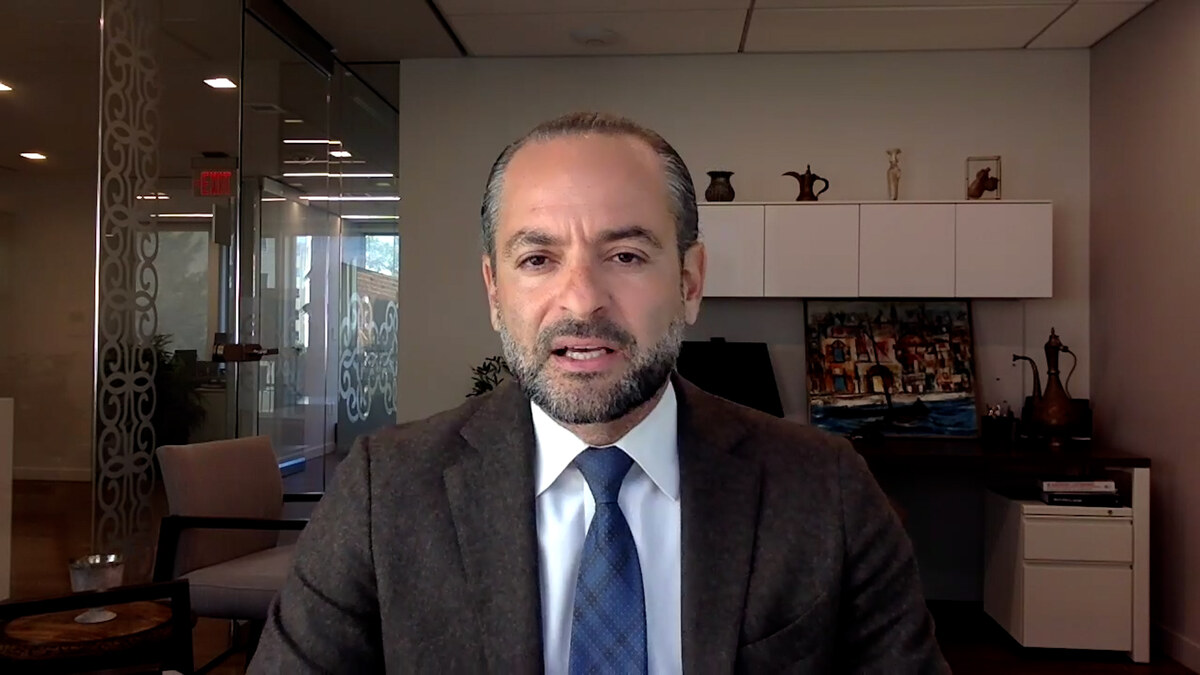
Maksad, appearing on Frankly Speaking, highlighted a dire humanitarian situation, pointing to the more than one million internally displaced people who have fled from Hezbollah-controlled areas in southern Lebanon. (AN Photo)
Maksad highlighted the dire humanitarian situation in Lebanon, pointing to the more than one million internally displaced people who have fled from Hezbollah-controlled areas in southern Lebanon.
“About one-quarter of the population is under evacuation orders from the Israeli military,” he said. “The domestic toll for a relatively weak country suffering still from the weight of an unprecedented economic collapse in 2019, where most people lost their life savings in the banks, is tremendous.”
Maksad said the displacement has heightened sectarian tensions, as those displaced from pro-Hezbollah areas have moved into regions less sympathetic to the group.
“It does not bode well longer term for Lebanon, and the longer that this conflict drags, the more we have to (be concerned) about the bubbling of tensions and the instability that that might result in,” he said.
“Hezbollah has essentially wagered the country’s fate on (the outcome of the war) in Gaza and the fate of Hamas and its leaders,” he said.
Maksad also discussed the broader geopolitical implications of the conflict, suggesting that Israel is unlikely to engage in a long-term occupation of southern Lebanon.
“The Israelis fully understand the disadvantages of a lengthy occupation,” he said, recalling the heavy toll it took on the Israeli military when they last occupied Lebanon, a presence that ended in 2000.
“What I keep hearing is that Israel is looking to mop up Hezbollah infrastructure, tunnels and otherwise along the border, perhaps maybe even occupy, for a short period of time, the key villages, because the topography of south Lebanon is such that so many of these border villages are overlooking Israel and they want to take the higher ground.”
Having said that, Maksad predicted that Israel would pursue a diplomatic process, possibly through a new security arrangement based on UN Security Council Resolution 1701, after dealing with Hezbollah’s infrastructure.
Hezbollah’s alignment with the cause of Hamas and other Palestinian militant groups has alienated significant segments of the Lebanese population, further straining the country’s already delicate sectarian fabric. The political leadership in Lebanon is consequently under immense pressure.
Maksad views Nabih Berri, the Shiite speaker of Lebanon’s parliament, as a crucial player in mediating the crisis. However, at 86 years old, his ability to navigate such a complex situation is in question.
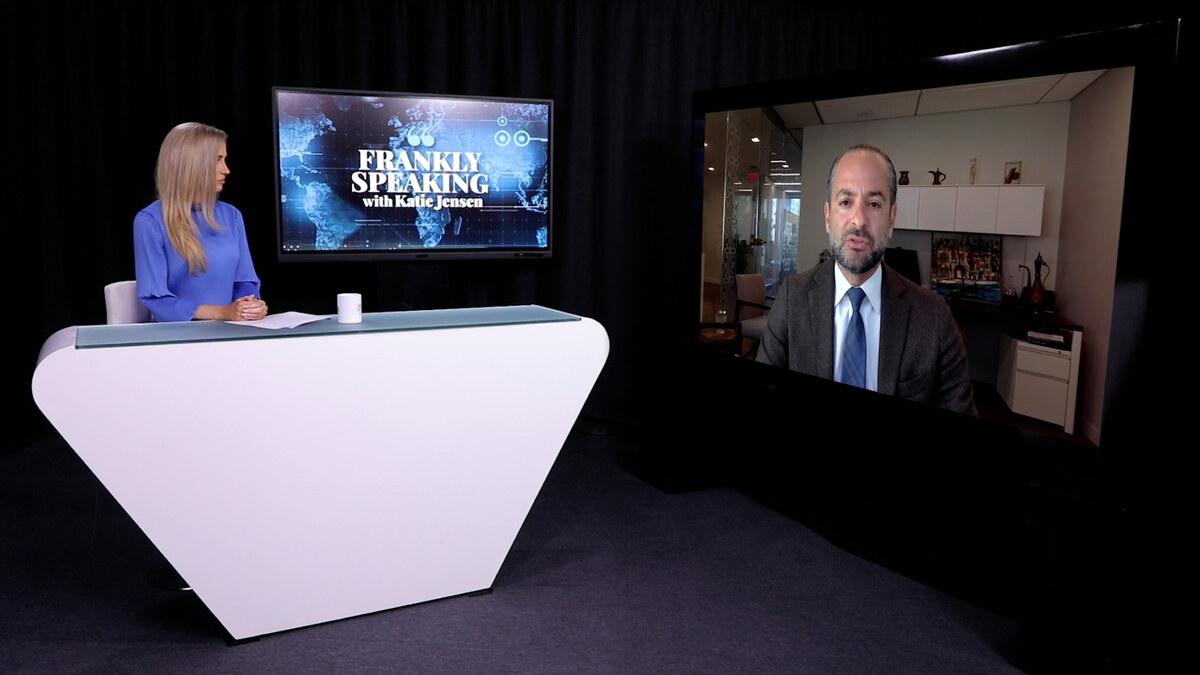
Maksad told host Katie Jensen that he views Nabih Berri, the Shiite speaker of Lebanon’s parliament, as a crucial player in mediating the crisis. (AN Photo)
“He can’t do it alone,” Maksad said, noting that other key figures, such as Druze leader Walid Jumblatt and Christian political leader Samir Geagea, will need to play constructive roles too. While acknowledging that Najib Mikati, the caretaker prime minister, is also a key player, he noted that since the assassination in 2005 of Rafik Hariri, the former prime minister, “there’s been a void in the Sunni community and it’s been hard to replace that.”
Maksad remarked that Berri, Jumblatt and Geagea were all around during the civil war in the 1980s and are still active players on the Lebanese political scene.
“They have long memories. They remember in 1982 when (Israel’s defense minister) Ariel Sharon initially announced a limited operation into Lebanon and then ended up invading all the way to Beirut, upending the political system, facilitating the election of a pro-Western president,” he said.
But very quickly Iran and Syria launched their comeback, assassinated Bachir Gemayel, the president at the time, and by 1985 had pushed the Israelis all the way back to the south. “Iran and Hezbollah have time … they tend to be persistent and they have strategic patience,” Maksad said. “Berri and others remember that. So, they’re going to be moving very slowly, and they’re going to be taking their cues from the regional capitals of influence.”
Recent developments in the Middle East, particularly the killing by Israel on Oct. 16 of Hamas leader Yahya Sinwar in Gaza, represent what Maksad describes as “a potential fork in the road.”
The killing could either escalate tensions across the region or serve as a turning point, allowing Israel to seek a diplomatic solution, according to Maksad.
“It can open up a diplomatic process where maybe Netanyahu can then reclaim the mantle of ‘Mr. Security,’ having killed Sinwar, and then begin to seriously negotiate a swap that would see the Israeli hostages released. And we all know that a ceasefire in Lebanon was premised on a diplomatic outcome in a ceasefire in Gaza. And, then, arguably, Lebanon can begin to move in that direction,” he said.
However, Iran is on “a completely separate track” and the Middle East could be in the midst of a “multi-stage conflict.”
Maksad added: “Once we get the past the Nov. 5 (US election) day, maybe Netanyahu will have a much freer hand for a second round of attacks that can then maybe take a toll on (Iran’s) nuclear infrastructure and the oil facilities in Iran. And then that opens up a Pandora’s box. So, we’re continuing to be in a very uncertain period for not only Gaza and Lebanon, but for Iran and the region at large.”
Discussing the stances of Saudi Arabia and other Gulf states on the Middle East conflicts, Maksad said that these countries are understandably hedging their foreign policy priorities and relations.
“There’s been questions in recent years about the US security commitment to the GCC region, given an increasingly isolationist trend in the US, and talk about ending forever wars,” he said.
“That has rightfully caused countries like Saudi Arabia and others to want to diversify their foreign policy options. I think this is part of a broader strategic approach that the Kingdom has taken. I don’t see any significant changes yet, except that the war in Gaza and now Lebanon, the longer that drags on, the less likely that we’re going to see any progress on normalization with Israel.”


