TOKYO: Approval ratings for Japan’s new Prime Minister Shigeru Ishiba have fallen ahead of an October 27 general election, one weekend poll showed, with another survey suggesting the ruling coalition could struggle to secure a majority.
Former defense minister Ishiba took office this month after being voted leader of the Liberal Democratic Party (LDP), which has been in power for most of Japan’s post-war history.
Scandals over funding and LDP lawmakers’ ties to the Unification Church, compounded by voter discontent over rising prices, caused the party’s ratings to plummet during the tenure of Ishiba’s predecessor Fumio Kishida.
A Kyodo News survey on Saturday and Sunday put the current approval rating for Ishiba’s cabinet at 41.4 percent, down from 42.0 percent a week earlier.
The disapproval rating was 40.4 percent in the most recent survey of some 1,260 voters, Kyodo said Sunday. Disapproval in the October 12-13 poll was 36.7 percent.
A separate weekend survey by the liberal-leaning Asahi Shimbun newspaper found public support for Ishiba’s cabinet at 33 percent, below 39 percent who disapproved.
Those results are worse than Kishida faced in 2021 ahead of his first general election as premier: 42 percent approval against 31 percent disapproval, the Asahi said.
The daily said its polls indicated that the LDP and its junior coalition partner Komeito ran the risk of losing a majority in the upcoming vote.
Jiji Press said its polls and reporting showed the coalition was likely to retain its majority, although the LDP may not pass the threshold on its own — a possibility reflected in several previous polls by other outlets.
The conservative LDP and Komeito, a moderate party backed by a Buddhist-linked group, have been in power since 2012 when late former premier Shinzo Abe won a landslide victory.
“Regardless of whether or not we lose our majority, we should hold positive talks with parties that are trying to develop the country with the same policies,” the LDP’s secretary general Hiroshi Moriyama said in a political debate program aired by public broadcaster NHK on Sunday.


![]()

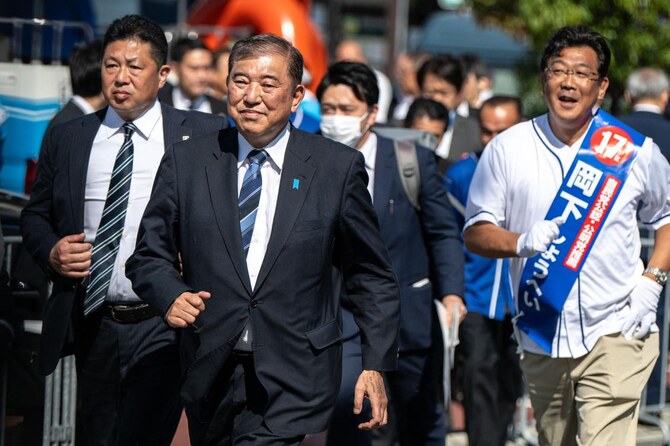
Japan PM facing lukewarm approval ahead of election
Short Url
https://arab.news/vhznp
Japan PM facing lukewarm approval ahead of election
- Former defense minister Ishiba took office this month after being voted leader of the Liberal Democratic Party


Latest updates


Recommended


© 2026 SAUDI RESEARCH & PUBLISHING COMPANY, All Rights Reserved And subject to Terms of Use Agreement.