Google, Meta and TikTok have removed social media posts from a industrial plant in Russia’s Tatarstan region aimed at recruiting young foreign women to make drones for Moscow’s war in Ukraine.
Accounts on YouTube, Facebook, Instagram and TikTok were taken down following an investigation by The Associated Press published Oct. 10 that detailed working conditions in the drone factory in the Alabuga Special Economic Zone, which is under US and British sanctions.
Videos and other posts on the social media platforms promised the young women, who are largely from Africa, a free plane ticket to Russia and a salary of more than $500 a month following their recruitment via the program called “Alabuga Start.”
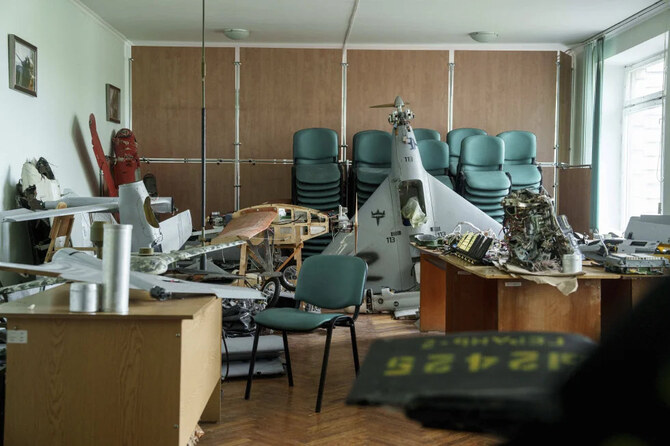
But instead of a work-study program in areas like hospitality and catering, some of them said they learned only arriving in the Tatarstan region that they would be toiling in a factory to make weapons of war, assembling thousands of Iranian-designed attack drones to be launched into Ukraine.
In interviews with AP, some of the women who worked in the complex complained of long hours under constant surveillance, of broken promises about wages and areas of study, and of working with caustic chemicals that left their skin pockmarked and itching. AP did not identify them by name or nationality out of concern for their safety.
The tech companies also removed accounts for Alabuga Polytechnic, a vocational boarding school for Russians age 16-18 and Central Asians age 18-22 that bills its graduates as experts in drone production.
The accounts collectively had at least 53,144 followers.
In a statement, YouTube said its parent company Google is committed to sanctions and trade compliance and “after review and consistent with our policies, we terminated channels associated with Alabuga Special Economic Zone.”
Meta said it removed accounts on Facebook and Instagram that “violate our policies.” The company said it was committed to complying with sanctions laws and said it recognized that human exploitation is a serious problem which required a multifaceted approach, including at Meta.
It said it had teams dedicated to anti-trafficking efforts and aimed to remove those seeking to abuse its platforms.
TikTok did not immediately respond to a request for comment but appeared to have removed accounts run by Alabuga with about 35,000 followers.
The women aged 18-22 were recruited to fill an urgent labor shortage in wartime Russia. They are from places like Uganda, Rwanda, Kenya, South Sudan, Sierra Leone and Nigeria, as well as the South Asian country of Sri Lanka. The drive also is expanding to elsewhere in Asia as well as Latin America.
Accounts affiliated to Alabuga with tens of thousands of followers are still accessible on Telegram, which did not reply to a request for comment. The plant’s management also did not respond to AP.
The Alabuga Start recruiting drive used a robust social media campaign of slickly edited videos with upbeat music that show African women smiling while cleaning floors, wearing hard hats while directing cranes, and donning protective equipment to apply paint or chemicals.
Videos also showed them enjoying Tatarstan’s cultural sites or playing sports. None of the videos made it clear the women would be working in a drone manufacturing complex.
Online, Alabuga promoted visits to the industrial area by foreign dignitaries, including some from Brazil, Sri Lanka and Burkina Faso.
In a since-deleted Instagram post, a Turkish diplomat who visited the plant had compared Alabuga Polytechnic to colleges in Turkiye and pronounced it “much more developed and high-tech.”
According to Russian investigative outlets Protokol and Razvorot, some pupils at Alabuga Polytechnic are as young as 15 and have complained of poor working conditions.
Videos previously on the platforms showed the vocational school students in team-building exercises such as “military-patriotic” paintball matches and recreating historic Soviet battles while wearing camouflage.
Last month, Alabuga Start said on Telegram its “audience has grown significantly!”
That could be due to its hiring of influencers, who promoted the site on TikTok and Instagram as an easy way for young women to make money after leaving school.
TikTok removed two videos promoting Alabuga after publication of the AP investigation.
Experts told AP that about 90 percent of the women recruited via the Alabuga Start program work in drone manufacturing.


![]()

Tech firms remove social media posts from a Russian drone factory after an AP investigation
Short Url
https://arab.news/598q2
Tech firms remove social media posts from a Russian drone factory after an AP investigation
- Lured to a work-study program in Russia in areas like hospitality and catering, the young women, mostly Africans, ended up toiling in a factory to assemble Iranian-designed attack drones to be launched into Ukraine


Latest updates


Recommended


© 2026 SAUDI RESEARCH & PUBLISHING COMPANY, All Rights Reserved And subject to Terms of Use Agreement.