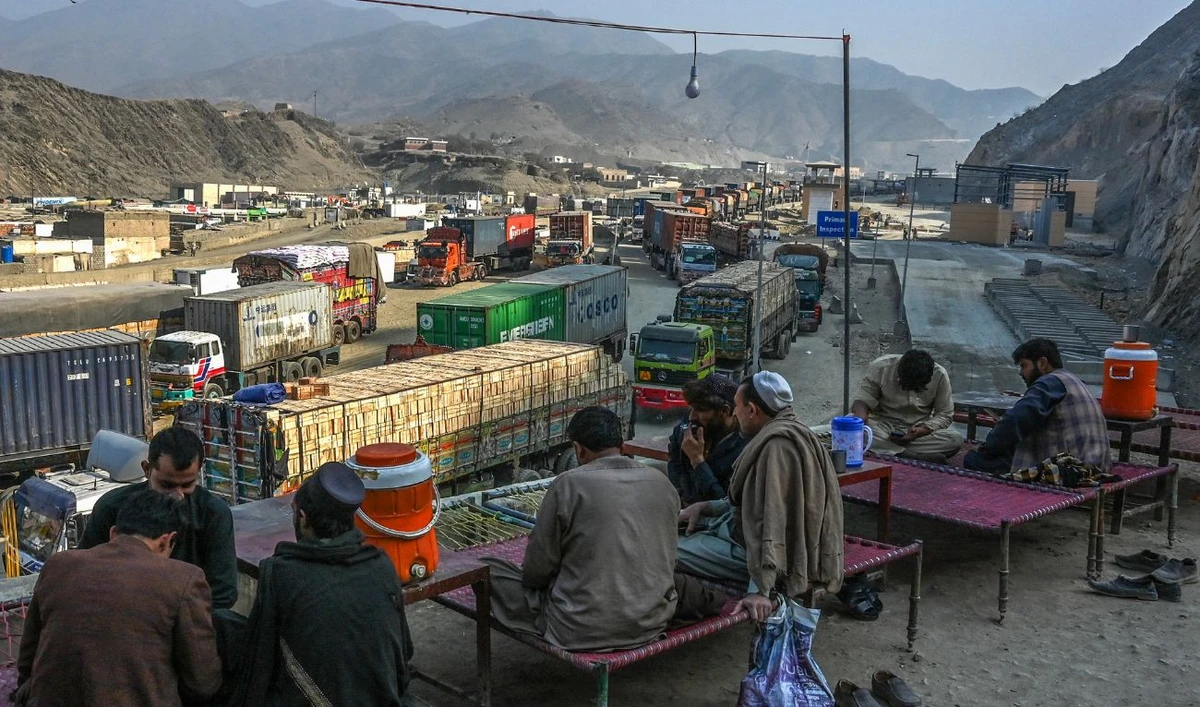
- Pakistan’s customs authorities say a vehicle carrying coal was trying to smuggle US-made weapons, ammunition
- Driver of the vehicle disappeared before being arrested, according to official Pakistani statement about the incident
DERA ISMAIL KHAN: Pakistan’s customs authorities have seized a large cache of weapons and ammunition at the Torkham border in Khyber Pakhtunkhwa province from a vehicle arriving from Afghanistan, according to an official statement, though an Afghan official denied knowledge of any weapons trafficking at the busy border crossing.
The statement released by Pakistan Customs on Monday said that a truck carrying coal entered Pakistan’s import terminal on Friday and was selected for thorough inspection following the scanning procedure.
It revealed that the seized weapons and ammunition were US-made and valued at approximately Rs35 million ($125,000).
This development comes amid already strained relations between the two neighboring states, with a surge in militant violence in Pakistan. Authorities in Islamabad have accused Afghan officials of "facilitating" armed groups targeting Pakistani civilians and security forces, a claim denied by the Taliban administration in Kabul.
“On 11th October, 2024 at about 6:50 pm, a vehicle bearing registration No. KBL 51828 loaded with coal entered the import terminal and was regarded as abnormal in NLC [National Logistic Cell] scan image,” the statement said. “Upon examination, weapons parts/ammunitions were detected,”
It informed the recovered items included “gun barrels (15Nos), loaded magazines (170), having 30 rounds each with a total of 5,100 rounds.”
All the smuggled items were shifted to the Customs Appraisement Office for action, though the driver of the vehicle disappeared before his arrest.
“Further investigation is underway,” the statement said.
Pakistan has raised concerns that US military equipment left behind in Afghanistan after the 2021 withdrawal has ended up in the hands of militants, including the Tehreek-e-Taliban Pakistan (TTP), who have been using it to target Pakistani security forces.
The US government has previously said these weapons were intended for the Afghan National Army, which had been trained and equipped by US military officials prior to the Taliban’s return to power. However, much of this equipment fell into the hands of militant factions after the withdrawal of international forces.
According to Haji Hikmatullah Safi, the Torkham Gate Commissioner on the Afghan side, his country was neither aware of any attempt to smuggle arms nor had Pakistan shared any information about the development.
“We have put strict checking measures in place to discourage any kind of smuggling through this vital border crossing,” he told Arab News. “We have three separate departments for vehicle checking before they enter Pakistan.”
Asked about the development, a Pakistani customs official at Torkham, Umar Jan, confirmed the weapons recovered from the vehicle were left over by the US in Afghanistan.
“We don’t need to share this information directly or immediately with our Afghan counterparts,” he continued. “Rather, we share it with the relevant department, which can then raise the issue at the appropriate time.”