ISLAMABAD: China has sent an inter-agency working group to join an investigation into last week’s bomb attack in Pakistan’s southern city of Karachi that killed two Chinese nationals, Chinese state media reported, citing a foreign ministry spokesperson.
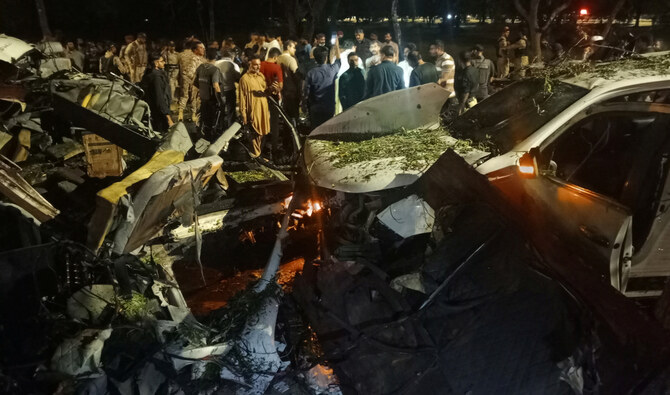
Two Chinese nationals among three people were killed and 10 others injured in the attack near the Karachi airport on Oct. 6, according to Pakistani and Chinese authorities. The Baloch Liberation Army (BLA) separatist group claimed responsibility for the attack, saying that Chinese nationals were targeted by a vehicle-borne improvised explosive device.
A Chinese foreign ministry spokesperson said on Friday that Beijing quickly sent an inter-agency working group to Pakistan as part of its response to the attack on a Chinese convoy of the Port Qasim coal-fired power plant that killed and injured Chinese personnel, Chinese state-run CGTN news channel reported.
“After arriving in Islamabad on October 8, the working group immediately joined the Embassy in Pakistan and the company concerned in the emergency response,” the spokesperson was quoted as saying by the English-language news channel.
“The working group met intensively with heads of Pakistani Ministry of Foreign Affairs, Ministry of Interior, and military, police and intelligence departments, and asked the Pakistani side to properly handle ensuing matters, make every effort to save the injured, conduct thorough investigations, bring all the perpetrators to justice, and step up security measures to ensure the safety and security of Chinese personnel, institutions and projects in Pakistan.”
Pakistan strongly condemned the attack and is fully dealing with the aftermath, investigating the incident and nailing down the perpetrators, according to the spokesperson. Islamabad has said it will further strengthen security measures and make all-out efforts to protect Chinese interests in Pakistan.
Pakistan Prime Minister Shehbaz Sharif this week met Chinese Ambassador Jiang Zaidong and assured him of personally overseeing investigation into the militant attack and promised that those responsible would be brought to justice.
The Chinese ambassador expressed confidence in the Pakistani government’s “effective investigation, prompt identification of the responsible terrorists, and their swift punishment,” Sharif’s office said in a statement.
Sunday’s attack is the latest by the BLA, the most prominent of a number of separatist groups fighting for independence for Pakistan’s gas-and-mineral-rich Balochistan province, where a low-lying insurgency has been ongoing for the past two decades. Baloch militants blame the Pakistani state for exploiting the province’s resources, a charge denied by state authorities.
The BLA also accuses Beijing of helping Islamabad exploit the province and has attacked Chinese interests and projects in the past, in particular the strategic port of Gwadar on the Arabian Sea. It has previously killed Chinese citizens working in the region and attacked Beijing’s consulate in Karachi.
In March this year, a suicide bombing killed five Chinese engineers and a Pakistani driver in northwestern Pakistan as they headed to the Dasu Dam, the biggest hydropower project in the country. In 2022, three Chinese educators and their Pakistani driver were killed when an explosion ripped through a van at the University of Karachi.


![]()

Beijing sends team to Pakistan to join probe into Karachi bombing that killed two Chinese
Short Url
https://arab.news/2szwf
Beijing sends team to Pakistan to join probe into Karachi bombing that killed two Chinese
- Two Chinese nationals among three people were killed and 10 others injured in the bomb attack near the Karachi airport on Oct. 6
- Pakistan fully dealing with the aftermath, investigating the attack and nailing down the perpetrators, Chinese foreign ministry says
Latest updates





© 2026 SAUDI RESEARCH & PUBLISHING COMPANY, All Rights Reserved And subject to Terms of Use Agreement.