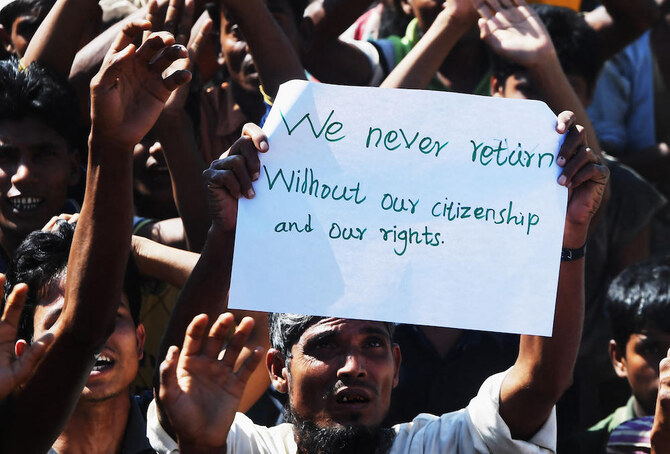
GENEVA: The UN said Friday that in the decade since it launched a campaign to end the limbo of statelessness, over half a million people without a nationality had acquired citizenship.
In a report, the United Nations’ refugee agency detailed the progress made since it launched its #IBelong campaign in 2014. Its aim was to mobilize international action to resolve the problem of statelessness.
The UNHCR described statelessness as “a major human rights violation.”
It leaves people politically and economically marginalized, unable to access critical services and particularly vulnerable to exploitation and abuse, the agency argued.
Last year, the UNHCR reported that there were 4.4 million stateless people recorded, but that millions more were affected since the data only covers around half of the world’s countries.
The campaign, which ends this year, aimed to address “a largely invisible crisis: that of millions of people around the world living in the shadows, without a nationality, unable to assert their most basic human rights,” said UNHCR chief Filippo Grandi.
While welcoming “significant progress” toward the ambitious goal of ending statelessness, he added “our work is not yet done.”
The report found that “more than 565,900 stateless people and persons with undetermined nationality gained nationality” over the past decade.
Australian actor Cate Blanchett, UNHCR’s goodwill ambassador, said the progress had been “remarkable.”
“Twenty countries have improved rights for stateless people, (and) 13 countries have passed laws to ensure that no child is born stateless,” she said.
“We must make sure that anyone still living without nationality is given the right to be recognized and included.”
UNHCR highlighted the efforts made in several countries, including Turkmenistan, Portugal, North Macedonia, Rwanda, Brazil and Thailand.
Kyrgyzstan has resolved all known cases of statelessness on its territory, the agency added.
It pointed out that 77 more countries had joined the UN Statelessness Conventions, and at least 22 countries had adopted national action plans toward ending statelessness.
“Great strides have been made to remedy this devastating blight, but the need for further action remains critical,” said Ruven Menikdiwela, UNHCR’s assistant high commissioner for protection.
“There are still countless people who do not exist on paper — and hence are pushed to the fringes of society, simply because of ethnic, religious or gender discrimination, or because of flaws in nationality laws and policies,” she said.
While the #IBelong campaign is wrapping up, UNHCR said it would host a high-level meeting on statelessness during its executive committee meeting in Geneva Monday.
It also said it was launching a new “Global Alliance to end Statelessness.”


![]()

UN: Half a million stateless people got citizenship in past decade
Short Url
https://arab.news/mbpzm
UN: Half a million stateless people got citizenship in past decade
- The UNHCR describes statelessness as ‘a major human rights violation’
- Last year, the UNHCR reported that there were 4.4 million stateless people recorded

Latest updates




© 2026 SAUDI RESEARCH & PUBLISHING COMPANY, All Rights Reserved And subject to Terms of Use Agreement.