ISLAMABAD: Human rights advocates including Nobel Peace Prize laureate Malala Yousafzai criticized Pakistan on Wednesday for stopping a leading ethnic minority activist from traveling to accept a US award.
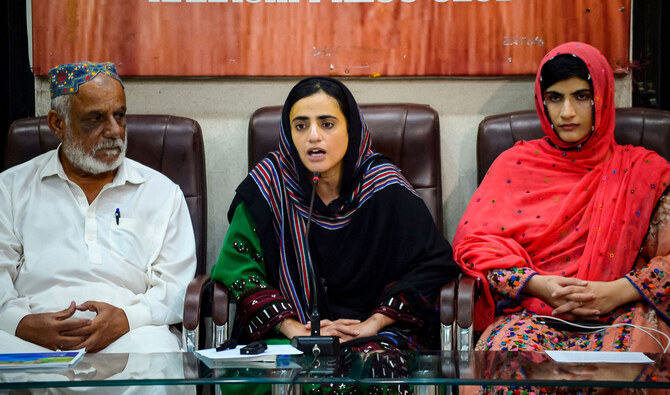
Mahrang Baloch, one of Pakistan’s most prominent rights voices, said officials blocked her from leaving Karachi for New York on Monday night to attend a TIME magazine awards gala.
The 31-year-old had been due to accept an award for campaigning on behalf of the Baloch ethnic group, which claims it has been targeted by Islamabad with extrajudicial harassment, arrests and killings.
“Mahrang Baloch’s activism for Baloch people should be recognized, not denied a platform,” Pakistan’s Yousafzai wrote on social media platform X on Wednesday.
“I know this will not deter her from continuing to speak up and protest peacefully for human rights,” she said.
The Pakistan government says its forces are fighting separatist militants, who target state forces and foreign nationals, in southwestern Balochistan province.
Authorities in Islamabad have blocked foreign travel for many Pakistani activists, critical journalists and dissenting politicians in recent years.
Baloch said she held a valid US visa but immigration officials in Karachi prevented her from boarding her flight.
She said she was detained for five hours and that her passport and phone were seized, blaming police and the Federal Investigation Agency, a Pakistani intelligence service.
Neither organization responded immediately to a request for comment.
“This action reflects the growing fear and insecurity of the state toward Baloch voices,” Baloch said in a video statement late on Monday.
“There was no legitimate purpose for preventing my travel, except to silence Baloch voices from being heard internationally,” she said.
Baloch, a doctor, was named on the 2024 TIME100 Next list of “rising leaders” who the magazine believes “will play an important role in leading the future.”
The Human Rights Commission of Pakistan said blocking Baloch’s travel was “a flagrant violation of her right to freedom of movement and expression.”
UN Special Rapporteur on Human Rights Defenders Mary Lawlor said on X she was “very concerned.”
Pakistan also banned another ethnic activist organization, the Pashtun Protection Movement, at the weekend.
Amnesty International said it was “part of a systematic and relentless clampdown by the Pakistani authorities on peaceful protests and assemblies by dissenting groups.”
Baloch began her activist career at the age of 16 in 2009, when her father went missing in an alleged “enforced disappearance.” His body was found two years later.
Protests and advocacy among the Baloch are generally led by women, who say their male counterparts have suffered the worst in a decades-long state crackdown.


![]()

Rights groups slam Pakistan for blocking activist’s US travel
Short Url
https://arab.news/nm53k
Rights groups slam Pakistan for blocking activist’s US travel
- Ethnic rights activist Mahrang Baloch says officials blocked her from leaving for New York to attend a TIME magazine awards gala
- Authorities in Islamabad have blocked foreign travel for many Pakistani activists, journalists and dissenting politicians in recent years
Latest updates


© 2026 SAUDI RESEARCH & PUBLISHING COMPANY, All Rights Reserved And subject to Terms of Use Agreement.