

Saudi aid agency KSrelief boosts medical services in Egypt, Jordan’s Zaatari refugee camp

1 / 2
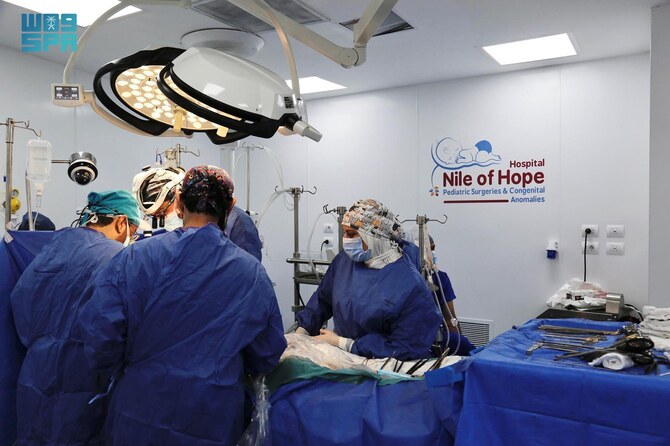
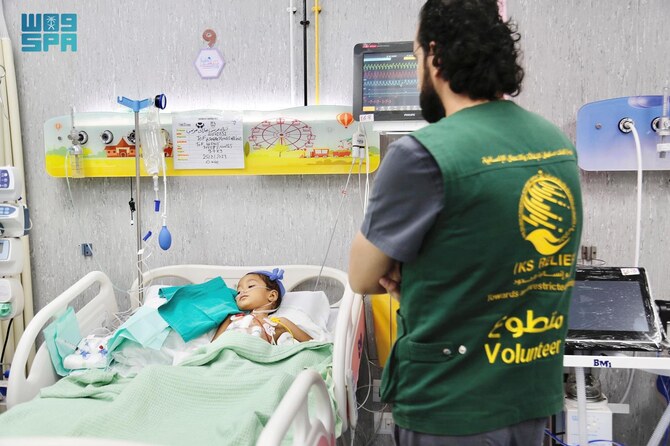
A team of volunteers including 14 specialist doctors performed 28 pediatric heart surgeries in Alexandria, Egypt. (SPA)
2 / 2
A team of volunteers including 14 specialist doctors performed 28 pediatric heart surgeries in Alexandria, Egypt. (SPA)
Short Url
Updated 08 October 2024
Follow

Saudi aid agency KSrelief boosts medical services in Egypt, Jordan’s Zaatari refugee camp

  • Various clinics provide pediatric, eye, dental, emergency treatments, and open-heart surgeries for needy people

RIYADH: The Kingdom’s aid agency KSrelief has stepped up its healthcare services to reach more beneficiaries in Egypt and Jordan’s Zaatari refugee camp.

KSrelief’s clinics provided comprehensive medical services to 2,564 Syrian refugees at Jordan’s Zaatari camp during the last week of September, the Saudi Press Agency reported on Monday.

During this period, the general medicine clinics treated 680 patients, and the internal medicine clinic saw 79 patients with diabetes, hypertension, and asthma.

The pediatric, emergency, dental and two gynecology clinics attended to 318 children, 314 patients, 109 patients, and 220 females, respectively, at the camp.

Also, the ear, nose, and throat clinic saw 43 patients with various infections. In addition, the eye, cardiology and diagnostic radiology clinics treated 80, 20 and 31 patients.

The health education department served 72 beneficiaries, and 2,340 medical prescriptions were filled at the pharmacy.

A team of volunteers including 14 specialist doctors performed 28 pediatric heart surgeries in Alexandria, Egypt, from Sept. 24 to 30.

The procedures included 23 open-heart surgeries and five cardiac catheterizations, all performed with a 100 percent success rate, said the SPA.

The project was a part of KSrelief’s efforts to provide critical healthcare services to people in need across the world.

“The surgeries were part of a volunteer medical project aimed at providing life-saving heart procedures for children from low-income families,” reported the SPA.


AI, automation creating new jobs and displacing traditional roles: Saudi HR minister

Updated 15 sec ago
Follow

AI, automation creating new jobs and displacing traditional roles: Saudi HR minister

  • Ahmad Al-Rajhi: Expect significant growth in tech-centric jobs like AI specialists and data analysts, while roles such as data entry and administrative assistants may decline
  • Al-Rajhi: Rising living costs and economic slowdowns will shape which skills are most valued, like resilience, flexibility and creative thinking

RIYADH: Artificial intelligence, robotics and automation are creating new opportunities while displacing traditional roles, Saudi Arabia’s Minister of Human Resources and Social Development Ahmad Al-Rajhi said in his opening remarks at a conference in Riyadh on Monday.

Al-Rajhi was speaking during the opening of the third Global Labor Market Conference, which is being held under the theme “Future in Progress” and brings together decision-makers, thought leaders and experts from around the world.

“Expect significant growth in tech-centric jobs like AI specialists and data analysts, while roles such as data entry and administrative assistants may decline,” he said.

Al-Rajhi added that the green transition is driving demand for renewable energy engineers and environmental specialists.

“We will see a surge in green jobs as industries adapt to climate goals,” he said.

The minister also pointed to broader economic and geopolitical pressures shaping labor markets globally, including rising living costs and slowing growth.

“Rising living costs and economic slowdowns will shape which skills are most valued, like resilience, flexibility and creative thinking,” he said.

Al-Rajhi added that demographic shifts, including aging populations in some regions and expanding working-age populations in others, will continue to influence labor supply and demand, increasing the need for healthcare, training and inclusive job creation.

Turning to the global youth employment challenge, he said international trends highlight the urgency of coordinated action.

“More than 262 million young people worldwide are not in employment, education or training in many regions, and job creation is not keeping pace with population growth, while other countries are facing the pressure of aging workforces and rising dependency ratios,” Al-Rajhi said, citing international estimates.

He added that rapid technological change is outpacing education and training systems, making continuous upskilling essential across both advanced and emerging economies.

“These pressures differ by region, but they are too complex for countries to address in isolation,” he said.

Highlighting Saudi Arabia’s domestic workforce transformation, Al-Rajhi said more than 2.5 million Saudis have joined the private sector since 2020, describing young men and women as a growing national asset driving new fields and skills development.

“These indicators, among others, show an economy movement for people who are investing in themselves, learning, competing and shaping the future with confidence,” he said.

During the event, Saudi Minister of Industry and Mineral Resources Bandar Al-Khorayef announced the launch of an occupations and skills framework for the mining and industrial sectors, aimed at clarifying job roles and workforce requirements.

He said the framework will cover more than 500 occupations and outline the skills, job descriptions and titles needed across the sectors, helping private companies, educators and training providers to align workforce development with industry demand.

“This is an important framework to allow different players in the ecosystem, from private sector who will actually need (those) kinds of jobs, but it will allow, I think, most importantly, training and the training ecosystem,” Al-Khorayef said

Saudi Minister of Tourism Ahmed Al-Khateeb added global travel is expected to continue rising over the next decade, driving demand for tourism workers as the Kingdom expands new destinations and cities.

He said the global tourism sector is expected to create 91 million jobs by 2035, while facing a projected shortfall of 43 million workers.

“(This is) good news for the job market in Saudi Arabia. We’re projecting to create an additional 400,000 jobs to 600,000 jobs in the next five to six years, just to fill the new destinations, the new cities that we are building today.”

Al-Khateeb added that tourism does not require highly specialized skills in the same way as sectors such as engineering or medicine, but instead builds soft skills that can deliver positive outcomes.

He said that employment in the tourism sector has risen sharply since the Kingdom launched its tourism strategy in 2019, contributing to job creation and lower unemployment, and underscoring the importance of training and workforce development.

“When we launched tourism back in 2019, we used to have 750,000 people working in the sector. Last year, we surpassed 1 million,” he said.

He added that tourism has become one of the most impactful sectors for reducing unemployment and creating jobs, with an emphasis on ensuring that workers entering the industry are well trained.

Saudi Minister of Transport and Logistics Services Saleh Al-Jasser said infrastructure investment plays a key role in driving economic growth, development and job creation, citing its strong multiplier effect across sectors.

Al-Jasser also cited a recent World Bank statement at the World Economic Forum in Davos on the scale of the labor market challenge ahead.

“There would be 1.2 billion (entering) the labor market in the next 10 years … but only 400 million jobs will be opening up,” he said.

He added that the growing global focus on job creation will be decisive in determining whether development succeeds or falls short in the years ahead.

The event will run from Jan. 26–27 and will focus on six key pillars: trade changes and employment; informal economies; the new global skills landscape; the real impact of artificial intelligence on jobs and productivity; building resilient labor markets in times of crisis; and improving job quality, with particular attention to youth as the foundation of the future economy.