TUNIS: With his major opponents imprisoned or left off the ballot, Tunisian President Kais Saied faces few obstacles to winning reelection on Sunday, five years after riding anti-establishment backlash to a first term.
The North African country’s Oct. 6 presidential election is its third since protests led to the 2011 ouster of President Zine El Abidine Ben Ali — the first autocrat toppled in the Arab Spring uprisings that also overthrew leaders in Egypt, Libya and Yemen.
International observers praised the previous two contests as meeting democratic norms. However, a raft of arrests and actions taken by a Saied-appointed election authority have raised questions about whether this year’s race is free and fair. And opposition parties have called for a boycott.
What’s at stake?
Not long ago, Tunisia was hailed as the Arab Spring’s only success story. As coups, counter-revolutions and civil wars convulsed the region, the North African nation enshrined a new democratic constitution and saw its leading civil society groups win the Nobel Peace Prize for brokering political compromise.
But its new leaders were unable to buoy its struggling economy and were plagued by political infighting and episodes of violence and terrorism.
Amid that backdrop, Saied, then 61 and a political outsider, won his first term in 2019. He advanced to a runoff promising to usher in a “New Tunisia” and hand more power to young people and local governments.
This year’s election will offer a window into popular opinion about the trajectory that Tunisia’s fading democracy has taken since Saied took office.
Saied’s supporters appear to have remained loyal to him and his promise to transform Tunisia. But he isn’t affiliated with any political party, and it’s unclear just how deep his support runs among Tunisians.
It’s the first presidential race since Saied upended the country’s politics in July 2021, declaring a state of emergency, sacking his prime minister, suspending the parliament and rewriting Tunisia’s constitution consolidating his own power.
Those actions outraged pro-democracy groups and leading opposition parties, who called them a coup. Yet despite anger from career politicians, voters approved Saied’s new constitution the following year in a low-turnout referendum.
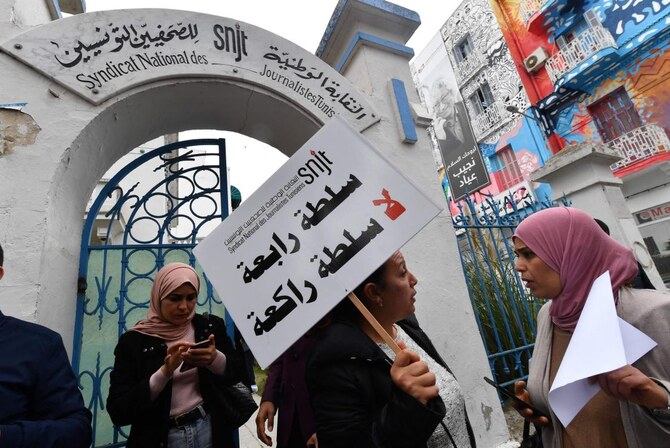
Authorities subsequently began arresting Saied’s critics including journalists, lawyers, politicians and civil society figures, charging them with endangering state security and violating a controversial anti-fake news law that observers argue stifles dissent.
Fewer voters turned out to participate in parliamentary and local elections in 2022 and 2023 amid economic woes and widespread political apathy.
Who’s running?
Many wanted to challenge Saied, but few were able to.
Seventeen potential candidates filed paperwork to run and Tunisia’s election authority approved only three: Saied, Zouhair Maghzaoui and Ayachi Zammel.
Maghzaoui is a veteran politician who has campaigned against Saied’s economic program and recent political arrests. Still, he is loathed by opposition parties for backing Saied’s constitution and earlier moves to consolidate power.
Zammel is a businessman supported by politicians not boycotting the race. During the campaign, he has been sentenced to prison time in four voter fraud cases related to signatures his team gathered to qualify for the ballot.
Others had hoped to run but were prevented. The election authority, known as ISIE, last month dismissed a court ruling ordering it to reinstate three additional challengers.
With many arrested, detained or convicted on charges related to their political activities, Tunisia’s most well-known opposition figures are also not participating.
That includes the 83-year-old leader of Tunisia’s most well organized political party Ennahda, which rose to power after the Arab Spring. Rached Ghannouchi, the Islamist party’s co-founder and Tunisia’s former house speaker, has been imprisoned since last year after criticizing Saied.
The crackdown also includes one of Ghannouchi’s most vocal detractors: Abir Moussi, a right-wing lawmaker known for railing against Islamists and speaking nostalgically for pre-Arab Spring Tunisia. The 49-year-old president of the Free Destourian Party also was imprisoned last year after criticizing Saied.
Other less known politicians who announced plans to run have also since been jailed or sentenced on similar charges.
Opposition groups have called to boycott the race. The National Salvation Front — a coalition of secular and Islamist parties including Ennahda — has denounced the process as a sham and questioned the election’s legitimacy.
What are the other issues?
The country’s economy continues to face major challenges. Despite Saied’s promises to chart a new course for Tunisia, unemployment has steadily increased to one of the region’s highest at 16 percent, with young Tunisians hit particularly hard.
Growth has been slow since the COVID-19 pandemic and Tunisia has remained reliant on multilateral lenders such as the World Bank and the European Union. Today, Tunisia owes them more than $9 billion. Apart from agricultural reform, Saied’s overarching economic strategy is unclear.
Negotiations have long been stalled over a $1.9 billion bailout package offered by the International Monetary Fund in 2022. Saied has been unwilling to accept its conditions, which include restructuring indebted state-owned companies and cutting public wages. Some of the IMF’s stipulations — including lifting subsidies for electricity, flour and fuel — would likely be unpopular among Tunisians who rely on their low costs.
Economic analysts say that foreign and local investors are reluctant to invest in Tunisia due to continued political risks and an absence of reassurances.
The dire economic straits have had a two-pronged effect on one of Tunisia’s key political issues: migration. From 2019 to 2023, an increasing number of Tunisians attempted to migrate to Europe without authorization. Meanwhile, Saied’s administration has taken a harsh approach against migrants arriving from sub-Saharan Africa, many who have found themselves stuck in Tunisia while trying to reach Europe.
Saied energized his supporters in early 2023 by accusing migrants of violence and crime and portraying them as part of a plot to change the country’s demography. The anti-migrant rhetoric prompted extreme violence against migrants and a crackdown from authorities. Last year, security forces targeted migrant communities from the coast to the capital with a series of arrests, deportation to the desert and the demolition of tent camps in Tunis and coastal towns.
Bodies continue to wash ashore on Tunisia’s coastline as boats carrying Tunisians and migrants from sub-Saharan Africa manage only to make it a few nautical miles before sinking.
What does it mean overseas?
Tunisia has maintained ties with its traditional Western allies but also forged new partnerships under Saied.
Much like many populist leaders who’ve taken power worldwide, Saied emphasizes sovereignty and freeing Tunisia from what he calls “foreign diktats.” He has insisted that Tunisia won’t become a “border guard” for Europe, which has sought agreements with him to better police the Mediterranean.
Tunisia and Iran lifted visa requirements and in May announced plans to boost trade ties. It has also accepted millions in loans as part of China’s Belt and Road Initiative to build hospitals, stadiums and ports.
Yet European countries remain Tunisia’s top trade partners and their leaders have maintained productive ties with Saied, hailing agreements to manage migration as a “model” for the region.
Saied has spoken ardently in support of Palestinians as war has swept the Middle East and opposes moves made to normalize diplomatic ties with Israel.


![]()

Tunisia votes Sunday in its third presidential election since the Arab Spring
Short Url
https://arab.news/wkw3p
Tunisia votes Sunday in its third presidential election since the Arab Spring
- Tunisia’s President Kais Saied faces few obstacles to winning another term in the country’s presidential election Sunday because his major opponents have been imprisoned or left off the ballot
- The presidential election is Tunisia’s third since protests led to the 2011 ouster of President Zine El Abidine Ben Ali during the Arab Spring


Latest updates


© 2026 SAUDI RESEARCH & PUBLISHING COMPANY, All Rights Reserved And subject to Terms of Use Agreement.