

Saudi Arabia’s non-oil business growth continues as PMI rises to 56.3 

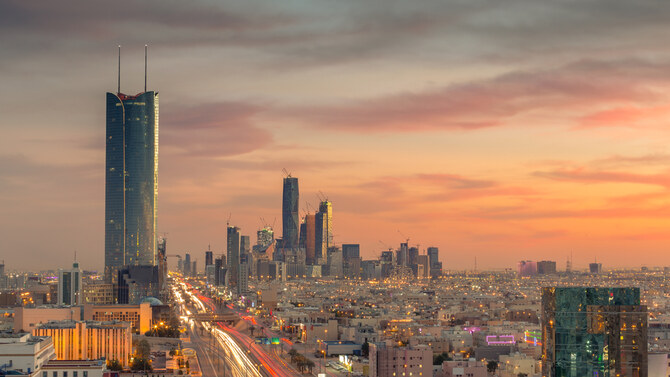
The Riyad Bank Saudi Arabia PMI survey, compiled by S&P Global, showed the Kingdom’s Purchasing Managers’ Index reached 56.3 in September, up from 54.8 in August. Shutterstock
Short Url
Updated 03 October 2024
Follow

Saudi Arabia’s non-oil business growth continues as PMI rises to 56.3 

RIYADH: Saudi Arabia’s non-oil private sector business conditions strengthened in September, driven by improved sales momentum and rising new orders, according to an economic tracker. 

The Riyad Bank Saudi Arabia PMI survey, compiled by S&P Global, showed the Kingdom’s Purchasing Managers’ Index reached 56.3 in September, up from 54.8 in August. 

S&P Global noted that any PMI reading above 50 indicates growth in the non-oil sector, while readings below 50 signal contraction. 

Supporting non-oil sector growth is a key goal of Saudi Arabia’s Vision 2030 initiative, which aims to diversify the economy and reduce dependence on oil revenue. 

“The rise in Saudi Arabia’s PMI to 56.3 shows the highest level in four months, highlighting a notable acceleration in non-oil private sector growth. This uptick was primarily driven by increased output and new orders, reflecting the sector’s expanding activity,” said Naif Al-Ghaith, chief economist at Riyad Bank.  

He added: “Businesses are responding to stronger domestic demand, which plays a critical role in reducing Saudi Arabia’s dependence on oil revenues.”  

Al-Ghaith also emphasized the significance of non-oil sector growth, given current crude production cuts and declining global oil prices. 

To stabilize the market, Saudi Arabia reduced its oil output by 500,000 barrels per day in April 2023, with the cut extended until December 2024. 

“As oil revenues come under pressure, the robust performance of the non-oil private sector serves as a buffer, helping to mitigate the potential impact on the country’s economic health. The diversification of revenue streams is crucial for maintaining growth amid fluctuating oil markets,” said Al-Ghaith.  

The report also indicated that improved business conditions supported employment growth, though companies struggled to find skilled workers in September. 

Despite strengthening demand, firms expressed concerns over competitive pressures, which dampened future activity expectations.  

S&P Global noted that higher competition led to a reduction in selling prices for the third consecutive month, despite rising business costs. 

“Rising output levels not only enhance the competitiveness of Saudi businesses but also drive forward developments aimed at expanding private sector participation in the economy. This shift provides a more stable foundation for long-term growth, making the economy less vulnerable to oil price volatility,” said Al-Ghaith.  

According to the report, growth was robust and widespread across monitored segments of the non-oil economy, with respondents citing higher demand and new project approvals. 

“By expanding output across key non-oil industries, Saudi Arabia is better positioned to navigate the challenges of oil market fluctuations, ensuring a more sustainable and diversified economic future,” concluded Al-Ghaith. 


Acwa signs key terms to develop 5GW of renewable energy capacity in Turkiye

Updated 23 February 2026
Follow

Acwa signs key terms to develop 5GW of renewable energy capacity in Turkiye

JEDDAH: Saudi utility giant Acwa has signed key investment agreements with Turkiye’s Ministry of Energy and Natural Resources to develop up to 5 gigawatts of renewable energy capacity, starting with 2GW of solar power across two plants in Sivas and Taseli.

Under the investment agreement, Acwa will develop, finance, and construct, as well as commission and operate both facilities, according to a press release.

The program builds on the company’s first investment in Turkiye, the 927-megawatt Kirikkale Independent Power Plant, valued at $930 million, which offsets approximately 1.8 million tonnes of carbon dioxide annually, the statement added.

A separate power purchase agreement has been concluded with Elektrik Uretim Anonim Sirketi for the sale of electricity generated by each facility.

Turkiye aims to boost solar and wind capacity to 120GW by 2035, supported by around $80 billion in investment, while recent projects have already helped prevent 12.5 million tonnes of CO2 emissions and reduced reliance on imported natural gas.

Turkiye’s energy sector has undergone a rapid transformation in recent years, with renewable power emerging as a central pillar of its strategy.

Raad Al-Saady, vice chairman and managing director of ACWA, said: “The signing of the IA (implementation agreement) and PPA key terms marks a pivotal moment in Acwa’s partnership with Turkiye, reflecting the country’s strong potential as a clean energy leader and manufacturing powerhouse.”

He added: “Building on our long-standing presence, including the 927MW Kirikkale Power Plant commissioned in 2017, this step elevates our partnership to a new level,” Al-Saady said.

In its statement, Acwa said the 5GW renewable energy program will deliver electricity at fixed prices, enhancing predictability for grid planning and supporting long-term industrial investment.

By replacing imported fossil fuels with domestically generated clean energy, the initiative is expected to reduce Turkiye’s exposure to global energy market volatility, strengthening energy security and lowering long-term power costs.

The company added that the economic impact will extend beyond the anticipated investment of up to $5 billion in foreign direct investment, with thousands of jobs expected during the construction phase and hundreds of high-skilled roles created during operations.

The energy firm concluded that its existing progress in Turkiye reflects a strong appreciation for Turkish engineering, construction, and manufacturing capacity, adding that localization has been a strategic priority, and it has already achieved 100 percent local employment at its developments in the country.