

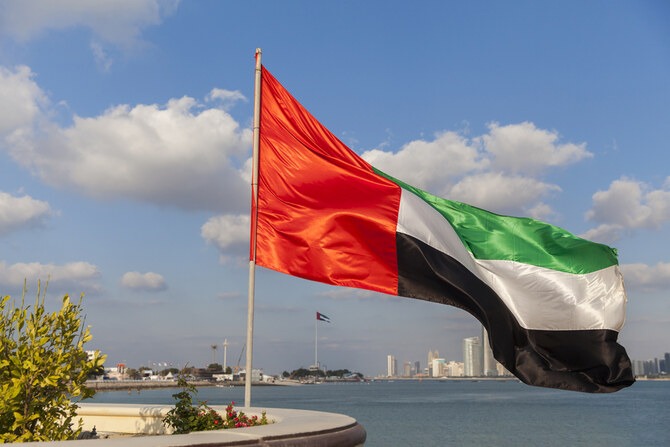

RIYADH: The UAE’s non-oil private sector regained momentum in August, with the Emirates’ Purchasing Managers’ Index rising to 54.2, up from an almost three-year low of 53.7 in July.
According to an S&P Global report, this growth is attributed to an upturn in business activity, driven primarily by a stronger intake of new orders, particularly from foreign clients.
While the PMI indicated solid improvement in the non-oil private sector, the rate of expansion was the second-slowest in over a year and a half.
Developing a robust non-oil private sector is crucial for the UAE as it aligns with the broader economic diversification plans of Middle Eastern countries to reduce reliance on oil.
“Although the UAE PMI picked up in August and was consistent with a solid expansion in non-oil business conditions, it remained weaker than the levels recorded earlier in the year, as fewer companies reported uplifts in activity,” said David Owen, senior economist at S&P Global Market Intelligence.
The report noted that international demand improvement in August led to the sharpest rise in new export orders since October 2023.
“Nevertheless, businesses remain confident that output growth will be sustained over the coming year, especially as sales pipelines remain strong and firms have ample levels of outstanding work to complete. Capacity constraints are also easing which should further aid business activity,” added Owen.
S&P Global also noted that hiring growth across the non-oil sector weakened in August, marking the slowest pace in seven months. While some firms expanded their workforces to boost output, others cut staffing levels.
The report highlighted that the future business outlook strengthened in August after falling to a six-month low in July, with firms largely optimistic about improving domestic economic conditions.
“Ongoing price mark-ups have the potential to curb demand, adding some uncertainty to the view that growth will continue unabated,” said Owen.
The study also revealed that operating conditions in Dubai’s non-oil private sector improved at a stronger pace in August compared to July. This improvement was driven by a quicker increase in new business inflows, with demand growth reaching a five-month high.
“Dubai non-oil firms continued to face upward pressure on their input costs in August. Prices rose sharply, albeit at the slowest pace since May. Average selling charges rose for the fourth month in a row and to the greatest extent since April 2021,” added S&P Global.
Qatar’s non-energy business conditions strengthen in August
In another report, S&P Global said that non-energy business growth in Qatar strengthened in August, with the country’s PMI hitting 53.1 that month, representing a rise from 51.3 in July.
The survey, carried out in association with Qatar Financial Center, underlined that this growth was spurred by the strengthening of demand for goods and services, as well as a solid expansion in output.
The report said that private sector jobs in Qatar rose strongly in August, reversing July’s slight decline, driven by strengthening demand for the country’s non-energy goods and services.
“The PMI resumed its recent upward trajectory in August, mainly reflecting a surge in employment and stronger inflows in new business. The increase in jobs was the second-fastest in the survey history, while demand growth was driven by the goods and services segments of the non-energy economy,” said Yousuf Mohamed Al-Jaida. CEO of QFC Authority.
He added: “Financial services continued to lead the way with the sharpest rise in new business in two years.”
The level of incoming new orders expanded for the 18th time in 19 months, and at a strong rate that outperformed the long-run survey trend, said the analysis.
The report also revealed that operating conditions in Dubai’s non-oil private sector improved at a stronger pace in August compared to July. This improvement was driven by a quicker increase in new business inflows, with demand growth reaching a five-month high.
“Dubai non-oil firms continued to face upward pressure on their input costs in August. Prices rose sharply, albeit at the slowest pace since May. Average selling charges rose for the fourth month in a row and to the greatest extent since April 2021,” added S&P Global.


