Cultural Week in Greece showcases rich Saudi heritage

1 / 17
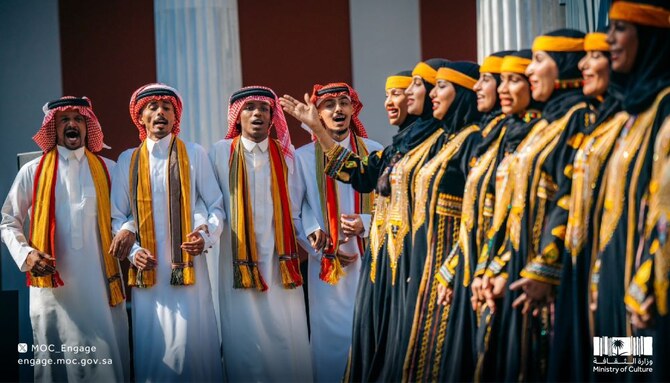
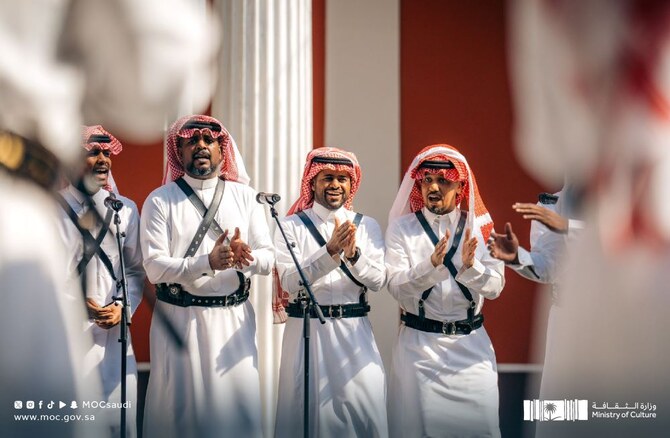
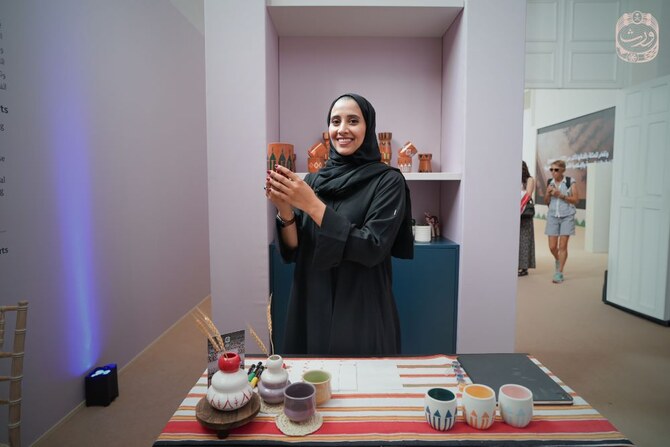
Saudi Cultural Week was held from Sept. 27 to Oct. 1 in Athens, Greece. (X/@MOCSaudi)
2 / 17
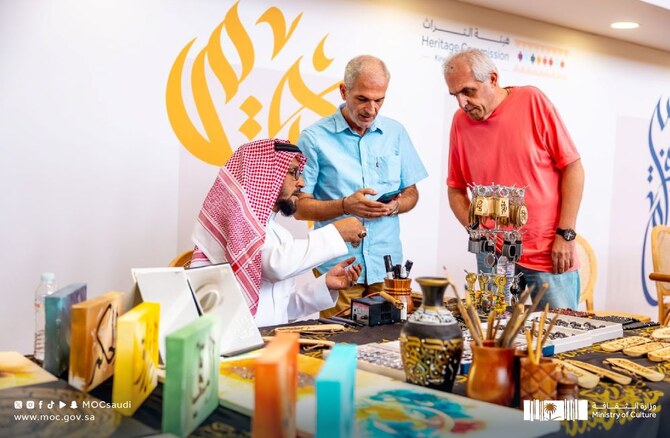
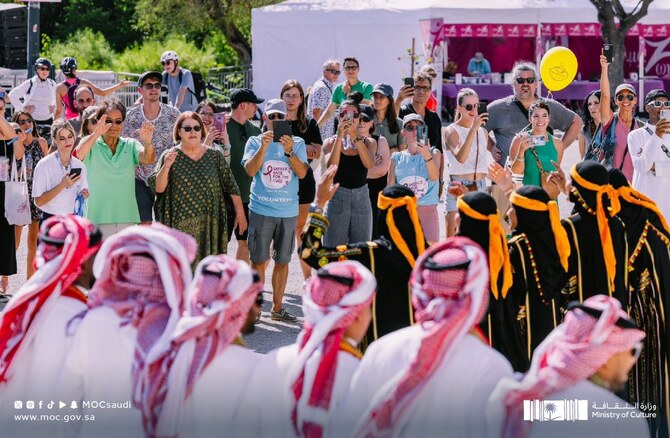
Saudi Cultural Week was held from Sept. 27 to Oct. 1 in Athens, Greece. (X/@MOCSaudi)
3 / 17
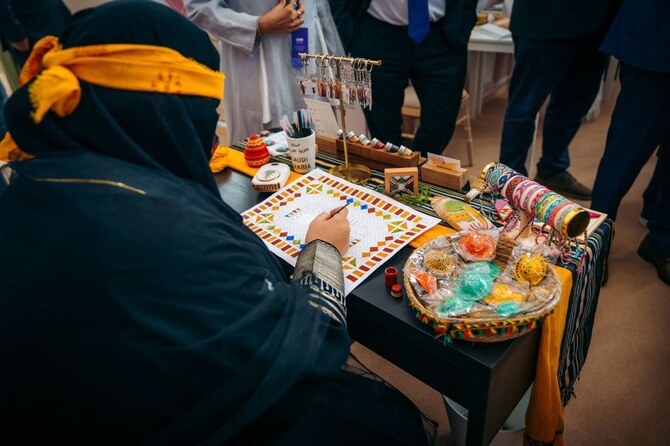
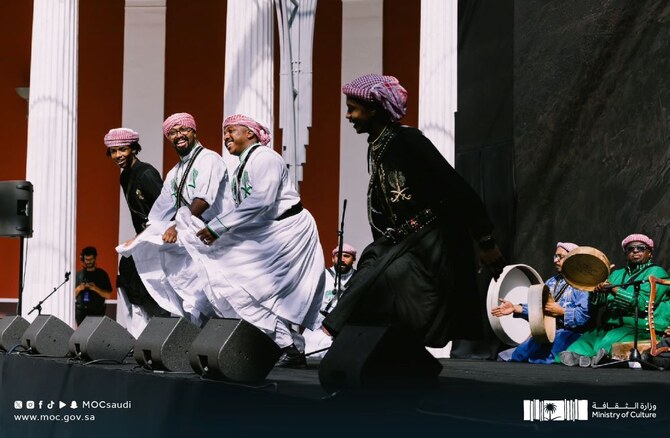
Saudi Cultural Week was held from Sept. 27 to Oct. 1 in Athens, Greece. (X/@MOCSaudi)
4 / 17
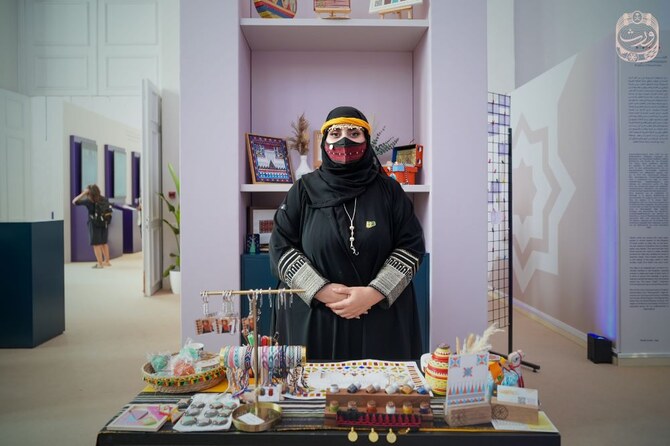
Saudi Cultural Week was held from Sept. 27 to Oct. 1 in Athens, Greece. (X/@MOCSaudi)
5 / 17
Saudi Cultural Week was held from Sept. 27 to Oct. 1 in Athens, Greece. (X/@MOCSaudi)
6 / 17
Saudi Cultural Week was held from Sept. 27 to Oct. 1 in Athens, Greece. (X/@MOCSaudi)
7 / 17
Saudi Cultural Week was held from Sept. 27 to Oct. 1 in Athens, Greece. (X/@MOCSaudi)
8 / 17
Saudi Cultural Week was held from Sept. 27 to Oct. 1 in Athens, Greece. (X/@MOCSaudi)
9 / 17
Saudi Cultural Week was held from Sept. 27 to Oct. 1 in Athens, Greece. (X/@MOCSaudi)
10 / 17
Saudi Cultural Week was held from Sept. 27 to Oct. 1 in Athens, Greece. (X/@MOCSaudi)
11 / 17
Saudi Cultural Week was held from Sept. 27 to Oct. 1 in Athens, Greece. (X/@MOCSaudi)
12 / 17
Saudi Cultural Week was held from Sept. 27 to Oct. 1 in Athens, Greece. (X/@MOCSaudi)
13 / 17
Saudi Cultural Week was held from Sept. 27 to Oct. 1 in Athens, Greece. (X/@MOCSaudi)
14 / 17
Saudi Cultural Week was held from Sept. 27 to Oct. 1 in Athens, Greece. (X/@MOCSaudi)
15 / 17
Saudi Cultural Week was held from Sept. 27 to Oct. 1 in Athens, Greece. (X/@MOCSaudi)
16 / 17
Saudi Cultural Week was held from Sept. 27 to Oct. 1 in Athens, Greece. (X/@MOCSaudi)
17 / 17
Saudi Cultural Week was held from Sept. 27 to Oct. 1 in Athens, Greece. (X/@MOCSaudi)
Short Url
Updated 30 September 2024
Follow

Cultural Week in Greece showcases rich Saudi heritage

  • Program included various events and cultural and artistic activities that showcased the rich Saudi culture across different creative industries
  • Libraries Commission showcased rare Arabic and Islamic manuscripts, demonstrating the beauty of Arabic calligraphy to visitors

MAKKAH: The Saudi Cultural Week was held from Sept. 27 to Oct. 1 in the Greek capital, Athens by the Ministry of Culture to familiarize visitors with Saudi traditions and customs.

The program included various events and cultural and artistic activities that showcased the rich Saudi culture across different creative industries.

Abdulrahman Almutawa, spokesperson for the Ministry of Culture, told Arab News that the Culinary Arts Commission also participated to introduce traditional Saudi dishes and Saudi coffee to visitors, highlighting the authenticity and hospitality of the Saudi community.

The participation aimed to introduce Saudi culture and heritage to the international community.

The Libraries Commission showcased rare Arabic and Islamic manuscripts, demonstrating the beauty of Arabic calligraphy to visitors.  

Its participation was in cooperation with the Prince Mohammed bin Salman Global Center for Arabic Calligraphy Initiative, with Saudi calligraphers showcasing their creativity in calligraphy and inscriptions that reflect the beauty of the art form.

The Fashion Commission displayed traditional Saudi clothes, presented an exhibition that reflected the creativity of Saudi designers in fashion, introduced Saudi fashion and its diverse aesthetics, and screened Saudi short films.

The Music Commission presented performances by Saudi musicians using traditional musical instruments, while the Theater and Performing Arts Commission featured various traditional performances from different regions of the Kingdom.

The Heritage Commission set up an archeological tent for visitors to learn about Saudi cultural heritage, treasures, and prominent traditional games in the Kingdom. 

The Culinary Arts Commission provided a live cooking demonstration to prepare the Kingdom's most famous traditional dishes, featuring Saudi food products.

Almutawa indicated that a pavilion was dedicated to the Year of the Camel initiative, which aimed to highlight the importance of camels and introduce visitors to their historical and cultural role in Arab and Saudi heritage.

Kawthar Al-Atiyah: ‘My paintings speak first to the body, then to the mind’ 

Updated 19 December 2025
Follow

Kawthar Al-Atiyah: ‘My paintings speak first to the body, then to the mind’ 

  • The Saudi artist discusses her creative process and her responsibility to ‘represent Saudi culture’ 

RIYADH: Contemporary Saudi artist Kawthar Al-Atiyah uses painting, sculpture and immersive material experimentation to create her deeply personal works. And those works focus on one recurring question: What does emotion look like when it becomes physical?  

“My practice begins with the body as a site of memory — its weight, its tension, its quiet shifts,” Al-Atiyah tells Arab News. “Emotion is never abstract to me. It lives in texture, in light, in the way material breathes.”  

This philosophy shapes the immersive surfaces she creates, which often seem suspended between presence and absence. “There is a moment when the body stops being flesh and becomes presence, something felt rather than seen,” she says. “I try to capture that threshold.”  

Al-Atiyah, a graduate of Princess Nourah bint Abdulrahman University, has steadily built an international profile for herself. Her participation in VOLTA Art Fair at Art Basel in Switzerland, MENART Fair in Paris, and exhibitions in the Gulf and Europe have positioned her as a leading Saudi voice in contemporary art.  

Showing abroad has shaped her understanding of how audiences engage with vulnerability. “Across countries and cultures, viewers reacted to my work in ways that revealed their own memories,” she says. “It affirmed my belief that the primary language of human beings is emotion. My paintings speak first to the body, then to the mind.” 

Al-Atiyah says her creative process begins long before paint touches canvas. Instead of sketching, she constructs physical environments made of materials including camel bone, raw cotton, transparent fabrics, and fragments of carpet.  

“When a concept arrives, I build it in real space,” she says. “I sculpt atmosphere, objects, light and emotion before I sculpt paint.  

“I layer color the way the body stores experience,” she continues. “Some layers stay buried, others resurface unexpectedly. I stop only when the internal rhythm feels resolved.”  

This sensitivity to the unseen has drawn attention from international institutions. Forbes Middle East included her among the 100 Most Influential Women in the Arab World in 2024 and selected several of her pieces for exhibition.  

“One of the works was privately owned, yet they insisted on showing it,” she says. “For me, that was a strong sign of trust and recognition. It affirmed my responsibility to represent Saudi culture with honesty and depth.”  

Her recent year-long exhibition at Ithra deepened her understanding of how regional audiences interpret her work.  

'Veil of Light.' (Supplied) 

“In the Gulf, people respond strongly to embodied memory,” she says. “They see themselves in the quiet tensions of the piece, perhaps because we share similar cultural rhythms.”  

A documentary is now in production exploring her process, offering viewers a rare look into the preparatory world that precedes each canvas.  

“People usually see the final work. But the emotional architecture built before the painting is where the story truly begins,” she explains.  

Beyond her own practice, Al-Atiyah is committed to art education through her work with Misk Art Institute. “Teaching is a dialogue,” she says. “I do not focus on technique alone. I teach students to develop intuition, to trust their senses, to translate internal experiences into honest visual language.”  

 'Jamalensan.' (Supplied) 

She believes that artists should be emotionally aware as well as technically skilled. “I want them to connect deeply with themselves so that what they create resonates beyond personal expression and becomes part of a cultural conversation,” she explains.  

In Saudi Arabia’s rapidly growing art scene, Al-Atiyah sees her role as both storyteller and facilitator.  

“Art is not decoration, it is a language,” she says. “If my work helps someone remember something they have forgotten or feel something they have buried, then I have done what I set out to do.”