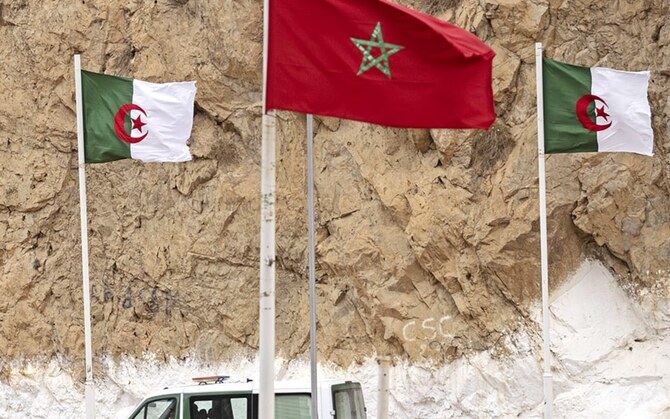
ALGIERS: Algeria said Thursday it was imposing visa requirements on Moroccans, accusing its passport holders of criminal activity, including “Zionist espionage,” in a new downturn in fraught relations with its neighbor.
A statement carried by Algeria’s official APS news agency charged that Morocco had “engaged in various actions that threaten Algeria’s stability.”
It accused Morocco of having “deployed Zionist espionage agents holding Moroccan passports to freely enter the national territory.”
It also said Morocco had been conducting “multiple networks of organized crime, drug and human trafficking, not to mention smuggling and illegal immigration” within its borders.
Earlier this month, authorities in the Algerian city of Tlemcen said they had arrested seven people, including four Moroccans, accused of belonging to a spy ring.
Algiers broke diplomatic ties with Rabat in August 2021, citing “hostile acts” by its neighbor, months after the kingdom normalized relations with Israel.
In 2020, then US president Donald Trump recognized Morocco’s annexation of the disputed Western Sahara in return for Rabat normalizing relations with Israel.
The border between Algeria and Morocco has been closed for 30 years.
But travelers from Morocco did not need a visa to enter Algerian territory — despite the lack of direct flights — and neither do Algerians to enter Morocco.
There was no immediate response from Rabat to Thursday’s move by Algiers.
Algeria said it was “committed to preserving ties” with the “brotherly” Moroccan people, and blamed the Rabat authorities for recent diplomatic rifts.
“The Moroccan regime alone bears responsibility for the current deterioration of bilateral relations due to its hostile and aggressive actions against Algeria,” it said.
The two countries remain at odds over the Western Sahara and alleged Moroccan support for the Berber separatist movement MAK in Algeria.
The Polisario Front, which is backed by Algiers, has campaigned for the independence of Western Sahara since its colonial ruler Spain pulled out in 1975 but the territory is largely controlled by Morocco.
The United Nations, which has had a peacekeeping mission in Western Sahara since 1991, regards it as a “non-self-governing territory.”
After French President Emmanuel Macron said in July that “the only solution” was a Moroccan plan to grant the territory autonomy within the kingdom without the option of independence, Algeria recalled its ambassador.
Algiers also accuses Rabat of backing the MAK movement, which seeks independence for the Berber Kabylie region east of the capital.
Morocco described the 2021 decision to break off diplomatic relations as “completely unjustified.”


![]()

Algeria slaps visa requirements on Moroccans, citing ‘Zionist espionage’
Short Url
https://arab.news/5695j
Algeria slaps visa requirements on Moroccans, citing ‘Zionist espionage’
- A statement carried by Algeria’s official APS news agency charged that Morocco had “engaged in various actions that threaten Algeria’s stability“
- Algiers broke diplomatic ties with Rabat in August 2021, citing “hostile acts” by its neighbor


Latest updates





© 2026 SAUDI RESEARCH & PUBLISHING COMPANY, All Rights Reserved And subject to Terms of Use Agreement.