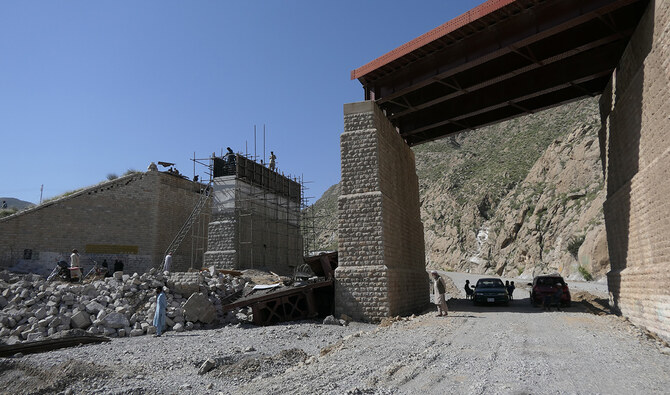

QUETTA: Nearly a month after a series of coordinated attacks in Pakistan’s restive Balochistan province killed over 50 people, a senior Pakistan Railways official expressed optimism on Tuesday about completing the restoration work on a key bridge destroyed by militants by October 10.
Built in 1887, the five-span bridge was the second such link constructed by the British Army at the Bolan Pass after sealing a deal with the then Khan of Kalat, Meer Khuda-e-Dad Khan, to expand the railway network to Quetta and Chaman near the Afghan border.
Dozens of armed militants from the outlawed Baloch Liberation Army (BLA) carried out multiple coordinated attacks, including suicide bombings, in Lasbela, Musakhail, Kachi, Kalat and Mastung districts on August 26. The attacks coincided with the 18th death anniversary of local chieftain Nawab Akbar Bugti, who was assassinated in an army operation in 2006.
During the militant violence, BLA fighters fatally shot commuters on passenger buses, attacked the paramilitary Frontier Corps’ camp and targeted the railway infrastructure.
“As per the engineering design, October 10 is the date [set for the completion of the restoration work],” Imran Hayat, divisional superintendent of Pakistan Railways in Quetta, told Arab News. “But the secretary-chairman [the top railway official] during his recent visit directed for earlier completion of the bridge, and we are working day and night to ensure that.”
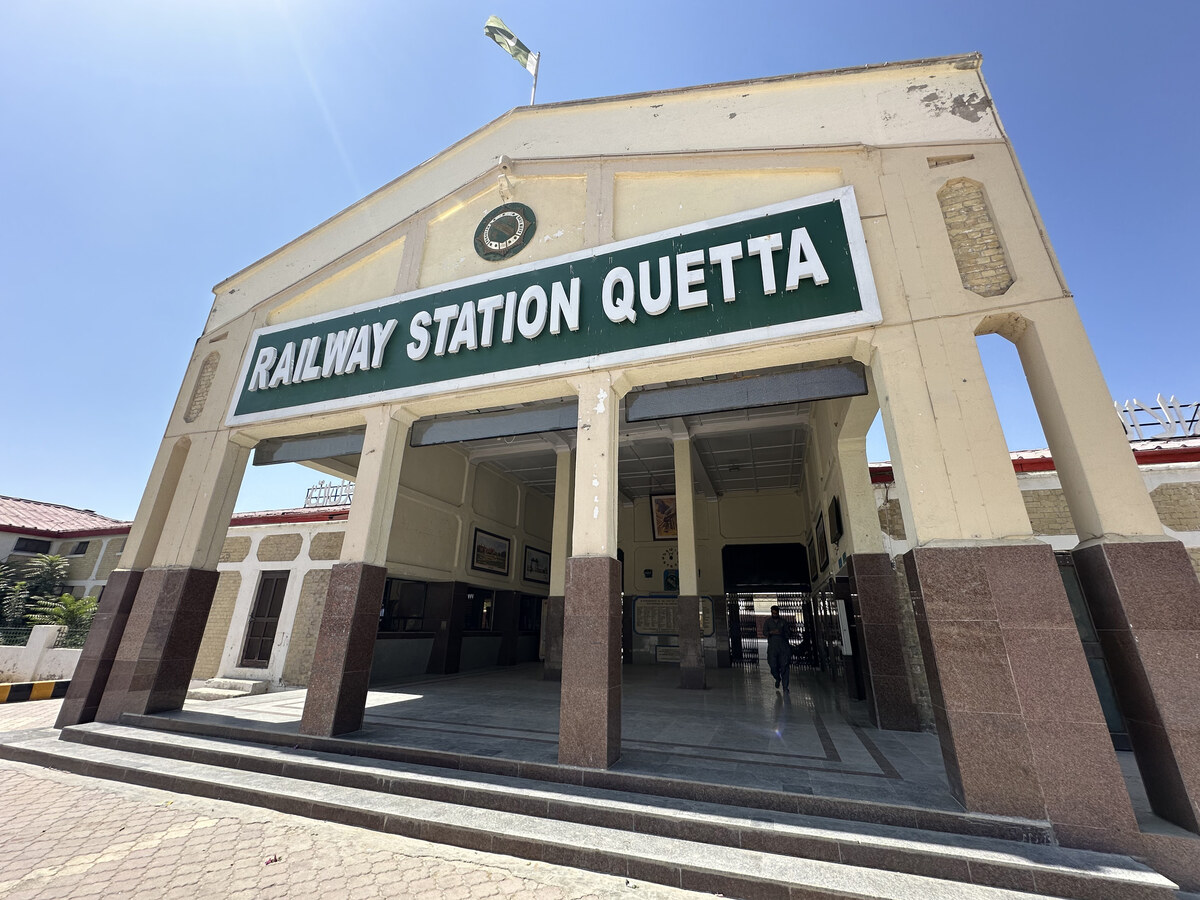
This photo taken on September 23, 2024, shows a deserted view of Quetta Railway Station in Quetta, Balochistan, as the railway lines connecting the province to other parts of Pakistan destroyed in militant attacks on August 26. (AN Photo)
“The bridge has a very rich history,” he continued. “Many old citizens [of the province] have expressed their dismay over the incident, which has compromised the bridge.”
The railway official said the suspension of train services since last month had caused around Rs40 million ($144,000) in revenue losses.

This photo taken on September 23, 2024, shows a deserted view of Quetta Railway Station in Quetta, Balochistan, as the railway lines connecting the province to other parts of Pakistan destroyed in militant attacks on August 26. (AN Photo)
The bridge at Bolan Pass, a strategic mountain pass that historically served as a key trade and military route connecting the subcontinent with Afghanistan and Central Asia, primarily served two important train services: the Jaffar Khan Jamali Express, which runs up to Peshawar, the capital of Pakistan’s northwestern Khyber Pakhtunkhwa province, and the Bolan Mail, which travels between Quetta and Karachi, the capital of Sindh province.
“More than the [revenue] loss, it is about the public service obligation,” Hayat said, adding the government had not lost its “resolve to connect the people of Balochistan” with the rest of the country, noting the railway was the “ultimate travel mode for poor people.”
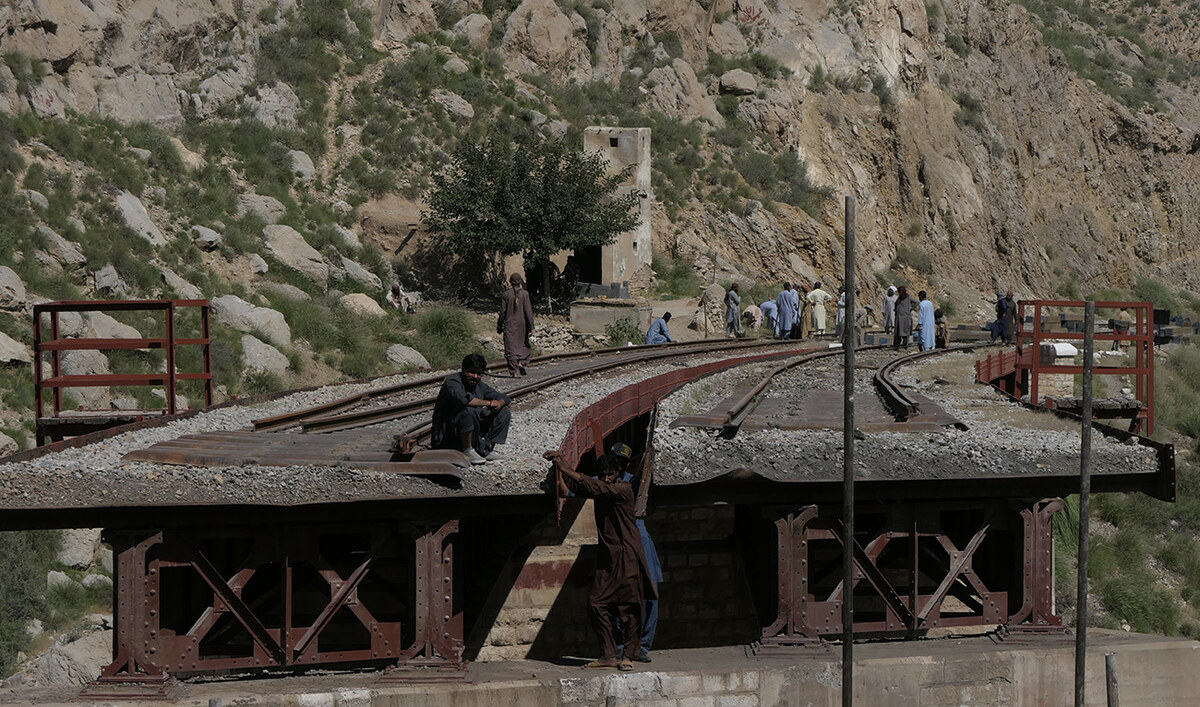
Laborers carry out restoration work on a destroyed bridge in Kolpur Pakistan on September 22, 2024, as the railway lines connecting the province to other parts of Pakistan destroyed in militant attacks on August 26. (AN Photo)
Baloch separatist groups have previously attacked passenger trains and railway tracks in the Bolan Pass area.
Last year in January, several passengers were injured after a bomb attack on the Peshawar-bound Jaffar Express overturned various carriages near Aab-e-Gum Railway Station.
Later, on October 16, six people were killed and several others wounded after a Punjab-bound passenger train was targeted by double explosions following its departure from Mach Railway Station in Balochistan.
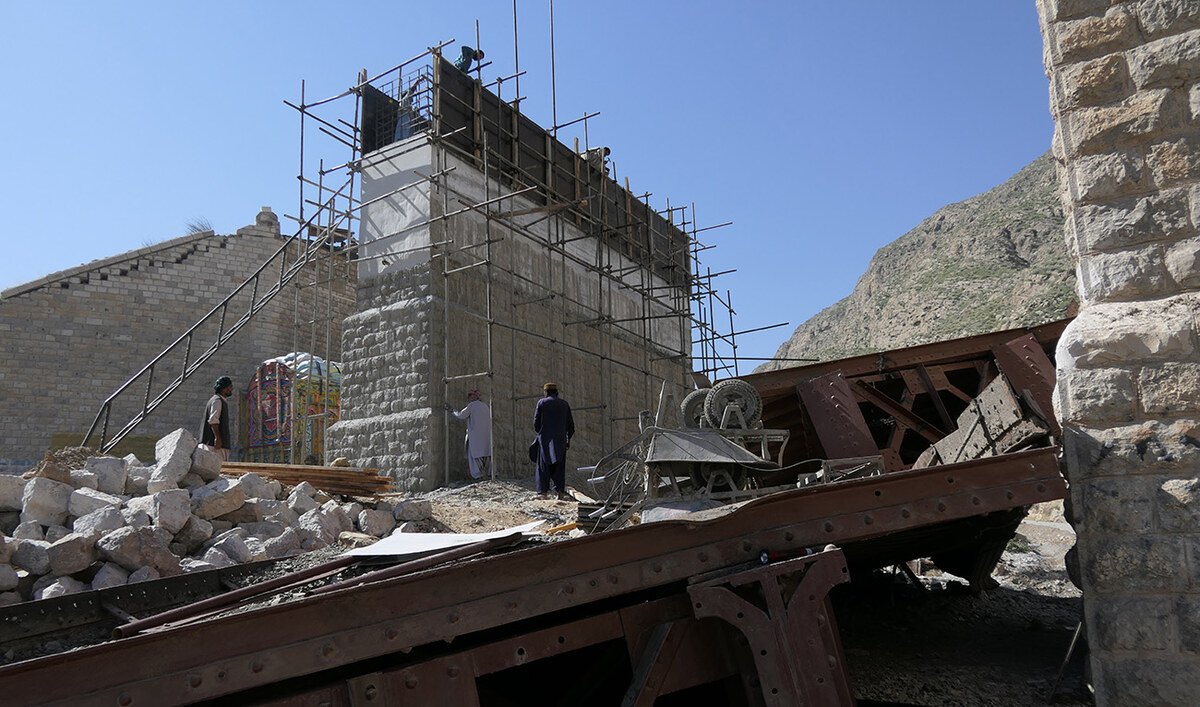
Laborers carry out restoration work on a destroyed bridge in Kolpur Pakistan on September 22, 2024, as the railway lines connecting the province to other parts of Pakistan destroyed in militant attacks on August 26. (AN Photo)
Asked about security arrangements for passenger trains and railway installations in the restive Balochistan region, Hayat said security forces had secured the area, allowing construction work on the bridge to proceed without hindrance.
“We are a service department,” he told Arab News. “Our responsibility is to ensure people have transportation whenever they wish to travel to any part of the country. We have faith in our security forces, who have secured the area up to Rohri and Quetta.”
Pakistan’s militancy-hit Balochistan province shares borders with Iran and Afghanistan, with Baloch separatists accusing the state of exploiting the province’s natural resources, a claim denied by the government.
The southwestern province has seen an uptick in violence by Baloch separatist groups over the last seven months, with militants blocking highways and attacking passengers, particularly those from Pakistan’s populous Punjab province.
Speaking to Arab News, Muhammad Nasrullah, a resident of Mach, a small town located about 50 kilometers from Quetta, said he had to travel with his family to Layyah, a district in Punjab, by passenger bus due to the suspension of train services from Quetta.
“There is a sense of insecurity due to the current situation in Balochistan, but we are compelled to commute on public transport,” he told Arab News. “People are traveling to Punjab by passenger buses because the train service is suspended due to the attack on the bridge.”
“I urge the government to increase the number of trains from Balochistan and provide secure train service to passengers,” he added.