PARIS: A French extremist linked to the perpetrators of the 2015 massacre at satirical magazine Charlie Hebdo made a surprise admission Tuesday that he was involved in the 2011 kidnapping of three French aid workers in Yemen.
Peter Cherif, 42, also known as Abou Hamza, is being tried in Paris for terrorism-related offenses committed between 2011 and 2018, when he allegedly belonged to Yemen-based militant group Al-Qaeda in the Arabian Peninsula (AQAP).
Arrested in Djibouti in 2018, he had previously denied involvement in the kidnapping.
But on Tuesday he told the court that “I accept the facts, I was the translator” between his fellow French and their captors.
“I regret being involved in all this,” he said, claiming that he was not aware of the plot to kidnap the aid workers and that they were better treated because of his presence.
Even before his unexpected admission, prosecutors had established that he was in Yemen in May 2011 when the three aid workers from the Triangle Generation Humanitaire charity were abducted as they returned to their lodgings in the village of Seiyun.
They were released in November 2011 after spending their captivity in desert caves.
Amelie, one of the hostages, had already testified at the trial that she recognized Cherif as the translator with the captors, who spoke neither English nor French.
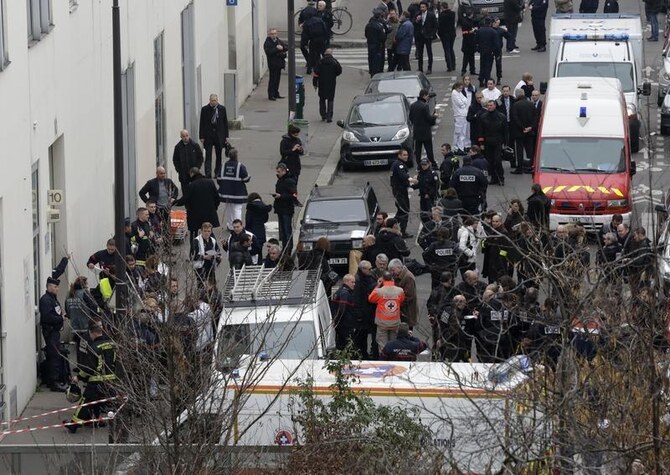
Cherif was linked to a Paris extremist cell and was named in the enquiry into the January 2015 attack on satirical magazine Charlie Hebdo, due to his regular contact with the perpetrators, Said and Cherif Kouachi.
Twelve people were killed in the massacre that sent shock waves across France. The brothers died in a shootout with police two days later.
Investigating judges believe Cherif recruited the brothers into AQAP and had knowledge of the plan to carry out an attack in France.
According to several witnesses, AQAP advised foreign fighters in Yemen to return to their countries of origin to stage attacks.
In 2020, Cherif was called as a witness during a trial over the 2015 attacks and claimed to have had “nothing to do” with the massacre.
In 2004, Cherif left Paris to fight in Iraq and was captured by coalition forces in the ruins of Fallujah a few months later.
He escaped to Syria in 2007, eventually reporting to the French embassy in Damascus and was deported in early 2008.
He went on trial in early 2011, but before he was sentenced to five years in prison, he fled to Yemen where he joined AQAP.
He spent seven years there before traveling under a false identity with his wife and two children in 2018 to Djibouti, where he was arrested and handed over to France.
The trial is scheduled to last until early October.


![]()

French extremist admits role in kidnapping of aid workers in Yemen
Short Url
https://arab.news/66a4m
French extremist admits role in kidnapping of aid workers in Yemen
- Amelie, one of the hostages, had already testified at the trial that she recognized Cherif as the translator with the captors
- Cherif was linked to a Paris extremist cell and was named in the enquiry into the January 2015 attack on satirical magazine Charlie Hebdo


Latest updates


© 2026 SAUDI RESEARCH & PUBLISHING COMPANY, All Rights Reserved And subject to Terms of Use Agreement.