Reform of UN can ‘give Africa a voice,’ Mauritanian president says

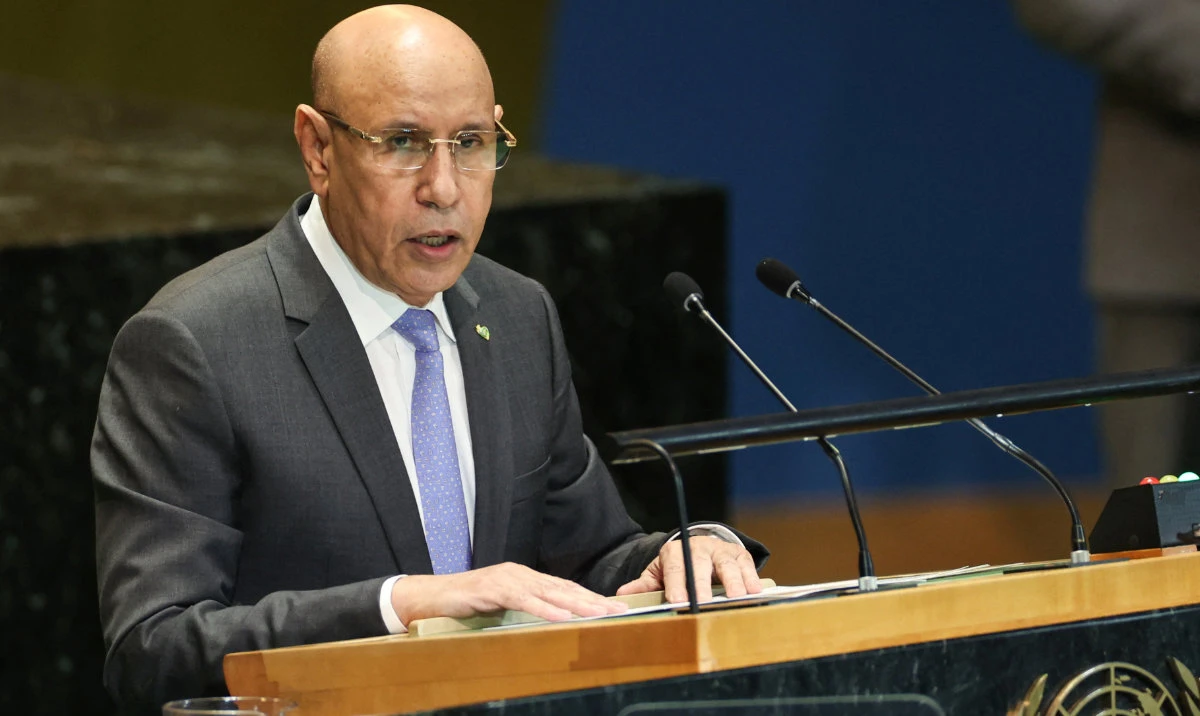
Mohamed Ould Ghazouani, President of Mauritania addresses the "Summit of the Future" in the General Assembly Hall of the United Nations Headquarters in New York City, US, September 23, 2024. (Reuters)
Short Url
Updated 24 September 2024
Follow

Reform of UN can ‘give Africa a voice,’ Mauritanian president says

  • Mohamed Ould Ghazouani highlights continent’s ‘tremendous efforts to achieve Agenda 2063’ plan for development and economic growth
  • But conflict, climate change and debt burdens are causing slowdown in development, he warns

NEW YORK CITY: Stagnating progress in efforts to achieve the UN’s Sustainable Development Goals is holding back African nations and the wider world, Mauritania’s president told the UN as he appealed for reforms of the international system to “give Africa a voice.”

Speaking on Monday at the organization’s headquarters in New York City, Mohamed Ould Ghazouani said that despite setbacks, the African Union and its member states have “made tremendous efforts to achieve Agenda 2063,” a blueprint for sustainable development and economic growth on the continent.

The day before his address, UN member states voted to adopt the “Pact of the Future,” an initiative designed to bring multilateralism “back from the brink” and revive progress toward achieving the SDGs.

“The crises faced by our world recently present a challenge to our common future,” said Ghazouani, who chairs the African Union.

“If we continue to (attempt to) achieve the SDGs following the same track, using the same mechanisms, following the same pace, within the foreseeable future we will not be able either to eradicate poverty or to achieve peace and security, or to restore the environmental balance, or create the sustainable development we want.”

Authorities in Mauritania have sought to battle violence, terrorism, vulnerabilities and poverty, and have worked to ensure the economic integration of Africa, he added.

But progress in efforts to achieve the SDGs, regionally and internationally, are “not up to standard,” Ghazouani warned, as he highlighted the regression in development because of “wars, conflict, climate change and the debt burden.”

Imbalances in international governance have also played a part in the stagnation of progress, he added.

“It has been incumbent on the international community to find solutions, effective and efficient solutions, that will establish a common agenda to accelerate the implementation of the SDGs,” he said.

Reform of the international financial architecture and the UN Security Council remain a priority for his country and continent, Ghazouani continued.

This would “allow our continent to have a voice so its priorities will be given due consideration in the international agenda,” he said.

“We also call (for efforts) to address the debt issue, address environmental needs, enhance international cooperation and ensure international peace and security, so together we can take our planet away from the collapse that it is experiencing.”
US allies, foes alarmed by capture of Venezuela’s Maduro

Updated 55 min 26 sec ago
Follow

US allies, foes alarmed by capture of Venezuela’s Maduro

  • Countries such as Russia and China, which had ties with Maduro’s government, were quick to condemn the operation but alarm also shared by France and EU
  • UN Secretary-General Antonio Guterres was “deeply alarmed” by the US strikes

PARIS: The US military operation that led to the seizure of Venezuelan President Nicolas Maduro on Saturday sparked alarm across the international community, with allies and foes of Washington and Caracas expressing disquiet.
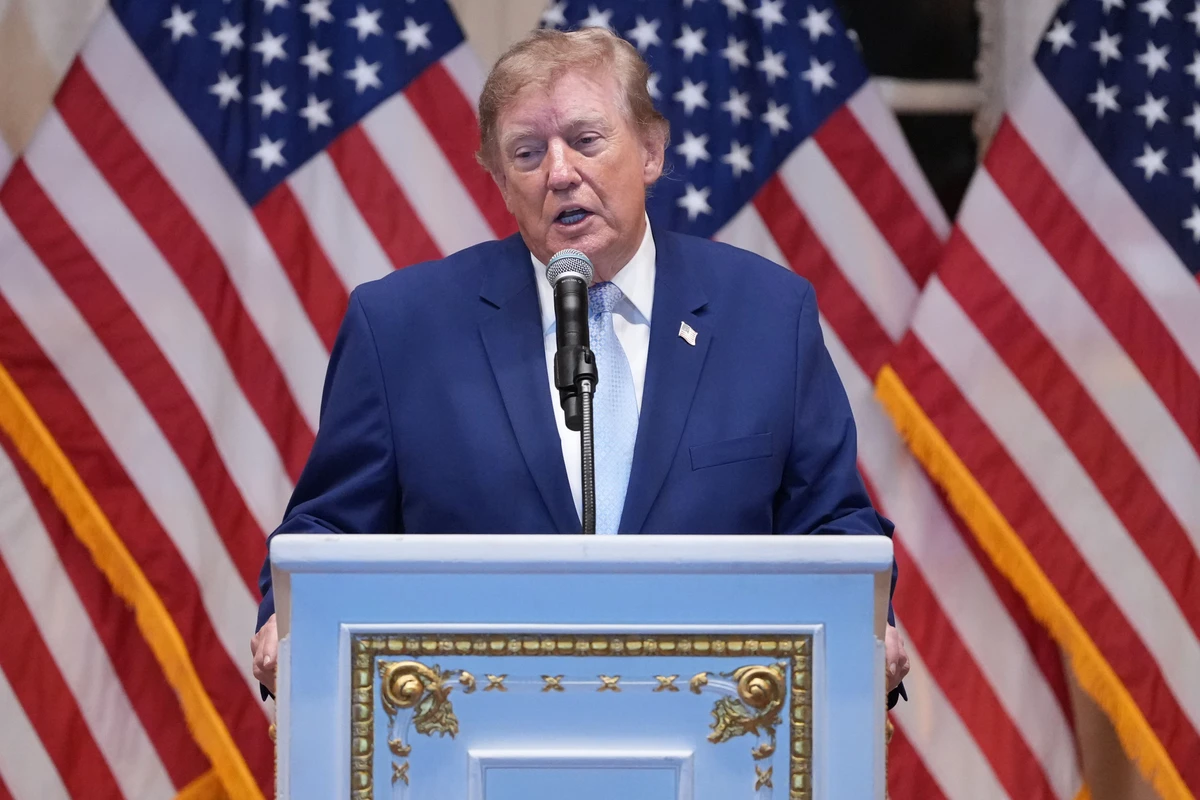
US President Donald Trump said Maduro and his wife would be taken to New York to face federal charges after military strikes and an operation which he described as looking like a “television show.”
The Venezuelan government decried what it termed a “extremely serious military aggression” by Washington and declared a state of emergency.
Countries such as Russia and Iran, which had longstanding ties with Maduro’s government, were quick to condemn the operation but their alarm was also shared by Washington’s allies including France and the EU.
Here is a rundown of the main reaction.

Russia

Russia demanded the US leadership “reconsider its position and release the legally elected president of the sovereign country and his wife.”

China

Beijing said “China is deeply shocked and strongly condemns the US’s blatant use of force against a sovereign state and its action against its president.”

Iran

Iran, which Trump bombed last year, said it “strongly condemns the US military attack on Venezuela and a flagrant violation of the country’s national sovereignty and territorial integrity.”

Mexico

Mexico, which Trump has also threatened with military force over drug trafficking, strongly condemned the US military action in Venezuela, saying it “seriously jeopardizes regional stability.”

Colombia

Colombian President Gustavo Petro — whose country neighbors Venezuela — called the US action an “assault on the sovereignty” of Latin America which would lead to a humanitarian crisis.

Brazil

Brazilian President Luiz Inacio Lula da Silva slammed the US attacks as a “serious affront” to Venezuela’s sovereignty.

Cuba

Cuba, a strong ally of Venezuela, denounced “state terrorism against the brave Venezuelan people.”

Spain

Spain offered to mediate in the crisis to find a way to a peaceful solution, while calling for “de-escalation and restraint.”

France

France condemned the US operation, saying it undermined international law and no solution to Venezuela’s crisis can be imposed from the outside.

EU

The EU more generally expressed concern at the developments and urged respect for international law, even as it noted that Maduro “lacks legitimacy.”
EU candidate country North Macedonia, along with fellow Balkan nations Albania and Kosovo, backed Washington, however.
“We stand with the United States and the Venezuelan people for freedom and democracy,” North Macedonia FM Timco Mucunski said on X.

Britain

British Prime Minister Keir Starmer said all countries should “uphold international law” and added that “the UK was not involved in any way in this operation” as he urged patience in order to “establish the facts.”

Italy

In a rare expression of support for the US operation by a major European country, far-right Italian Prime Minister Giorgia Meloni — a Trump ally — argued the US military action in Venezuela was “legitimate” and “defensive.”

Israel

Israel also hailed the operation, saying Washington acted as the “leader of the free world.”

Ukraine

Ukraine — dependent on US support in its war against invading Russia — did not address the legality of a big country like America using military force against a much smaller one like Venezuela.
Foreign minister Andriy Sybiga instead focused on Maduro’s lack of legitimacy and the Venezuelan government’s repression, while backing “democracy, human rights, and the interests of Venezuelans.”

South Africa

South Africa, which Trump accuses of alleged discrimination — and even “genocide” — of minority white Afrikaners, said: “Unlawful, unilateral force of this nature undermines the stability of the international order and the principle of equality among nations.”

UN

UN Secretary-General Antonio Guterres was “deeply alarmed” by the US strikes, with his spokesman quoting him as saying it could “constitute a dangerous precedent.”