

Saudi Arabia has ushered in a remarkable transformation in sports infrastructure with plans for 15 stadiums as part of its FIFA World Cup 2034 bid.
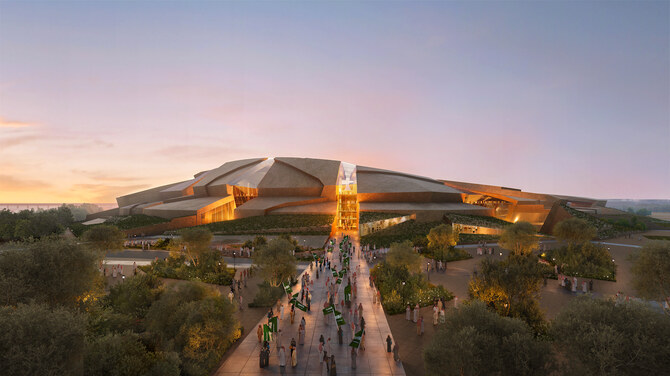
At the heart of this ambitious project is the King Salman International Stadium in Riyadh, which is set to become the largest stadium in the Kingdom, with a capacity of 92,760, when it is completed in 2029.
The stadium design is based on harmony with the natural landscape, and incorporates elements from the surrounding environment into its roof, providing shading and ventilation essential for comfort in the desert climate. This venue is destined to host significant national events and concerts, as well as sporting contests.
The Prince Mohammed bin Salman Stadium is also set to open its doors in 2029 in the entertainment city of Qiddiya being developed on the outskirts of Riyadh. With a capacity of 46,979, this stadium features a unique three-sided design that offers breathtaking views of the Tuwaiq cliffs.
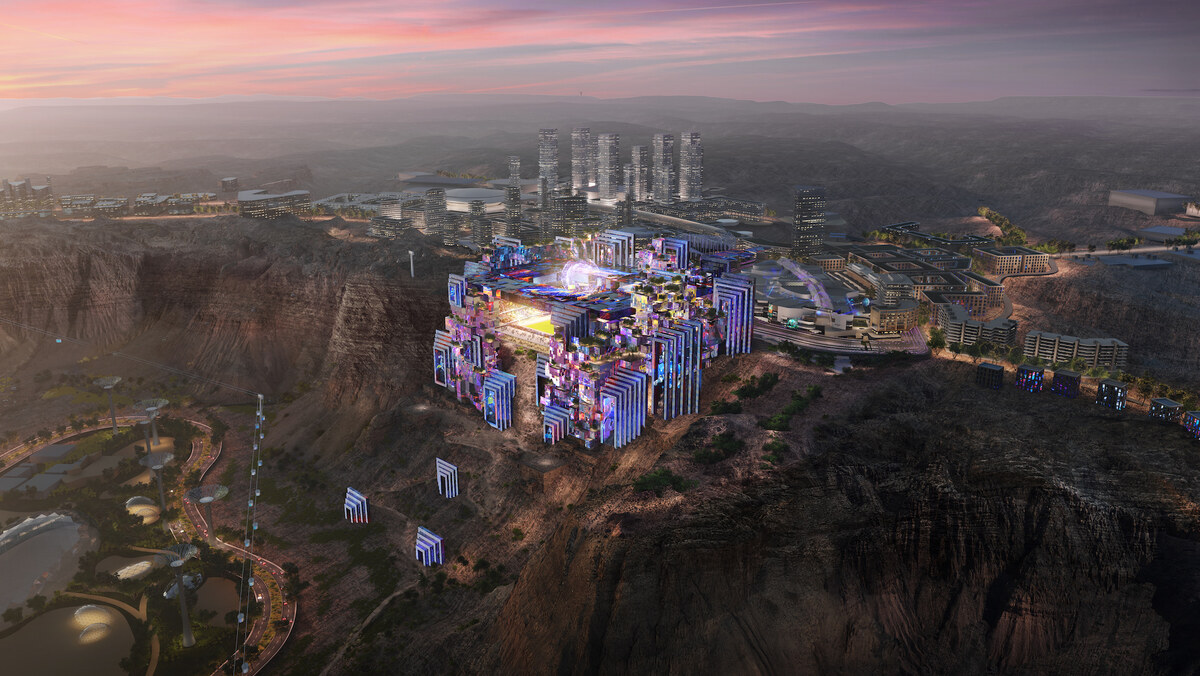
Prince Mohammed bin Salman Stadium. (Supplied)
Its aesthetic appeal is enhanced by the use of iridescent glass and solar panels, showcasing sustainable practices while providing a stunning visual experience. This venue will serve a dual purpose, hosting a variety of sporting events and cultural activities.
In the evolving sports scene, the New Murabba Stadium stands out as a community-focused venue, expected to be completed by 2032.
Drawing inspiration from the bark of the native acacia tree, this innovative stadium features customizable fan zones and spaces for diverse events beyond sports. The goal is to create an environment that fosters community connections and a sense of belonging.
The ROSHN Stadium, in southwest Riyadh, will have a capacity of 46,000, with a saddle-shaped seating bowl enhancing spectator comfort and encouraging social interactions. Surrounding amenities will promote cultural activities, making the stadium an integral part of the community.
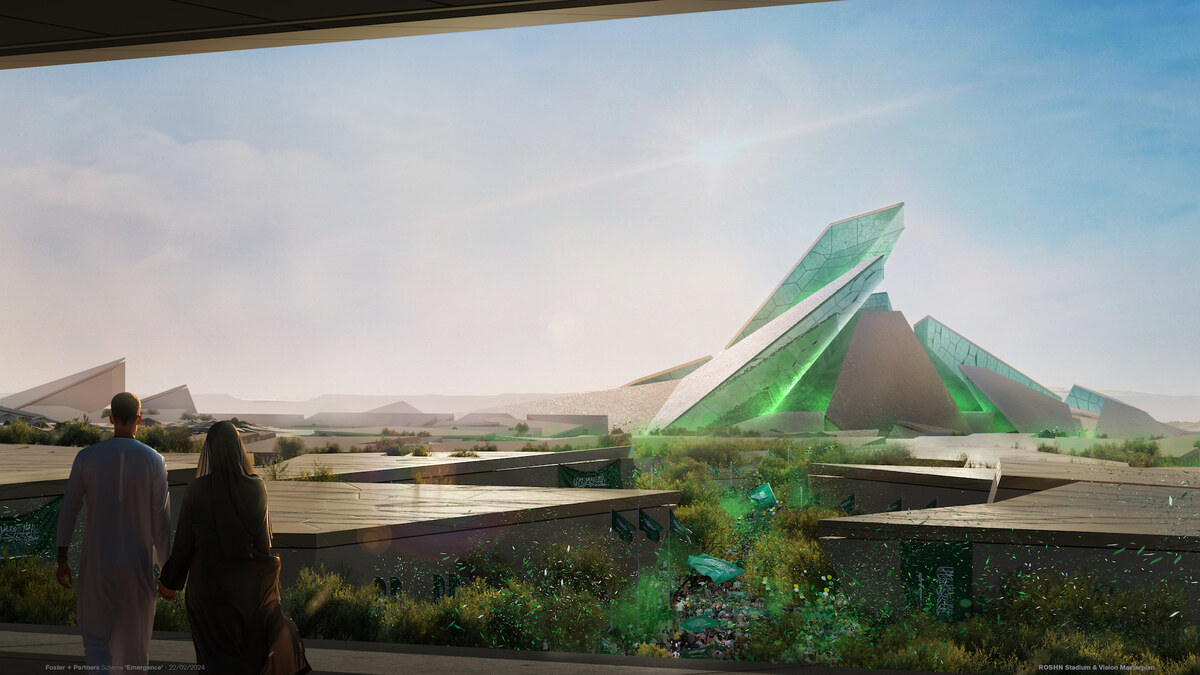
ROSHN Stadium. (Supplied)
Meanwhile, the Prince Faisal bin Fahad Sports City Stadium, now under construction, is expected to be completed in 2027.
With a capacity of more than 46,860, this facility utilizes locally sourced materials and energy-efficient systems, including extensive solar panels.
After completion, it will serve as a home for a professional football club and host significant events, contributing to the local sports culture.

Prince Faisal bin Fahad Sports City Stadium. (supplied)
The South Riyadh Stadium, due for completion by 2032 and with a capacity of 47,060, reflects the principles of Salmani architecture, blending modern features with the rich architectural language of the region.
Drought-resistant landscaping and rainwater harvesting systems are incorporated in the design.
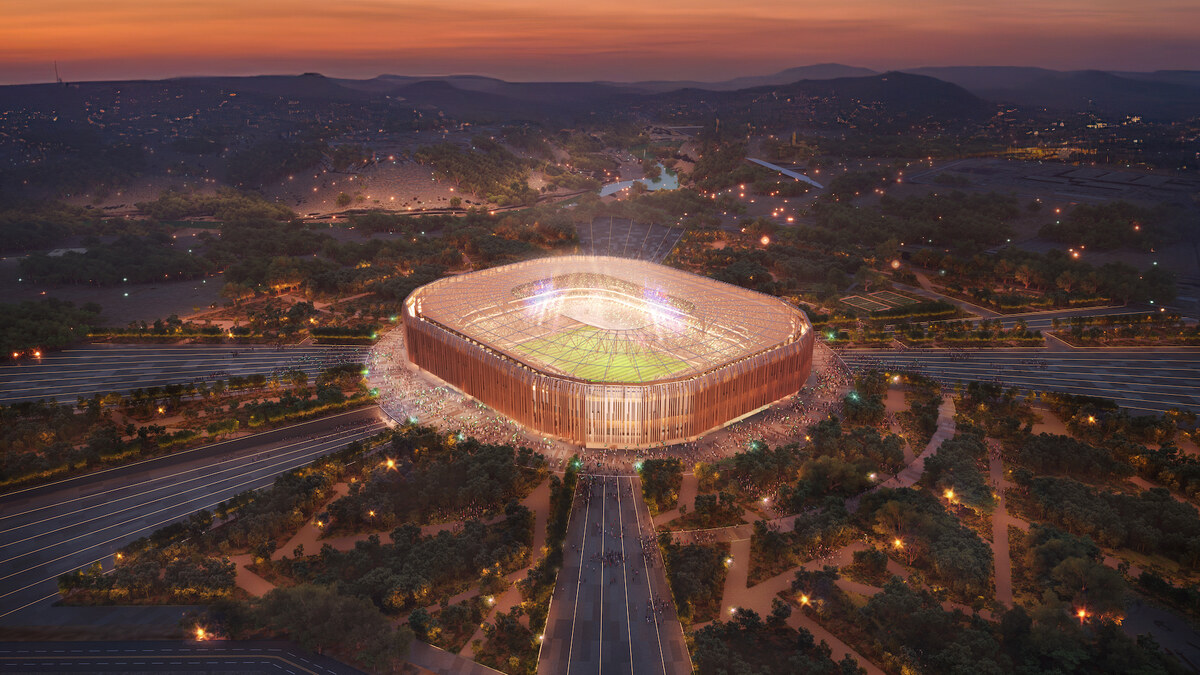
South Riyadh Stadium. (supplied)
In the innovative city of NEOM, the NEOM Stadium features a unique design placing the pitch more than 350 meters above ground, providing stunning vistas, and leveraging advanced technology for an unparalleled spectator experience.
Scheduled for completion in 2032 with a capacity of 46,010, this stadium will run entirely on renewable energy.
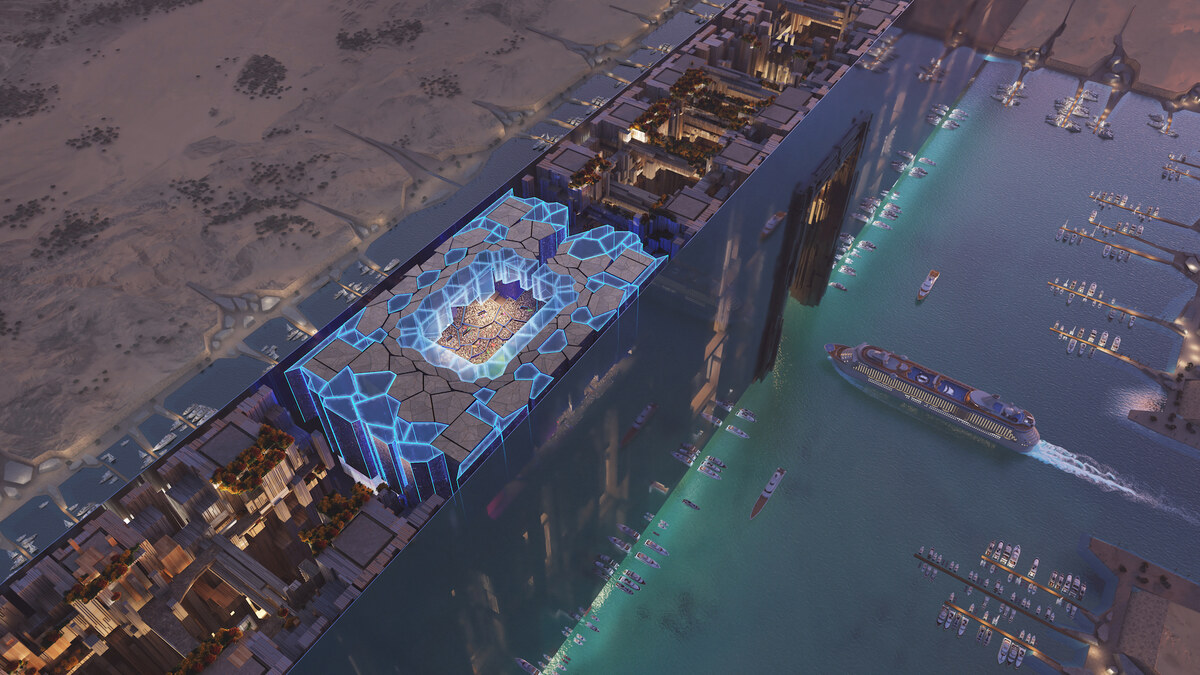
NEOM Stadium. (supplied)
The Qiddiya Coast Stadium in Jeddah, due to be completed by 2032, features a design that celebrates the relationship between people and water.
This versatile venue will hold 46,096 people, with its undulating form evoking the ripple effect of a “Mexican wave.”
Sports, concerts, and community events will be held in the stadium, creating a space for gatherings and celebrations.
Among existing structures, the King Fahad Sports City Stadium remains a prominent venue in Riyadh. The venue is undergoing refurbishment to meet modern standards, and will have an expanded capacity of 70,200 by 2026.
Known for its distinctive fabric roof inspired by traditional tents, this multipurpose facility has hosted numerous international events and will continue to play a vital role in the Kingdom’s sports calendar.
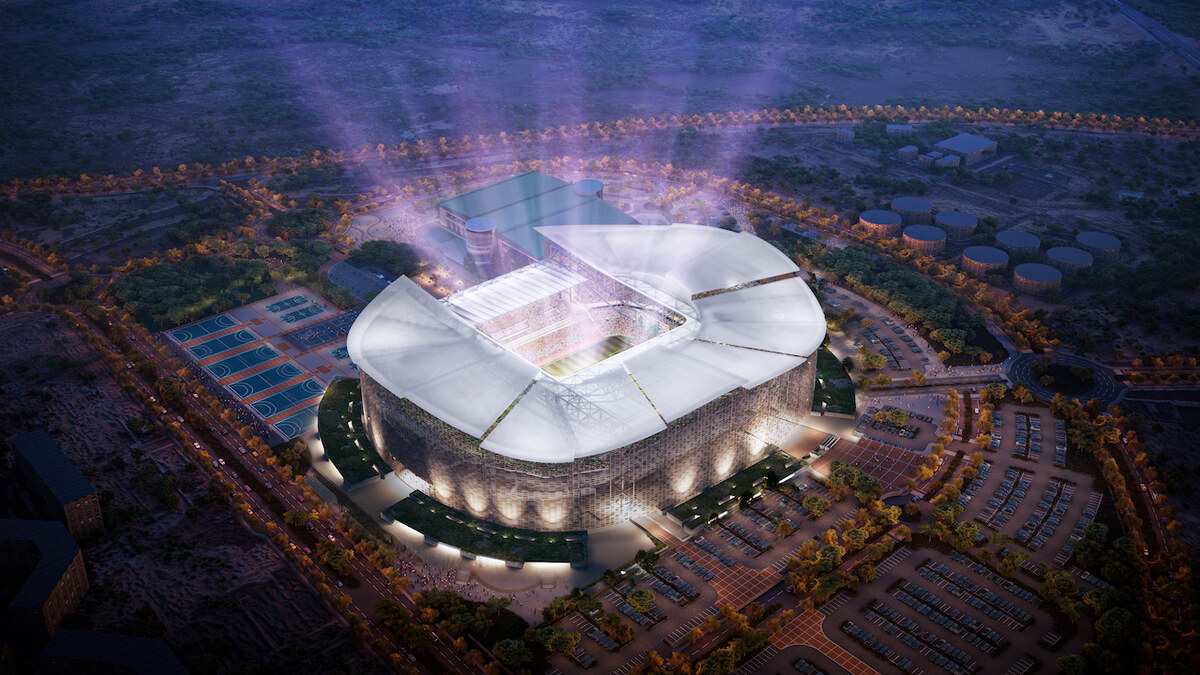
King Khalid University Stadium. (supplied)
King Abdullah Sports City Stadium in Jeddah is the second-largest stadium in Saudi Arabia, with a capacity of 58,432.
Often referred to as “The Shining Jewel” for its geometric architecture, it has been home to local football clubs and is set to undergo refurbishments to ensure compliance with FIFA requirements.
The King Saud University Stadium in Riyadh currently serves as a home for Al-Nassr football club, with plans for expansion ahead of major events.
Its capacity will increase to 46,000, modernizing the infrastructure, while preserving its historical significance.
Both the King Khalid University Stadium in Abha and the Aramco Stadium in Alkhobar are also undergoing renovations to enhance their capacity and facilities.
The Jeddah Central Development Stadium and the King Abdullah Economic City Stadium are designed to integrate community spaces, ensuring they serve as multipurpose venues after their renovations.
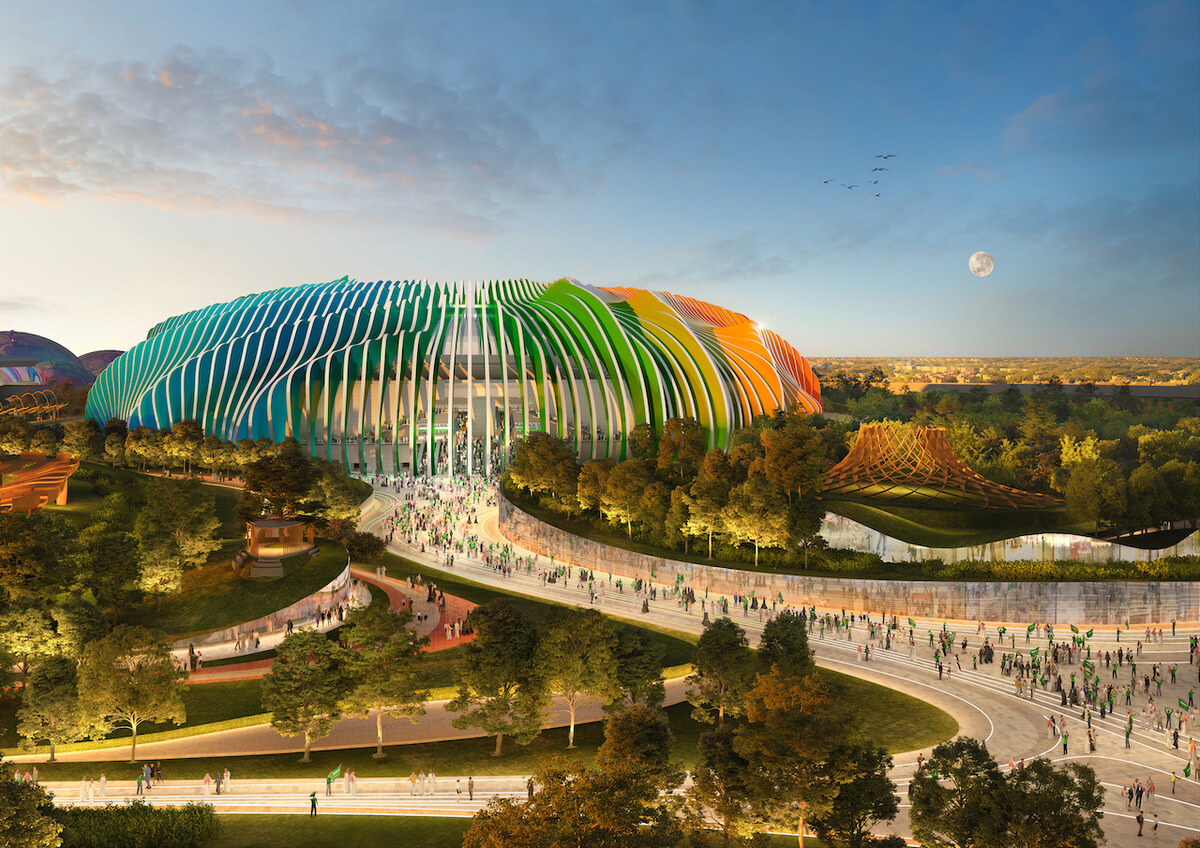
Qiddiya Coast Stadium (Supplied)
A focus of the new stadium designs is ensuring accessibility and inclusivity. Each venue will feature dedicated access seats, restrooms, and parking spaces to accommodate fans with a range of needs, demonstrating Saudi Arabia’s commitment to creating welcoming environments for visitors.
Moreover, the Kingdom’s new stadiums will play a vital role in promoting environmental responsibility through the integration of solar panels, rainwater harvesting systems, and the use of local materials.
Construction of these venues is expected to create thousands of jobs, stimulating local economies, and providing opportunities for community members.