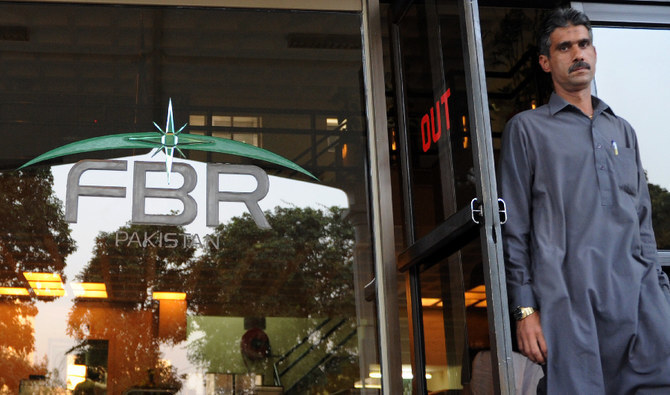
ISLAMABAD: Prime Minister Shehbaz Sharif on Friday approved the Federal Board of Revenue’s (FBR) homegrown transformation plan to improve tax collection, Pakistan state media reported on Friday, amid Islamabad’s efforts to support the dwindling $350 billion South Asian economy.
Pakistan last year came to the brink of default as the economy shriveled amid political chaos, impact of 2022 floods and decades of mismanagement. Last-minute loan rollovers from friendly countries as well as a $3 billion bailout from the International Monetary Fund (IMF) saved the nation.
The situation prompted Islamabad to introduce institutional reforms, as demanded by the IMF, to put the economy back on track but Pakistan’s finances remain in dire straits, with high inflation and staggering public debts.
Authorities prepared the FBR transformation plan in collaboration with economic and technological experts after a detailed analysis of tax collection in the last 25 years, the Radio Pakistan broadcaster reported.
“The plan includes a comprehensive strategy for the effective use of information technology, incentivizing officers and staff who demonstrate integrity and performance in improving tax collection and enhancing the enforcement of tax laws,” the report read.
“This will enable more tax to be collected in a better manner without hindering the journey of economic development and will provide more convenience to the people paying full tax.”
Strict measures can be taken against those who do not pay full tax on time and are involved in tax evasion, according to the proposals. Under the transformation plan, auditing capacity of the FBR will be enhanced.
Speaking at a meeting of stake-holders, PM Sharif directed the formulation of a comprehensive strategy to further enhance the effectiveness of the FBR’s enforcement system, describing it as a “pressing need.”
“FBR is the backbone of the country’s economy and its digitization is an important milestone in government’s economic reforms,” he was quoted as saying.
“Improvement in revenues will enhance the provision of services to the public and lead to betterment in the social sector.”
The prime minister also directed third party audit of all FBR projects.
In July, Sharif had asked FBR officials to re-evaluate and revise their strategy to enhance revenue collection to rid Pakistan of a massive public debt of $242 billion, according to Sharif’s office.
The statement came hours after Pakistan reached a staff-level agreement with the IMF for a new $7 billion loan deal. Islamabad agreed in exchange to conduct further unpopular reforms, including widening the South Asian nation’s chronically low tax base, and tax authorities have identified 4.9 million taxable persons in the country by using modern technology.
During the 2024-25 fiscal year beginning on July 1, Sharif’s government aims to raise nearly $46 billion in taxes, a 40 percent increase from the previous year. It has used more unusual methods, including blocking 210,000 mobile connections, to compel people to file their tax returns. Islamabad also aims to reduce its fiscal deficit by 1.5 percent to 5.9 percent in the coming year.
But Pakistan’s public debt of $242 billion remains a huge problem for the South Asian country and servicing it may swallow up half of the country’s income in 2024, according to the IMF.


![]()

Pakistan approves revamp of tax collection body in bid to support economy
Short Url
https://arab.news/5qftx
Pakistan approves revamp of tax collection body in bid to support economy
- Pakistan last year came to the brink of default as economy shriveled amid political chaos, impact of 2022 floods and decades of mismanagement
- Islamabad reached the IMF for a bailout and agreed in exchange to conduct unpopular reforms, including widening the chronically low tax base
Latest updates




© 2026 SAUDI RESEARCH & PUBLISHING COMPANY, All Rights Reserved And subject to Terms of Use Agreement.