





RIYADH: The Saudi Heritage Commission has revealed a number of discoveries related to long-term research into ancient, monumental, rectangular, stone-walled structures in the Kingdom known as mustatils.
The study is part of a larger Green Arabia project exploring the history of human expansion in the Arabian Peninsula during the Paleolithic period.
“We have been working on this Green Arabia Project for about 15 years now, in full collaboration and partnership with our Saudi colleagues, especially from the Heritage Commission, Ministry of Culture, and King Saud University,” said Michael Petraglia, a professor and the director of the Australian Research Center for Human Evolution.
“We have been conducting consistent fieldwork in Saudi Arabia, uncovering archaeological sites that date back as far as 500,000 years (through) to the historic present.”
The study of the mustatils involved rigorous spatial analysis of 169 structures in the southern and western margins of the Nefud Desert in Hail Province.
“One of the major findings of our project is that the environments of Saudi Arabia have changed significantly over time,” Petraglia said.
“We know that the Saudi Arabia we see today is arid, with vast deserts, but it wasn’t always that way. There were periods in the past when Arabia was much greener, which is why we call it the Green Arabia Project.”
During this historical period there was considerably more rainfall, as a result of which there was an abundance of lakes and rivers.
“Those lakes and rivers provided fresh water, supporting hunter-gatherer communities and attracting a diverse array of wildlife,” Petraglia said.
“In the past, we had a lush landscape of savannas and grasslands, inhabited by hunter-gatherers and various animal species. In fact, some of our older archaeological sites even contain remains of hippos and elephants. That’s how green it was back then.”
The aim of the research, the findings of which were published in the scientific journal Holocene, was to investigate and catalog the mustatils in northern Saudi Arabia and explore the purposes for which they were built, and to shed light on the factors that influenced the development of Neolithic settlements in the northwestern Arabian Peninsula.
Researchers documented 169 mustatils, studying their shapes, sizes and locations, in an area covering 44,000 square kilometers, using satellite imaging and field visits that included excavation work.
The experts said the work has provided vital insights into the cultural beliefs, ideas, customs and traditions of the people who lived in the area during the Neolithic period, between 10,000 and 2000 B.C., including significant information about economic, social and religious aspects of their lives.
Their findings suggest the large structures, found on the outskirts of the Nefud Desert on hilltops at elevations of up to 950 meters above sea level, were built over a relatively short period of about 1,200 years, between 5400 and 4200 B.C.
The mustatils therefore offered expansive views of the surrounding landscape, suggesting that the choice of locations was deliberate, and in particular based on proximity to water sources and raw materials.
Excavations at the sites revealed animal remains, including the horns and bones of cattle, gazelle and goats, which are thought to have been offered as sacrifices to deities.
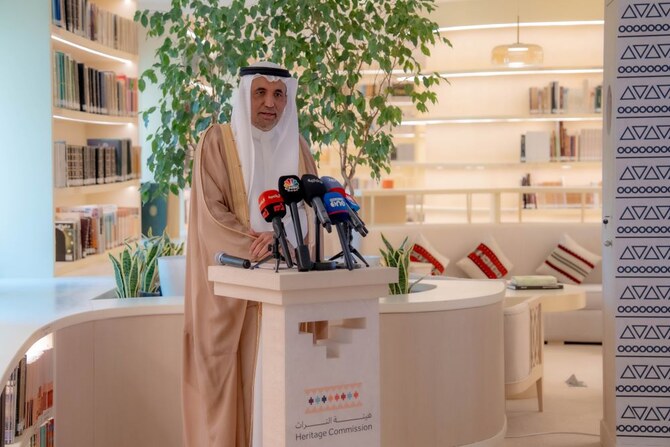
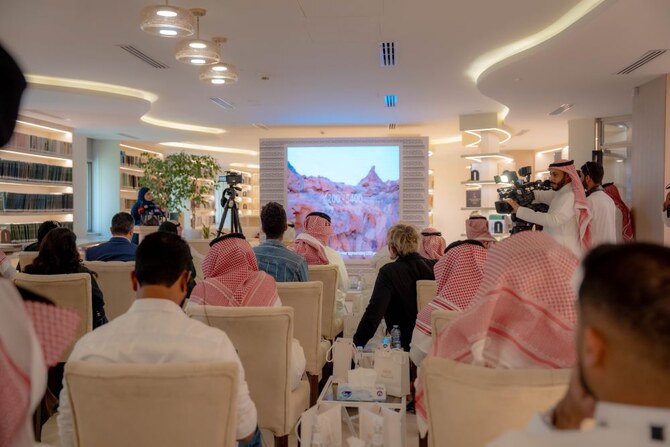
During an event on Wednesday to reveal the results of the research, the CEO of the Saudi Heritage Commission, Jasser Suleiman Al-Harbash, highlighted the role of archaeology in uncovering and understanding ancient societies, as well as advancements that have been made in this field under the Kingdom’s Vision 2030 plan for national development and diversification.
The research was carried out by the Saudi Heritage Commission in collaboration with local and international institutions including the Max Planck Institute for the Science of Human History, the University of Tubingen and the University of Cologne, all in Germany, King's College London, King Abdullah University of Science and Technology, King Saud University, Griffith University and the University of Queensland in Australia, the Smithsonian Institution in the US, and the University of Malta.


