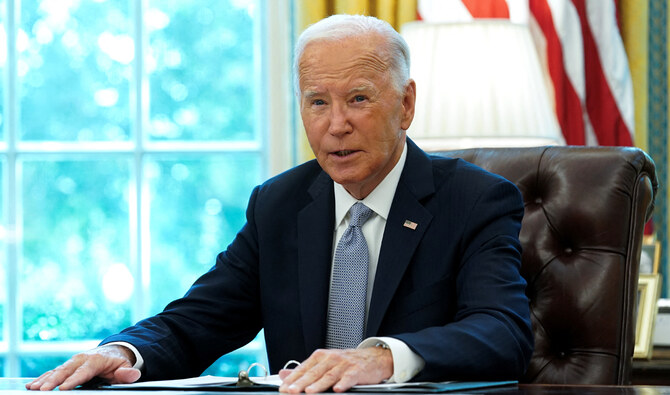
ISLAMABAD: United States President Joe Biden has said his country’s relations with Pakistan are important for regional security and stability, according to an official statement released by Pakistan’s embassy in Washington on Thursday, expressing his appreciation for the counterterrorism cooperation between the two states.
The US and Pakistan have shared a complex history of bilateral relations, dating back to the Cold War when they first established ties. Over the decades, the relationship has seen fluctuations, marked by periods of both cooperation and tension.
The two countries joined forces during the Soviet invasion of Afghanistan in the late 1970s, but their relations were later tested by the US-led war in Afghanistan following the September 11, 2001, attacks. Despite these challenges, the two nations have continued collaborating on regional security and counterterrorism since the withdrawal of US-led international forces in Afghanistan in August 2021.
The US president issued the statement about the relations between both countries as Pakistan’s new envoy to Washington, Ambassador Rizwan Saeed Sheikh, presented his Letter of Credence to him at Blair House.
“Our countries stand united in the face of significant challenges posed by climate change, regional security threats, and global health security,” Biden was quoted as saying by the statement shared by the Pakistani diplomatic mission. “We should continue highlighting common interests in security, trade and investment, economic growth, the US-Pakistan ‘Green Alliance’ framework, and prosperity.”
“The relationship between our two countries remains important for regional stability and security,” he continued. “We appreciate US-Pakistan cooperation on countering terrorist threats. We share a desire to build upon our bilateral relationship and strengthen US-Pakistan ties moving forward.”
He also described the arrival of the new Pakistani ambassador to his country significant on many levels.
“It signifies more than 75 years of friendship between our nations and our enduring commitment to economic engagement, security cooperation, people-to-people ties, and cultural exchange,” he maintained, adding the partnership between the two nations was critical to ensuring the security of their people and people around the world.
“The United States will continue to stand with Pakistan to tackle the most pressing global and regional challenges of our time,” he added.
Earlier, Ambassador Sheikh conveyed greetings to Biden from the Pakistani leadership and recalled US assistance to his country, especially during the nascent phase of Pakistan’s statehood.
“Pakistan-US economic partnership is the core of our engagement, and the United States continues to be the largest destination for Pakistani exports,” he said.
Highlighting the significant trade potential between the two countries, he noted that Pakistan was ready to enhance its trade with the US and absorb American investments in alternative energy, green technology, industry, digital platforms, higher education and other areas of mutual benefit.
Ambassador Sheikh emphasized the important role being played by Pakistan’s large and dynamic diaspora community in the US, describing them as a bridge between the two countries.
He also highlighted the need for structured, broad-based, and result-oriented periodic dialogues in both security and non-security realms to give fresh impetus to the relationship and promote mutual interests.
The new Pakistani envoy replace Ambassador Sardar Masood Khan who was appointed by his country in 2022.


![]()

Biden highlights US-Pakistan ties as key to regional security, praises counterterrorism collaboration
Short Url
https://arab.news/wywvv
Biden highlights US-Pakistan ties as key to regional security, praises counterterrorism collaboration
- The US president welcomes the new Pakistani ambassador to his country at a ceremony in Blair House
- He says US will stand with Pakistan to ‘tackle the pressing global and regional challenges of our time’


Latest updates


Recommended


© 2026 SAUDI RESEARCH & PUBLISHING COMPANY, All Rights Reserved And subject to Terms of Use Agreement.