

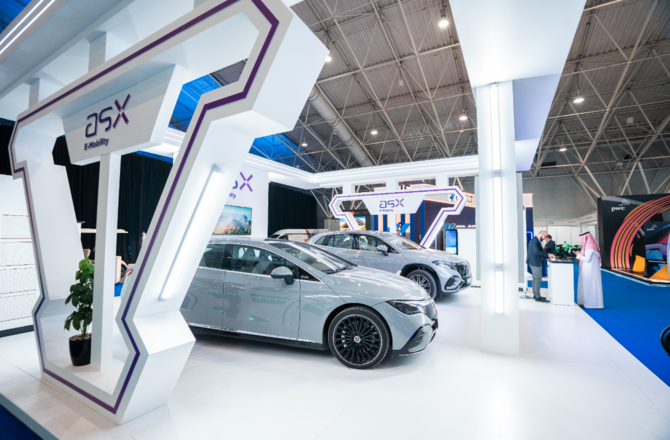
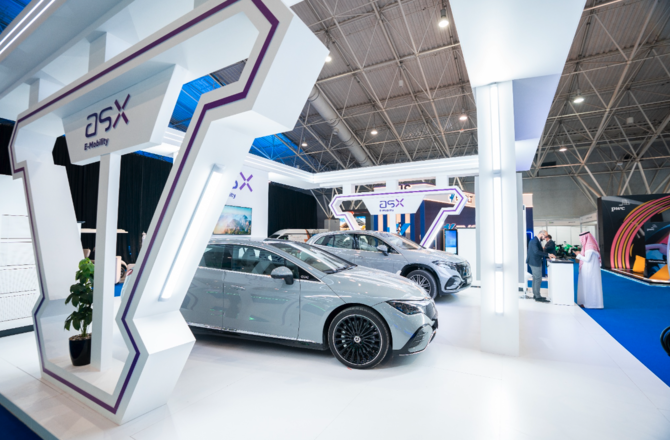
RIYADH: The EV Auto Show, held at the Riyadh International Convention and Exhibition Center, has gathered industry experts to discuss the future of electric vehicles in Saudi Arabia and the broader Middle East.
This year’s event, running from Sept. 17 to 19, is expected to reshape the Kingdom’s mobility landscape as it aligns with Saudi Vision 2030, a plan aimed at diversifying the economy and promoting sustainability.
The three-day gathering has drawn key stakeholders, including automakers, charging solution providers, and policymakers, all keen to share insights on the transformation of the regional EV market.
Battery electric vehicles gaining traction in the Kingdom
Heiko Seitz, partner and global e-mobility leader at PwC, was one of several panelists at the event who highlighted the favorable conditions for EV adoption.
“In Saudi Arabia, the Middle East, we have more favorable temperatures for battery electricity than we do up there in the Nordics in Europe,” said Seitz.
He underscored that these climate advantages and technological advancements are key factors driving the region’s shift to electric mobility.
Seitz elaborated on the market dynamics, saying: “We have more or less approached cost parity, which basically means, in simple terms, it is now almost equally affordable to drive an EV with the comparable car models compared to an internal combustion car in Saudi. In the UAE, the car prices are slightly lower, so they have already passed the tipping point.”
Seitz expected prices to drop further as more models and brands enter the market, leading to greater EV adoption across the Middle East.
He predicted a dramatic shift in the composition of the global car market over the next decade, saying: “Seven years from now, the mix in the world available will be that 30 percent of all vehicles will be battery electric. So lots of change there, and that will change the cost profile in the Kingdom and the Middle East in general.”
A greener future powered by renewables
Renewable energy is also playing a critical role in the Kingdom’s EV strategy. “There is more and more renewable energy, especially solar energy, coming into the mix here in Saudi Arabia,” said Seitz.
He expressed optimism that the country’s efforts to integrate solar power would advance the greening of its mobility sector. “This is one of the countries in the Middle East where it’s safe to say mobility will not only be electrified, it will also be green in the future,” he added.

An industry expert speaks at the event in Riyadh on Tuesday. AN Photo
Seitz also shared impressive forecasts for EV sales in Saudi Arabia, predicting that by 2030, 64 percent of all new cars sold in the Kingdom will be fully battery electric, driven by local and international brands eager to compete in the region’s rapidly growing market.
Challenges and opportunities in EV manufacturing
The panel discussion also highlighted EV production progress within Saudi Arabia. Oswaldo Dorantes, manager of automotive at the National Industrial Development Center, emphasized the growing presence of manufacturers in the Kingdom.
“We already have some manufacturers in Saudi making multiple manufacturing schemes like CKD (completely knocked down) and SKD (semi-knocked down) commercial vehicles and commercial trucks for medium and heavy-duty purposes,” Dorantes said.
He highlighted various government and private sector initiatives to develop local talent and support the broader EV ecosystem, underlining that programs like the National Automotive and Vehicle Academy or Nava are playing a key role in this strategy.
However, scale remains a critical challenge in attracting suppliers. “When we look at the development of the ecosystem, the first priority is going to be scale. How can we justify bringing in one supplier if we don’t have enough scale?” Dorantes asked.
He emphasized the importance of government support in overcoming this barrier, adding: “It doesn’t matter if you can bring the most reliable technology if you’re not competitive enough.
“This is something we look at from multiple perspectives, and that’s why the government needs to support it in the beginning.”
Advancements in battery technology
On the technical side, Julia Palle, vice president of sustainability at Formula E, spoke about the durability and efficiency of EV powertrains.

A panel discussion on the unique advantages of EV technology. AN Photo
“The technology of the batteries and the powertrain in an electric vehicle is basically one of the most durable systems that you have,” Palle said, adding that EVs transform 85 percent of their energy into movement, compared to traditional cars, which only convert up to 25 percent.
Palle’s insights aligned with those of Klaus Wawra, managing director at Hofer Powertrain, who discussed the technology crossover between EVs and hybrids.
“With a hybrid vehicle, you will still need an electric motor, you need an inverter, an onboard charger, and a direct current fast charging converter. So, more or less, all the technologies you have to cover inside the EV, you can then scale dedicatedly to this hybrid application,” Wawra explained.
Consumer demand on the rise
The need for electric and hybrid vehicles is steadily increasing in Saudi Arabia. Hasan Nergiz, managing director at Al-Futtaim Electric Mobility Co., shared data indicating the growing popularity of hybrids in the market.
“Right now, if I look at our last month’s order take, around 75 percent of Saudi customers are opting into hybrids,” Nergiz said. This statistic reflects the broader trend toward sustainable mobility solutions in the Kingdom.


