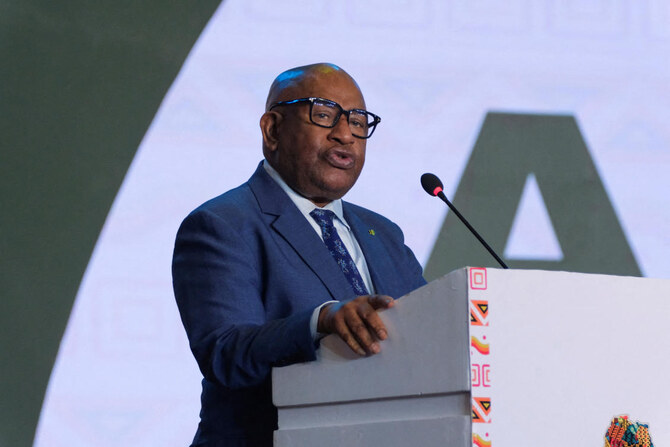
RIYADH: Saudi Arabia condemned in the strongest terms on Sunday the attempted assassination of Comoros President Azali Assoumani.
The president of the Indian Ocean island nation was “slightly injured” in a knife attack while attending the funeral of a religious leader on Friday, his office said.
The suspect, who was identified as a 24-year-old male soldier, was then found dead in a police cell on Saturday.
The Kingdom affirmed its support for Comoros and its people in the face of all threats to its security and stability.
The Kingdom’s Foreign Ministry wished the president a speedy recovery and the country’s people safety, stability, and prosperity.
Assoumani’s injuries were not serious and he had returned to his home, his office has said in a statement. It added that the attacker was arrested by security forces and was taken into custody, but authorities said he had been discovered a day later “unresponsive” in a cell where he was being held and was declared dead.


![]()


Saudi Arabia condemns knife attack on Comoros president
Short Url
https://arab.news/rwdsa
Saudi Arabia condemns knife attack on Comoros president
- President of Comoros was “slightly injured” in a knife attack while attending the funeral of a religious leader on Friday
- Kingdom’s Foreign Ministry wished the president a speedy recovery


Muslim World League chief delivers Friday sermon at Grand Mosque in Rwandan capital Kigali
- Al-Issa, who is also chairperson of the Council of Muslim Scholars, addressed a number of contemporary Islamic issues
KIGALI: Sheikh Mohammed bin Abdulkarim Al-Issa, secretary-general of the Muslim World League, delivered a sermon and led worshippers in prayer at the Grand Mosque in the Rwandan capital Kigali on Friday.
Al-Issa, who is also chairperson of the Council of Muslim Scholars, addressed a number of contemporary Islamic issues during his sermon, and extended his congratulations to worshippers on the occasion of the holy month of Ramadan, the league said.
He also spoke about key Islamic values that guide Muslims in their interactions with others, describing them as reflections of the noble moral principles espoused by the Prophet Muhammad.


Latest updates


Recommended


© 2026 SAUDI RESEARCH & PUBLISHING COMPANY, All Rights Reserved And subject to Terms of Use Agreement.