

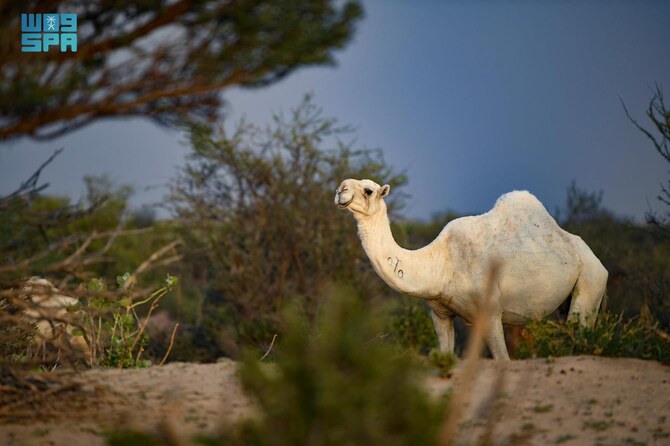


JEDDAH: Camels, fondly referred to as “ships of the desert,” have long held a special place in the hearts of their owners.
Their relationship is characterized by loyalty, love, and a deep connection that transcends language.
Stories abound of camels shedding tears when separated from their beloved companions, waiting patiently for their return, Saudi Press Agency noted in a recent report.
In Saudi Arabia, the relationship between humans and camels is deeply rooted in history and culture. Camels have served as essential companions in the harsh desert environment, providing transportation, food, and companionship, the report added.
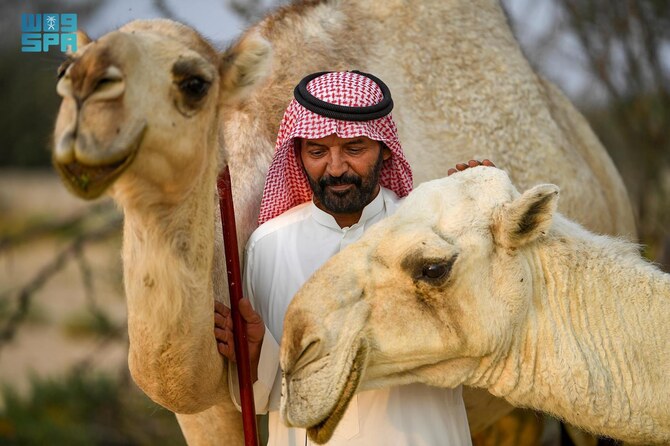
Bandar Al-Adwani, a camel owner, expressed his deep fondness for his beloved she-camel, Al-Na’amah. He described their relationship as one of trust, companionship, and mutual understanding.
Al-Adwani often spends time with his camels, tending to their needs, which forms a strong emotional connection.
“Every morning and evening, I feel compelled to visit my camels in their pastures. I want to be close to them, monitor their health, and ensure that they have enough food and water. I have a deep, affectionate bond with them, a connection that feels almost instinctive,” he told SPA in an interview.
His love for camels runs deep; he spends countless hours in their company and never approaches them with a stick.
“Our interactions are based on mutual respect and understanding. Al-Na’amah, in particular, responds to my voice and touch,” he said, adding that he uses a herding technique called Alheda’a, a UNESCO-recognized oral tradition that combines sounds, gestures, and sometimes music, to communicate with camels.
The bedouins of the Arabian Peninsula seem to have a profound understanding of their camels’ needs. They cannot imagine their lives without these loyal companions and this deep-rooted love is passed down from generation to generation.
“When we hear stories of loyalty among humans, we are reminded of the unwavering loyalty that camels show to their owners,” Al-Adwani said.
“They are incredibly beautiful creatures. Their graceful movements, their thirst for water, their kneeling posture, and the experience of riding on their backs are truly captivating.
“In Saudi Arabia, camels represent our history, culture, and heritage. Our kings and wise leadership have always valued and cared for camels, recognizing their economic importance and their role in preserving our national identity.”
The Camel Club, established by King Salman, has played a crucial role in promoting camel breeding, culture, and heritage.
The Ministry of Culture even declared 2024 the “Year of the Camel,” in honor of an animal seen as a cultural treasure, a pillar of national identity, and a valuable part of Arab heritage.


