

Camels’ winning aesthetics in beauty contests

1 / 6
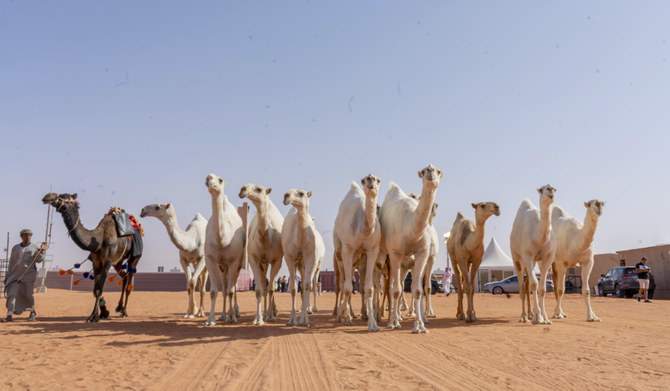
Camel owners enthusiastically participate in contests to parade their camels. (Supplied)
2 / 6
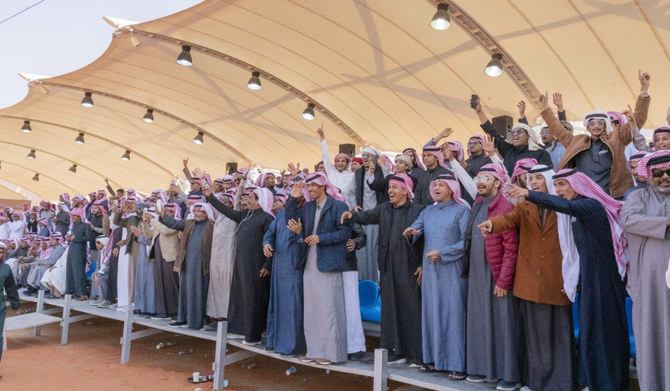
King Abdulaziz Camel Festival has attracted thousands of visitors. (Supplied)
3 / 6
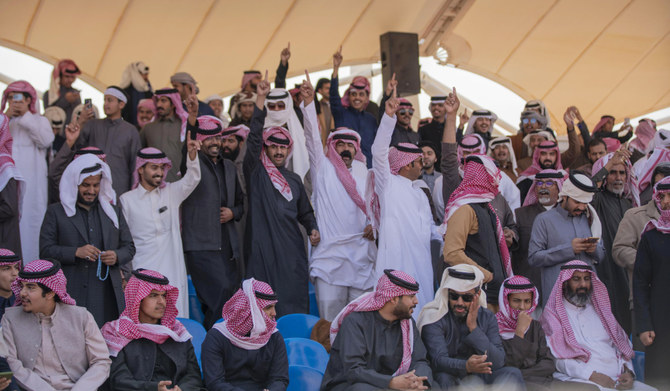
King Abdulaziz Camel Festival has attracted thousands of visitors. (Supplied)
4 / 6
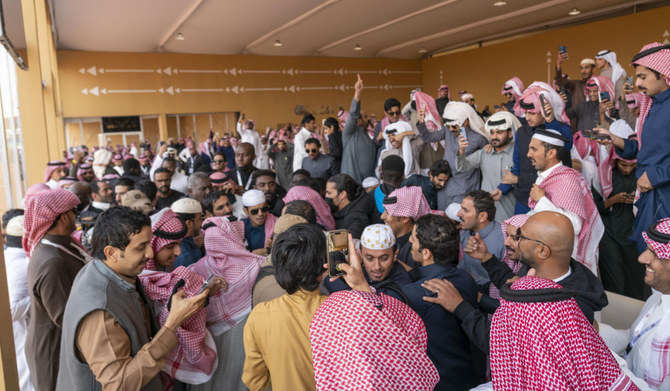
King Abdulaziz Camel Festival has attracted thousands of visitors. (Supplied)
5 / 6
Camel owners enthusiastically participate in contests to parade their camels. (Supplied)
6 / 6
Camel owners enthusiastically participate in contests to parade their camels. (Supplied)
Short Url
Updated 26 December 2022
Follow

Camels’ winning aesthetics in beauty contests

  • Long neck, arched nose, large head, height key
  • Pageants are important events in Arab world

RIYADH: Camels are a symbol of pride, joy and honor for Arabs, so it comes as little surprise that owners have beauty pageants that involve months of grooming to showcase their animals’ unique aesthetic traits.

The contest at King Abdulaziz Camel Festival, one of the largest in the Middle East, has attracted thousands of visitors early morning every week.

The six-week event, which will end in mid-January, crowns winners in different categories weekly.

Falah bin Melhem, an owner and well-known competitor, has participated in various contests with his animals including Mazayen Al-Ibil, which was recently held in Qatar.

Bin Melhem said his camels have bagged several awards at various competitions and now looks forward to winning more in the Kingdom.

He and other camel owners explained that it requires a great deal of planning to prepare an animal for such pageants, including proper transportation, fodder and healthcare.

FASTFACT

Camel owners explained that it requires a great deal of planning to prepare an animal for such pageants, including proper transportation, fodder and healthcare.

“It does not mean that this hard work is a bad thing … it is a pleasure for any camel lover who (has a) passion for competition and for winning,” said Bin Melham, who has his eyes on the crown after attaining top positions in all the rounds last year.

Abdullah bin Qasim, the owner of Mangiyah Al-Abadiyat, is participating for the first time in the competitions at the festival. He wakes up before dawn to care for his camels, which he emphasizes have big heads and well-structured bodies. He hopes to win big at the event.

Another participant, Mijbil Al-Dhafiri, who spends most of his day around camels, points out that attractive camels, like his Thokor, have long necks, arched noses, large head, good height, and display elegant movement.

Al-Dhafiri said he is well-prepared for the competition, having started six months ago in Hafr Al-Batin.


Saudi defense chief rallies international support amid escalating Iranian strikes

Updated 12 March 2026
Follow

Saudi defense chief rallies international support amid escalating Iranian strikes

  • Iran unleashes wave of drone strikes on Kingdom’s Eastern Province
  • Missiles fired at Prince Sultan Air Base intercepted, destroyed

RIYADH: Saudi Defense Minister Prince Khalid bin Salman held separate phone calls with his Turkish, Romanian, and South Korean counterparts as Iranian attacks on Gulf facilities continued on Thursday.

Iran escalated strikes on its Gulf neighbors in retaliation for ongoing US-Israeli attacks on Iranian territory. 

After a brief pause Wednesday, drone attacks on Saudi Arabia resumed at 9 p.m., targeting the Eastern Province and the Shaybah oil field in the Empty Quarter. All the drones were stopped, the Saudi Ministry of Defense confirmed.

Missiles aimed at Prince Sultan Air Base in Al-Kharj were also intercepted and shot down, the ministry added.

In his call with Turkish Defense Minister Yasar Guler, Prince Khalid reaffirmed commitment to joint security measures and condemned Iranian aggression. 

His conversation with Romanian counterpart Radu Miruta covered regional threats to global stability. 

A call with South Korea’s Ahn Gyu-back similarly focused on condemning Iran’s actions and reviewing the broader regional picture.

The crisis traces back to February 28, when US and Israeli forces struck Iran. Tehran has since targeted Gulf states and US-Israeli assets across the region.

Iran has also declared a blockade on energy shipments through the Strait of Hormuz — a critical chokepoint for global oil and gas flows — sending commodity prices surging.