RIYADH: Investments in the Middle East and North Africa eased in August, with total funding reaching $83 million across 30 rounds.
This reflects a 76 percent drop from July’s $355 million and a 24 percent year-on-year decrease, according to Wamda and Digital Digest’s monthly report.
Unlike previous months, August did not see any megadeals, with the largest round being UAE-based Yuze’s $30 million deal. Debt financing played a minimal role, accounting for only 3 percent of the total raised capital.
The UAE once again led the region in startup investments, as 13 UAE-based startups raised $55.7 million.
Saudi Arabia followed with $16 million secured across nine deals. Egypt, which had been a top performer in July, saw a sharp decline, raising just $7.6 million from four deals, while Kuwait made it to the top four with a single deal — Kem’s $3 million raise.
Investor interest remained concentrated on fintech, which continued to be the most funded sector for the third consecutive month, raising $54 million across eight deals. Web3 also regained momentum, securing $13.5 million in three rounds, while food tech reappeared on the scene, raising $9 million through four deals.
The month was dominated by early-stage funding, with two startups raising a total of $19 million in Series A rounds, and five startups raising $15.6 million in seed rounds. Seven startups did not disclose their funding stages, accounting for $35.4 million of the total investment.
Business-to-business models remained highly attractive to investors, with 13 startups raising $46 million. Business-to-consumer models attracted $15 million across five rounds, while the remaining funds went to startups operating in both sectors.
Female-led startups continued to face challenges in raising capital, securing just 0.3 percent of the total investment in August. Only one female-founded startup, Powder Beauty, raised an undisclosed pre-series A round, and another female co-founded startup received a $150,000 accelerator grant.
The MENA entrepreneurial ecosystem also saw other notable developments in August, including the formation of the Waad Investment firm, a coalition of Gulf-based family offices targeting a $200 million fund, and a $100 million fund launched by Singapore-based Gate Ventures and the Blockchain Center in Abu Dhabi to promote Web3 innovation.
In Egypt, T-Vencubator launched the “Where’s the Problem?” initiative to support the local startup ecosystem.
On the mergers and acquisitions front, August saw the UAE-based property crowdfunding platform Maisour acquired by Meteora Developers, while Kuwait-based proptech Sakan acquired Qatari company Hapondo.
FlapKap raises $34m in pre-series A round
UAE-based fintech FlapKap raised $34 million in a pre-series A round consisting of both debt and equity financing. The round was led by BECO Capital, with additional participation from Pact VC, A15, Nclude, QED Investors, and debt financing from Channel Capital.
Founded in Egypt in 2022 by Ahmad Coucha, Khaled Nassef, Sherif Bichara, and Kunal Harisinghani, FlapKap offers revenue-based and embedded finance solutions to help small and medium-sized enterprises scale up their inventory and digital ad spending with fast access to capital and the flexibility to pay later.
The new capital will enable FlapKap to expand its SME financing services across the Gulf and the broader Middle East region. The company previously raised $3.6 million in a seed round, bringing its total funding to $37.6 million.
Paymob raises $22m in series B extension
Egypt-based fintech Paymob secured an additional $22 million in a series B extension round, bringing the company’s total Series B funding to $72 million.
The round was led by EBRD Venture Capital, with participation from Endeavor Catalyst, as well as existing investors including PayPal Ventures, BII, FMO, A15, Nclude, and Helios Digital Ventures.
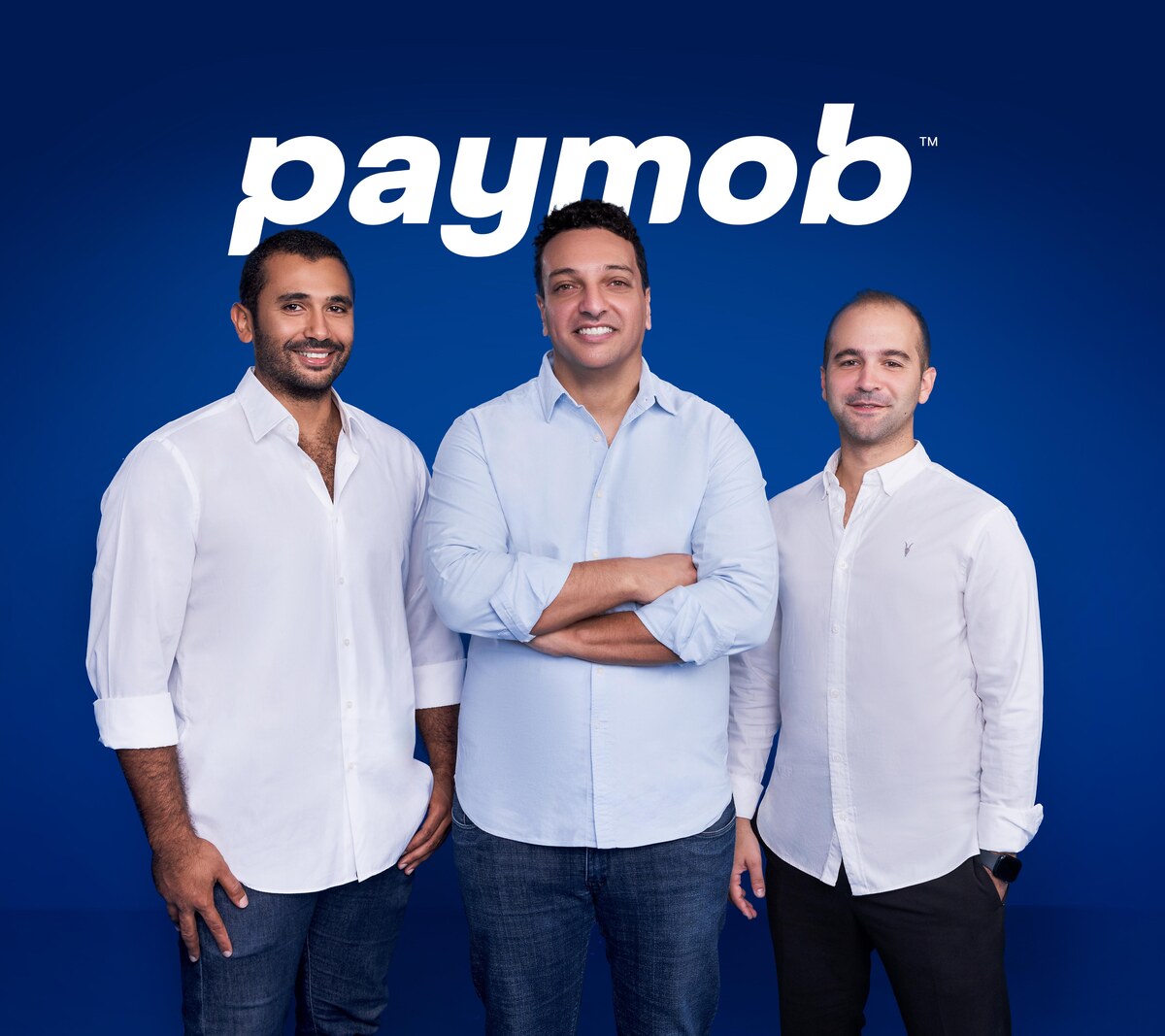
Founded in 2015 by Islam Shawky, Alain El-Hajj, and Mostafa El-Menessy, Paymob provides digital payment solutions to both online and offline merchants.Supplied
Founded in 2015 by Islam Shawky, Alain El-Hajj, and Mostafa El-Menessy, Paymob provides digital payment solutions to both online and offline merchants. The additional funding will help the company pursue its growth strategy across the MENA region.
HissaTech secures $666k in pre-seed funding
Saudi Arabia-based proptech HissaTech raised SR2.5 million ($666,164) in a pre-seed round led by undisclosed angel investors.
Founded in 2024 by Ali Al-Shareef, HissaTech provides a platform that allows individuals to co-own properties, offering rental income and potential capital gains, making property investment more accessible to smaller investors.
The company plans to use the funding to expand its customer base, enhance its digital platform, and build strategic partnerships within the property tech sector.
Entlaq acquires stake in food tech Brotinni
Egypt-based entrepreneurship support company Entlaq has acquired a stake in Brotinni, an Egyptian food tech startup, for an undisclosed amount.
Founded in 2020 by Dalia Abu Omar, Brotinni operates as a dark store, providing customers with online access to meat and poultry products.
The investment will support Brotinni’s plans to expand its operations both within Egypt and in regional markets. The company previously raised $600,000 in a seed round in 2022, led by Innlife Investments.
IO Kitchens closes $2.8m seed round
Oman-based cloud kitchen startup IO Kitchens has closed a $2.8 million seed round, led by Tanmia Small-Cap Fund, with additional backing from regional family offices and investors.
Founded in 2021 by Hisham Hasan, IO Kitchens operates delivery-only cloud kitchens and manages a portfolio of over 30 food and beverage brands. The funding will allow the company to scale its operations across Oman.
Oyster raises $59m, reaches $1.2bn valuation
Lebanese-founded Oyster raised $59 million in its latest series D funding round, reaching a valuation of $1.2 billion.
Founded by Lebanese entrepreneur Tony Jamous, the company offers a payroll and human resources platform that specializes in distributed workforces or global employment.
The new funding brings Oyster’s total raised to $286 million and pushes its valuation to $1.2 billion, up from $1 billion in 2022 when it secured its $150 million series C.
This marks a notable achievement, as the company has maintained its valuation while many tech firms have faced downturns amid challenging market conditions, according to a report by Tech Crunch.
“We’ve grown significantly, more than 7x in two years, and we improved our margins tremendously. It’s a completely different business financially. So I’m glad that we did not have a down round, which would have been the expected scenario if we didn’t grow that much and improved the business in that time,” Jamous told Tech Crunch.