OTTAWA: The Toronto International Film Festival said Thursday it was pausing all upcoming screenings of controversial documentary “Russians at War” after receiving “significant threats.”
“We have been made aware of significant threats to festival operations and public safety,” festival organizers said in a statement, pointing to reports they received “indicating potential activity in the coming days that pose significant risk.”
“This is an unprecedented move for TIFF,” read the statement.
“Given the severity of these concerns, we cannot proceed as planned.”
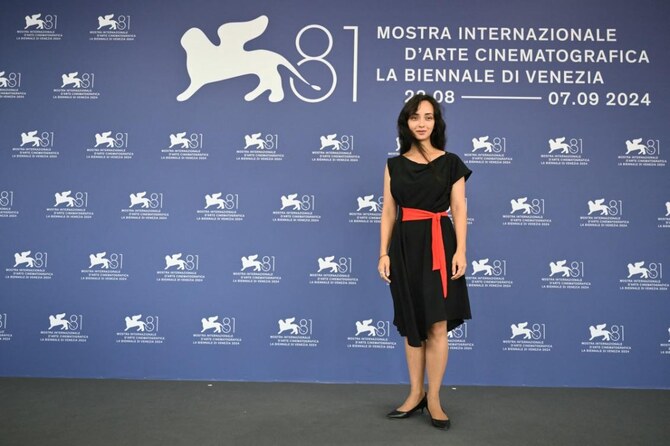
Anastasia Trofimova first presented “Russians at War” at the Venice Film Festival.
In the film, she embedded with a Russian battalion as it advanced across eastern Ukraine after Moscow launched its invasion in February 2022.
It was to have its North American premiere in Toronto on Friday, followed by additional screenings on Saturday and Sunday.
Both in Venice and Toronto it has sparked outrage in Ukrainian cultural and political circles against what many consider a pro-Kremlin film that seeks to whitewash and justify Moscow’s assault on its neighbor.
Ukraine’s presidential chief of staff, Andriy Yermak, said he felt the festival should have dropped the film.
“The threat is Russian propaganda,” he wrote on Telegram, adding that the film should be “banned.”
Canada’s deputy prime minister, Chrystia Freeland, criticized the planned screening in Toronto.
“There can be no moral equivalency in our understanding of this conflict,” she said.
Canadian public broadcaster TVO, which had helped fund the documentary, pulled its support for the film and said it would not be airing it.
Meanwhile, Ukraine’s state film agency appealed to TIFF to drop the film, which it said was “a dangerous tool for public opinion manipulation.”
Trofimova has rejected the criticisms, telling AFP the Canada-France production was “an anti-war film” that showed “ordinary guys” who were fighting for Russia.
The soldiers depicted appear to have little idea of why they have been sent to the front, and are shown struggling to make Soviet-era weapons serviceable.
Others chain-smoke cigarettes and down shots of alcohol amid the deaths and wounds of their comrades.
Producer Sean Farnel said on X that the decision to cancel the screenings was “heartbreaking.”
He blamed officials’ public criticisms for having “incited the violent hate that has led to TIFF’s painful decision to pause its presentation of ‘Russians at War.’“


![]()

Toronto festival drops Russian war film screenings over threats
Short Url
https://arab.news/nqezr
Toronto festival drops Russian war film screenings over threats
- Desicion was taken after receiving ‘significant threats to festival operations and public safety’
- Film features a Russian battalion as it advanced across eastern Ukraine in February 2022

Latest updates


Recommended


© 2026 SAUDI RESEARCH & PUBLISHING COMPANY, All Rights Reserved And subject to Terms of Use Agreement.