GENEVA: Israel has intensified airstrikes on Iranian-linked targets in Syria, inflicting civilian casualties on at least three occasions, an independent UN commission said Tuesday.
Since the Israel-Hamas war began nearly a year ago, Israel has conducted dozens of airstrikes in different parts of Syria. Iran blamed Israel for the April airstrike on Iranian consular offices in Damascus that killed seven people including two Iranian generals, and Tehran responded with an unprecedented attack against Israel almost two weeks later.
Regional tensions remain high after Iran vowed to retaliate for the July 31 killing of top Hamas leader Ismail Haniyeh in Tehran, believed to be carried out by Israel.
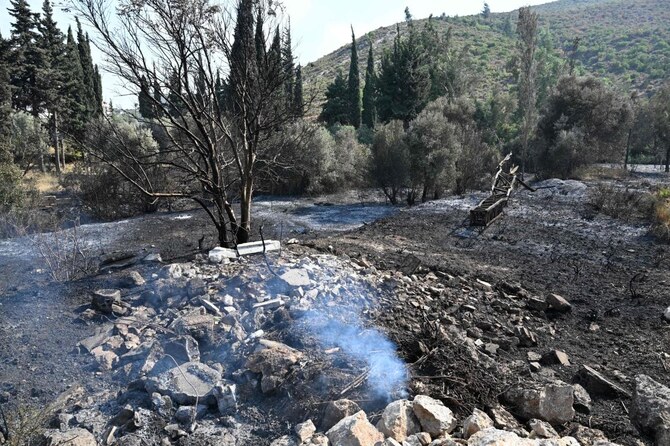
The commission is made up of independent experts mandated by the UN’s top human rights body. It said it continues to investigate airstrikes, including Sunday’s strike in Syria’s central province of Hamas that killed 18 people, making it one of the deadliest in years.
The report comes as the UN-backed Human Rights Council on Monday began its five-week autumn session.
Israel has vowed to stop Iranian entrenchment in Syria where thousands of Iran-backed fighters are deployed. Syria is a key route for Iran to send weapons to Lebanon’s Hezbollah group.
The Britain-based Syrian Observatory for Human Rights, an opposition war monitor, said that since the war in Gaza started Oct. 7 with a Hamas attack, Israel carried out 76 airstrikes in different parts of the country. It said 287 Iranian-linked fighters and Syrian troops and 27 civilians, including two children, died in the strikes.
The commission said groups affiliated with Iran have attacked bases housing US troops in east Syria more than 100 times, most recently last month. US forces responded with counterattacks.
The commission also warned that Syria is falling deeper into an alarming humanitarian crisis that threatens to spiral out of control.
“Only a quarter of this year’s humanitarian needs are funded,” the commission said in a statement, adding that the needs are at their highest since the start of the conflict 13 years ago.
It added that 13 million Syrians face acute food insecurity and over 650,000 children show signs of stunting from severe malnutrition.
UN agencies and international humanitarian organizations have for years struggled with shrinking budgets, further worsened by the coronavirus pandemic and conflicts elsewhere. The war in Gaza as well as those in Ukraine and Sudan are the focus of the world’s attention.
Syria’s civil conflict, which has killed nearly half a million people and displaced half the country’s pre-war population of 23 million, has long remained largely frozen.


![]()

Israel intensified airstrikes on Iran-linked targets in Syria
Short Url
https://arab.news/ruswf
Israel intensified airstrikes on Iran-linked targets in Syria
- It said it continues to investigate airstrikes, including Sunday’s strike in Syria’s central province of Hamas that killed 18 people, making it one of the deadliest in years
- The report comes as the UN-backed Human Rights Council on Monday began its five-week autumn session


Latest updates


© 2026 SAUDI RESEARCH & PUBLISHING COMPANY, All Rights Reserved And subject to Terms of Use Agreement.