

Najran’s rock art provides a window into ancient civilizations

1 / 5
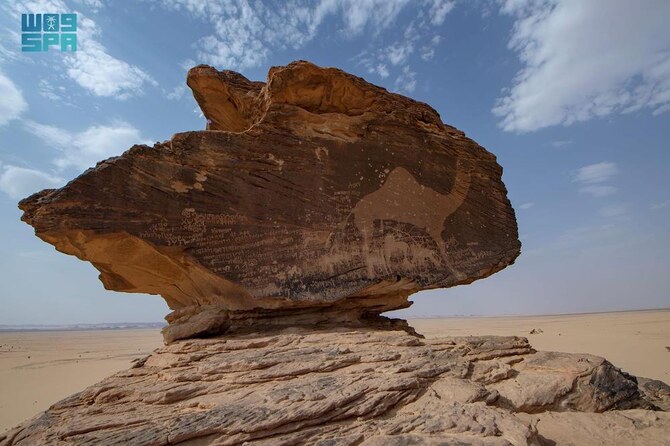
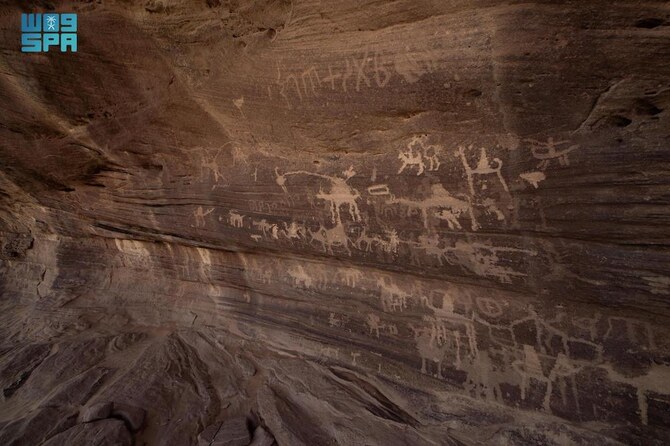
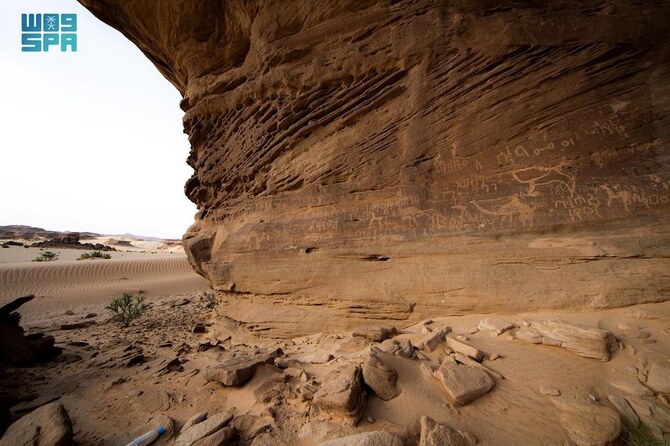
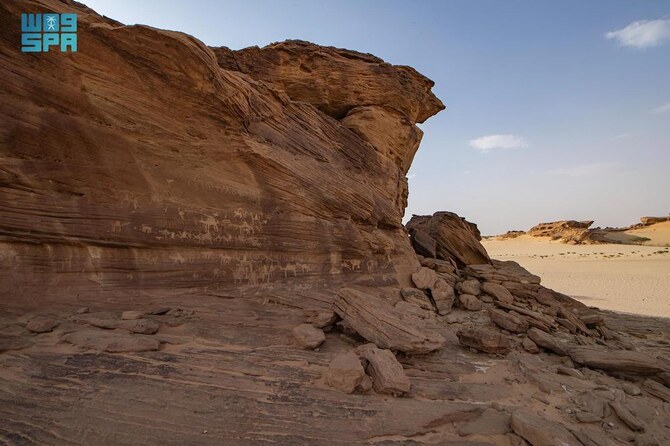
Najran Region is a treasure trove of rock carvings and ancient Arabic inscriptions that offer a glimpse into the lives and development of its ancient inhabitants. (SPA)
2 / 5
The UNESCO-inscribed Hima Cultural Area is a vast outdoor museum featuring numerous rock carvings. (SPA)
3 / 5
Najran Region is a treasure trove of rock carvings and ancient Arabic inscriptions that offer a glimpse into the lives and development of its ancient inhabitants. (SPA)
4 / 5
The UNESCO-inscribed Hima Cultural Area is a vast outdoor museum featuring numerous rock carvings. (SPA)
5 / 5
Najran Region is a treasure trove of rock carvings and ancient Arabic inscriptions that offer a glimpse into the lives and development of its ancient inhabitants. (SPA)
Short Url
Updated 05 September 2024
Follow

Najran’s rock art provides a window into ancient civilizations

RIYADH: Najran Region is a treasure trove of rock carvings and ancient Arabic inscriptions that offer a glimpse into the lives and development of its ancient inhabitants.

The UNESCO-inscribed Hima Cultural Area is a vast outdoor museum featuring numerous rock carvings, the Saudi Press Agency reported.

Almost every mountain in the region has numerous inscriptions or ancient South Arabian and Thamudic scripts.

Dr. Salem bin Tairan, professor of Semitic languages, ancient writings and archaeology at King Saud University, highlighted the region’s rich archaeological heritage.

He said that the rock art depicts various subjects, including human beings, camels, horses, ibex, ostriches, cows, predatory animals, hunting scenes and battles.

These carvings provide valuable insights into clothing, tools, weapons and domesticated animals of the time.

According to Bin Tairan, archaeological surveys in Najran have uncovered a vast number of archaeological sites with diverse rock art examples, including tribal signs, Thamudic, Sabaean, Himyarite and Islamic inscriptions.

Many of these inscriptions date from the Neolithic period and even the Paleolithic period.

Abdullah Al-Suqour, tour guide and member of the Najran Tourist Club, emphasized the significance of the rock carvings as historical records and tourist attractions.

He said the artistry of the engravings are often accompanied by the artist’s signature or prayers.

Al-Suqour urged everyone to cooperate with authorities in preserving and developing these invaluable cultural heritage sites and raising awareness about their importance.



Foreign ministers of Saudi Arabia, other Muslim countries warn against Israel’s West Bank control measures

A woman takes clothes as members of a Palestinian Bedouin community leave following Israeli army order in Arabba town near Jenin
Updated 10 sec ago
Follow

Foreign ministers of Saudi Arabia, other Muslim countries warn against Israel’s West Bank control measures

  • Foreign ministers of Saudi Arabia, Jordan, UAE, Qatar, Indonesia, Pakistan, Egypt, and Turkiye strongly condemned the new Israeli measures
  • Measures will tighten control of the West Bank and pave the way for more settlements in the occupied Palestinian territory

RIYADH: The foreign ministers of Saudi Arabia and several other Muslim countries warned against the continuation of Israel’s expansionist policies and illegal measures in the occupied West Bank on Monday.

The foreign ministers of Saudi Arabia, Jordan, the United Arab Emirates, Qatar, Indonesia, Pakistan, Egypt, and Turkiye strongly condemned new Israeli measures to tighten control of the West Bank and pave the way for more settlements in the occupied Palestinian territory, the Saudi Press Agency reported.

Israel approved the measures, announced by Finance Minister Bezalel Smotrich and Defence Minister Israel Katz, on Sunday. They include allowing Jewish Israelis to buy West Bank land.

The Israeli measures also envisage transferring authority over building permits for settlements in parts of Palestinian cities, including Hebron, from the Palestinian Authority’s municipalities to Israel.

The foreign ministers reaffirmed that Israel has no sovereignty over occupied Palestinian territory and said such measures undermine ongoing efforts to achieve peace and stability in the region.

The ministers expressed their absolute rejection of these illegal measures, which constitute a flagrant violation of international law, undermine the two-state solution, and represent an attack on the inalienable right of the Palestinian people to establish their independent and sovereign state within June 1967 borders, with occupied East Jerusalem as its capital.

They said that the measures are null and void, and constitute a clear violation of UN Security Council resolutions, particularly Resolution 2334, which condemns all Israeli measures aimed at changing the demographic composition, character and status of the Palestinian territory occupied since 1967, including East Jerusalem.

The added that the measures also contradict a 2024 International Court of Justice advisory opinion, which concluded that Israel’s policies and practices in the occupied Palestinian territory and its continued presence therein are illegal.

The ministers reiterated their call for the international community to uphold its legal and moral responsibilities and compel Israel to halt its dangerous escalation in the occupied West Bank and inflammatory statements made by its officials.

They emphasized that fulfilling the legitimate rights of the Palestinian people to self-determination and the establishment of their state, based on the two-state solution and in accordance with international law and the Arab Peace Initiative, is the only way to achieve a just and comprehensive peace that guarantees security and stability in the region.