Najran’s rock art provides a window into ancient civilizations

1 / 5
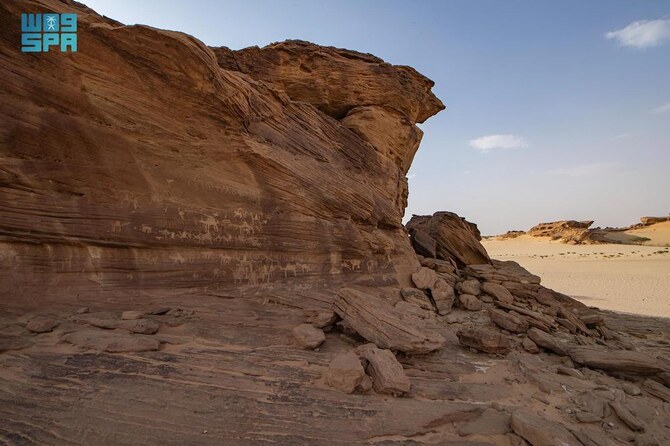
Najran Region is a treasure trove of rock carvings and ancient Arabic inscriptions that offer a glimpse into the lives and development of its ancient inhabitants. (SPA)
2 / 5
The UNESCO-inscribed Hima Cultural Area is a vast outdoor museum featuring numerous rock carvings. (SPA)
3 / 5
Najran Region is a treasure trove of rock carvings and ancient Arabic inscriptions that offer a glimpse into the lives and development of its ancient inhabitants. (SPA)
4 / 5
The UNESCO-inscribed Hima Cultural Area is a vast outdoor museum featuring numerous rock carvings. (SPA)
5 / 5
Najran Region is a treasure trove of rock carvings and ancient Arabic inscriptions that offer a glimpse into the lives and development of its ancient inhabitants. (SPA)
Short Url
Updated 05 September 2024
Follow

Najran’s rock art provides a window into ancient civilizations

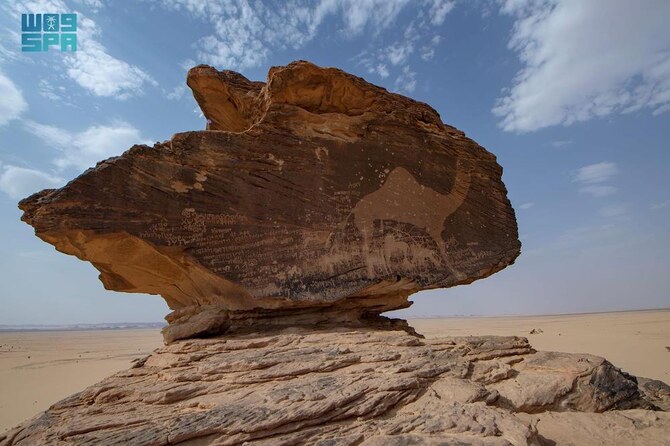
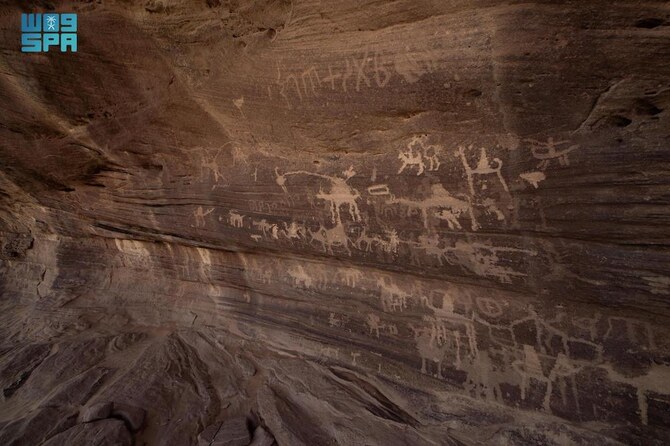
RIYADH: Najran Region is a treasure trove of rock carvings and ancient Arabic inscriptions that offer a glimpse into the lives and development of its ancient inhabitants.

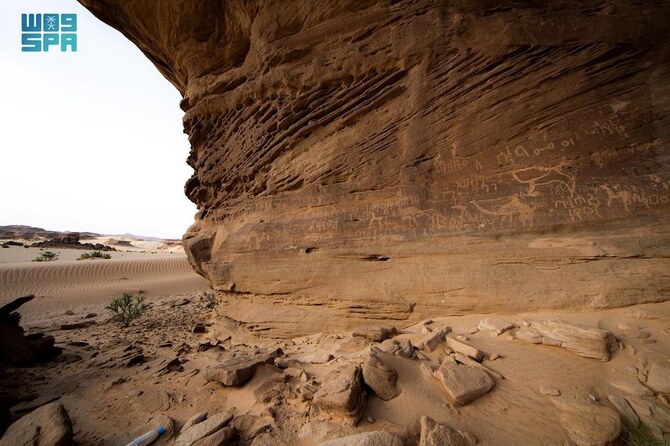
The UNESCO-inscribed Hima Cultural Area is a vast outdoor museum featuring numerous rock carvings, the Saudi Press Agency reported.

Almost every mountain in the region has numerous inscriptions or ancient South Arabian and Thamudic scripts.

Dr. Salem bin Tairan, professor of Semitic languages, ancient writings and archaeology at King Saud University, highlighted the region’s rich archaeological heritage.

He said that the rock art depicts various subjects, including human beings, camels, horses, ibex, ostriches, cows, predatory animals, hunting scenes and battles.

These carvings provide valuable insights into clothing, tools, weapons and domesticated animals of the time.

According to Bin Tairan, archaeological surveys in Najran have uncovered a vast number of archaeological sites with diverse rock art examples, including tribal signs, Thamudic, Sabaean, Himyarite and Islamic inscriptions.

Many of these inscriptions date from the Neolithic period and even the Paleolithic period.

Abdullah Al-Suqour, tour guide and member of the Najran Tourist Club, emphasized the significance of the rock carvings as historical records and tourist attractions.

He said the artistry of the engravings are often accompanied by the artist’s signature or prayers.

Al-Suqour urged everyone to cooperate with authorities in preserving and developing these invaluable cultural heritage sites and raising awareness about their importance.


Foreign ministers chair Saudi-Omani coordination council meeting in Muscat

Updated 23 December 2025
Follow

Foreign ministers chair Saudi-Omani coordination council meeting in Muscat

MUSCAT: Saudi Foreign Minister Prince Faisal bin Farhan met with Oman’s Foreign Minister Sayyid Badr bin Hamad Al-Busaidi on Monday.

They reviewed bilateral relations between their nations and ways to enhance and develop them across various fields. Additionally, they discussed regional and international developments.

The ministers co-chaired the third meeting of the Saudi-Omani Coordination Council in the Omani capital, Muscat, with the participation of the heads of the Council’s subsidiary committees and the two heads of the Council’s General Secretariat teams.

The meeting comes as an affirmation of the keenness of Saudi and Omani leaders to strengthen ties and advance them toward greater prosperity for both nations.

In his remarks during the meeting, Prince Faisal affirmed that gathering builds on the previous council meeting, held last year in AlUla, and on its positive and fruitful outcomes within the framework of the approved recommendations and initiatives. 

He stressed the importance of continuing the work of the council’s subsidiary committees to complete the necessary procedures to implement the remaining initiatives, and of the General Secretariat’s role in follow-up and in addressing any challenges that may hinder implementation.

He also underscored the importance of developing and enhancing trade relations, stimulating investment, and strengthening cooperation between the public and private sectors.

He also praised the ongoing work to establish and launch the Coordination Council’s electronic platform, which aims to connect all committee work and initiatives to facilitate follow-up on the Council’s progress. 

Al-Busaidi affirmed in his remarks the qualitative progress in relations between the two countries and the notable development witnessed across numerous sectors toward achieving economic integration and enhancing intra-trade and joint investments. 

The Omani foreign minister also highlighted deeper cooperation in the security and judicial fields, as well as the cultural and tourism sectors, noting the advanced and continuous political cooperation, consultation, and coordination on regional and international issues.